Millions of people all over the world struggle with addiction. For some, addiction manifests as an addiction to drugs or alcohol. For others, addiction may...

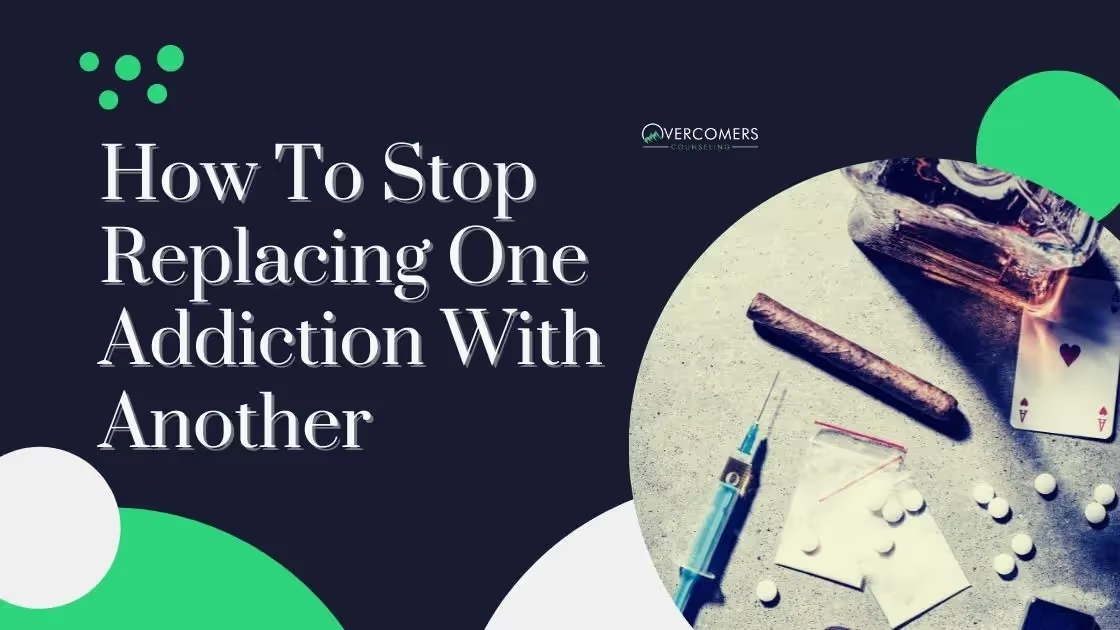
Millions of people all over the world struggle with addiction.
For some, addiction manifests as an addiction to drugs or alcohol.
For others, addiction may be to gambling, sex, or food.
No matter what the addiction is, it can be difficult to break the cycle and stop replacing one addiction with another.
Addiction is a disease that affects both the mind and the body.
It is characterized by compulsive behaviors, cravings, and a strong dependence on substances or activities.
When someone is addicted to a substance, they are not able to control their use, even when it is causing negative consequences.
Addiction can lead to physical and mental health problems, job loss, financial instability, and relationship difficulties.
It is a chronic disease, which means that it can last for a lifetime.
The good news is that addiction is treatable.
With the right tools and support, people can recover from addiction and lead healthy, fulfilling lives.
One of the most important things to do in recovery is to avoid replacing one addiction with another.
This means abstaining from all substances, including alcohol, drugs, and cigarettes.

If you've been struggling with addiction, you know that it can be all-consuming.
It can feel like you're constantly thinking about your next fix, and you may have trouble finding anything else to focus on.
That's why one of the key steps in recovering from addiction is to find new hobbies, activities, and interests to take up your time.
Some new hobbies to try could be:
This can help you to break the cycle of addiction and give you something positive to focus on.
The important thing is that it's something that you enjoy and that helps to take your mind off your addiction.
If you're not sure where to start, ask your friends or family for recommendations.
Seeking professional guidance or help may be the best step to take if you feel that you are struggling to overcome your addiction.
A professional can help you to understand your addiction and its causes and can provide you with support and advice on how to overcome it.
They can also help you to develop a recovery plan and can provide you with the tools and resources you need to stay on track.
If you feel that you are not ready to seek professional help, there are also many self-help groups and online resources available that can provide you with support and guidance.
Remember, no one is alone in this journey, and there is always help available if you need it.
If you're serious about overcoming your addiction, it's important to understand the root cause of your problem.
Addiction is often a way of self-medicating an underlying issue, such as depression, anxiety, or trauma.
By understanding the reason behind your addiction, you can begin to address the underlying issue and develop healthy coping mechanisms.
You may also need to seek professional help to get to the bottom of your addiction and develop a comprehensive treatment plan.
However, taking the time to understand the root cause of your addiction is an important step in recovery.
One key to overcoming addiction is to replace negative habits with positive ones.
For example, if you're trying to quit smoking, you might want to start exercising instead.
Exercise releases endorphins, which can help improve your mood and reduce stress.
It also gives you something to focus on other than your addiction.
If you're not sure how to get started, there are plenty of resources available, including online programs and workout apps.
You can also check with your local gym or community center for classes and programs.
Taking small steps like this can help you overcome your addiction and build a healthier, happier life, ultimately showing you how to stop replacing one addiction for another.
One of the most important steps you can take to avoid replacing one addiction with another is to educate yourself about addiction and what you can do to prevent relapse.
There are many resources available to help you understand addiction and its causes.
You can also find information on how to identify the signs of addiction and what to do if you or someone you know is struggling with an addiction.
In addition, there are many support groups and other resources available to help you through the process of recovery.
By taking the time to educate yourself about addiction, you will be better prepared to prevent relapse and maintain your sobriety.
This is an important part of learning how to stop replacing one addiction for another.
People who are in recovery from addiction often find that they need to connect with others who are going through the same process.
There are many reasons for this.
Whatever method you choose, make sure that you reach out and make connections with others in recovery.
It will make the process of staying sober much easier.
Step three of how to stop replacing one addiction with another is to take things one day at a time.
This may sound like a cliché, but it's important to remember that recovery is a process, not an event.
There will be good days and bad days, and it's important to be patient with yourself.
Celebrate your victories, no matter how small, and don't be too hard on yourself when you relapse.
Just pick yourself up and start again the next day.
Over time, you will get stronger and the urge to use will lessen.
But it takes time, so be patient and take things one day at a time.
Addiction is a serious problem that affects millions of people all over the world.
For some people, addiction manifests as an addiction to drugs or alcohol.
For others, addiction may be to gambling, sex, or food.
No matter what the addiction is, it can be difficult to break the cycle and stop replacing one addiction with another.
Tackling alcoholism isn't about finding a magic cure, but rather about learning to manage a chronic illness, much like learning to live with diabetes or asthma. It’s a long-term commitment to your well-being. The good news is that millions have successfully managed it and gone on to live fulfilling lives. You can get to a place where alcohol no longer controls your life. With the right support, like therapy, support groups, and medication, you can reclaim your peace and find a new way forward.
Have you ever felt like your internal "check engine" light is on, but you can't quite figure out why? The signs of alcohol abuse can feel like that. Maybe you're drinking more often than you planned, or you're missing out on things you used to love. Perhaps you're feeling a stronger desire to drink or noticing that you need more to feel the same effect. We understand that recognizing these signs is the first, brave step. We can help you listen to that signal and find the right path to wellness.
Taking on alcohol abuse is a powerful act of self-empowerment. The most effective approach is like building a custom toolbox for your recovery, filled with the right resources for you. This often includes therapies like Cognitive Behavioral Therapy (CBT), which helps you recognize triggers and build new coping skills. Many people also find support groups like Alcoholics Anonymous incredibly helpful, as it's a space where you can connect with others who truly get it. We'll help you find the right combination of tools to create lasting, positive change.