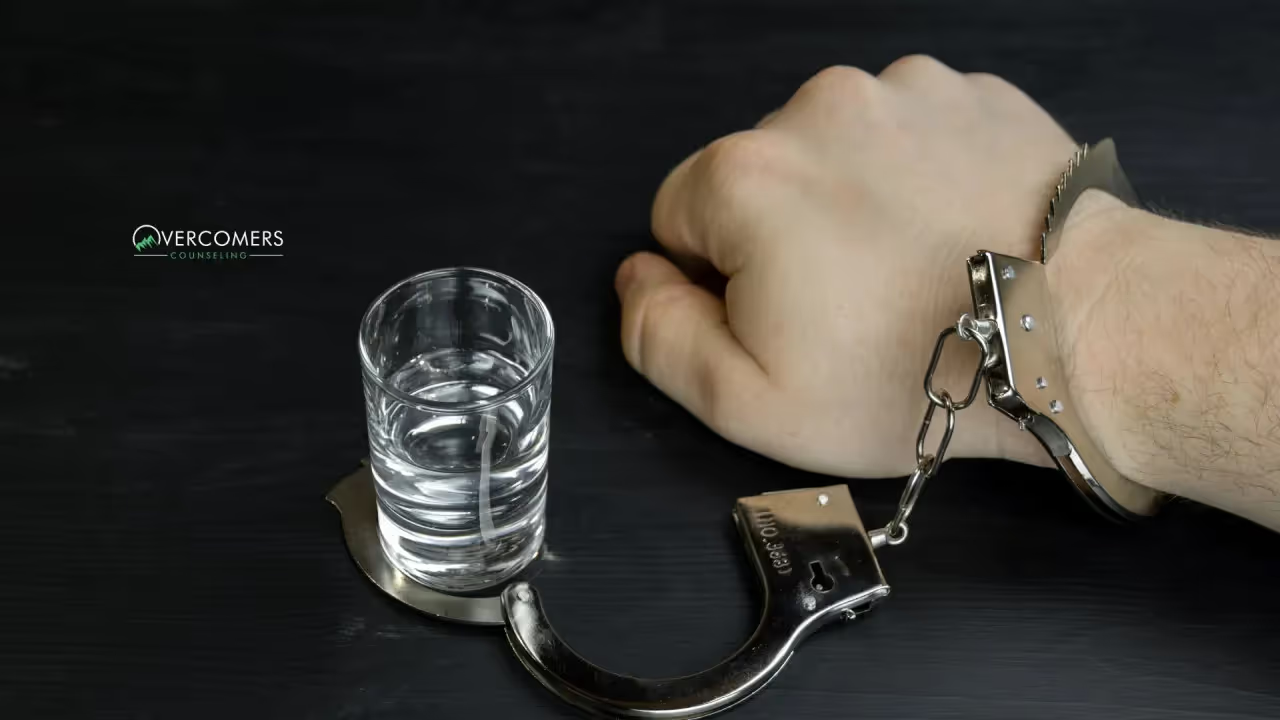
Much of the stigma of addiction is external.Therefore it's challenging to overcome. However, you can control how you react to this stigma. Whether you hear...


Much of the stigma of addiction is external.
Therefore it's challenging to overcome.
However, you can control how you react to this stigma.
Whether you hear or feel people around you trying to drag you down, there are some steps that you can take to overcome these things.
Take a moment to familiarize yourself with these things so that you can work on building yourself up.
Address the point where you're at and accept that your addiction makes it challenging for you to make good decisions.
At the same time, you need to accept this is a disease from which you can recover.
These facts will enable you to be truthful when someone asks about your recovery.
It doesn't mean that you can simply and easily navigate this road.
Both mental and emotional struggles will happen.
However, when someone shows you that they believe the stigma of addiction, you're in a better place to accept that they don't understand what you're going through.
You may even be able to educate them by allowing them to share in your struggle and thus help them end the stigma of addiction.

As you struggle with overcoming your addiction, you need to make sure that you have a strong, positive support system around you.
You want people who understand addiction, can help you manage therapy, and promote healing of your body and mind.
These are what you'll need so you can succeed in your recovery.
You don't need to surround yourself with people who encourage the stigma of addiction.
They'll only drag you down and cause you to relapse.
Although it's challenging and hurtful to face the stigma of addiction, you shouldn't accept it as your problem.
It's something that belongs to the other person because they fail to understand what you're going through.
Fortunately, you understand how harmful the stigma of addiction is because you've worked hard to overcome it.
It doesn't matter when or why you started your addiction.
It only matters that you're a strong enough person to overcome it (even though you may not always feel strong).
Don't let those who cannot understand these things have the power to drag you down.
No matter how well you understand the stigma of addiction, it'll still impact you.
Therefore you must develop healthy coping skills.
They'll guide you through the hard times you encounter along the way.
Some of the coping skills that'll help you here include:
These things will help you avoid spiraling downward into relapse.
Make sure you use them when you discover you're feeling the worst.

Take a moment and think about what you want your future to hold.
Set some achievable goals to help move you towards this future.
These will help you remain true to your recovery as you'll be too busy working towards your goals that you won't have time to return to your addiction.
At the same time, it'll also help you finally show those around you that their stigma of addiction simply isn't true.
Remember, addiction is a disease that significantly changes your brain.
The stigma of addiction occurs because people don't understand this.
It isn't up to you to change their opinions, but it is up to you to define your future.
By working with us at Overcomers Counseling, you'll become confident in who you are and able to step away from the negativity.
Take the first and biggest step in your recovery.
Reach out to us today.
https://link.springer.com/article/10.1007/s11673-017-9784-y
https://onlinelibrary.wiley.com/doi/abs/10.1034/j.1600-0447.2003.00075.x
The best way to help an addict without enabling them is by setting boundaries and getting help for yourself. It is important to remember that you cannot control the addict's behavior, but you can offer support and understanding. With time and patience, you can help your loved one recover from addiction.
Some resources for family members of addicts include therapy, counseling, 12-step programs, and other support groups. It is important to seek out these resources to get the tools you need to deal with your loved one's addiction. You can also find help for yourself through these resources.
Treatment for alcohol abuse often includes counseling, support groups, and medication. With the right help, your spouse can recover from alcoholism and go on to lead a healthy and happy life.
Staying sober is not a one-time thing; it’s a long-term commitment. Counseling helps you build a strong foundation for your recovery, like reinforcing the base of a house. We’ll help you develop skills to manage cravings, avoid relapse triggers, and navigate the daily stresses of life without turning to drugs. We’ll also help you create a network of support so you can continue to feel seen and heard on your journey. We believe in your capacity to lead a life of lasting recovery.
Sometimes, telling the difference between alcohol abuse and alcoholism can feel like looking at two seemingly similar roads. Alcohol abuse is the detour—a pattern of drinking that causes problems in your life, like missing work or making poor decisions. Alcoholism, now known as alcohol use disorder, is more like a new, unwanted destination. It's a chronic disease where drinking becomes a compulsive need you feel you can't control, with a physical and psychological dependence. We can work together to help you find your way back to your intended path.