The transition from military service to civilian life can be a challenging journey, often marked by a myriad of emotions and experiences.One such challenge...


The transition from military service to civilian life can be a challenging journey, often marked by a myriad of emotions and experiences.
One such challenge that many veterans face is post-military service depression, a mental health condition that can have far-reaching impacts on their quality of life.
With an alarming prevalence of depression among veterans, it is crucial to shed light on this issue and provide effective coping strategies.
This article aims to offer insights into understanding the importance of early detection and treatment.
When utilized effectively, these strategies can enable veterans to traverse their post-service life journey with fortitude and a positive mindset.
Identifying and addressing post-military service depression at an early stage is vital for the mental health and overall well-being of veterans.
Mental health issues, if left untreated, can escalate over time leading to severe consequences including self-harm, substance abuse, and even suicide.
Treatment can include therapy, counseling, medication, and self-care strategies that can significantly improve a veteran's quality of life.
However, there is often a stigma associated with mental health in the military community.
This stigma can act as a significant barrier to seeking help, with many veterans fearing judgment, discrimination, or damage to their career prospects.
Open conversations can help break down stereotypes, increase understanding, and normalize seeking help for mental health issues.
It's important to remember that mental health struggles are not a sign of weakness, but rather a common human experience that many people face.
One of the most effective ways to address post-military service depression is through psychotherapy.
Cognitive Behavioral Therapy (CBT) is a common approach that helps veterans understand and change thought patterns leading to harmful behaviors or distressing feelings.
This empowers them to detect skewed or detrimental thought processes, acknowledge and modify false beliefs, interact with others in a more constructive manner, and adjust their actions accordingly.
Another powerful therapy is Eye Movement Desensitization and Reprocessing (EMDR), which is particularly effective for those dealing with trauma.
EMDR therapy allows veterans to reprocess traumatic memories, reducing their long-term impact and helping them develop more adaptive coping mechanisms.
Both therapies should be administered by a trained professional and may be used in conjunction with other treatment methods for maximum benefit.
Alternative therapies such as yoga, meditation, and acupuncture have also shown promise in managing post-military service depression.
Yoga, with its combination of physical postures, breathing exercises, and meditation, can help improve mental and physical health by reducing stress, improving mood, and enhancing overall health.
Meditation can train the mind to focus and redirect thoughts, which can be particularly helpful in managing symptoms of depression like persistent negative thinking.
Acupuncture, a traditional Chinese medicine technique, involves inserting thin needles into specific points on the body.
It's believed to balance the body's energy flow (or 'qi'), and studies suggest it may also have beneficial effects on depression symptoms.
These alternative therapies can be great complements to traditional treatments, providing a holistic approach to managing post-military service depression.
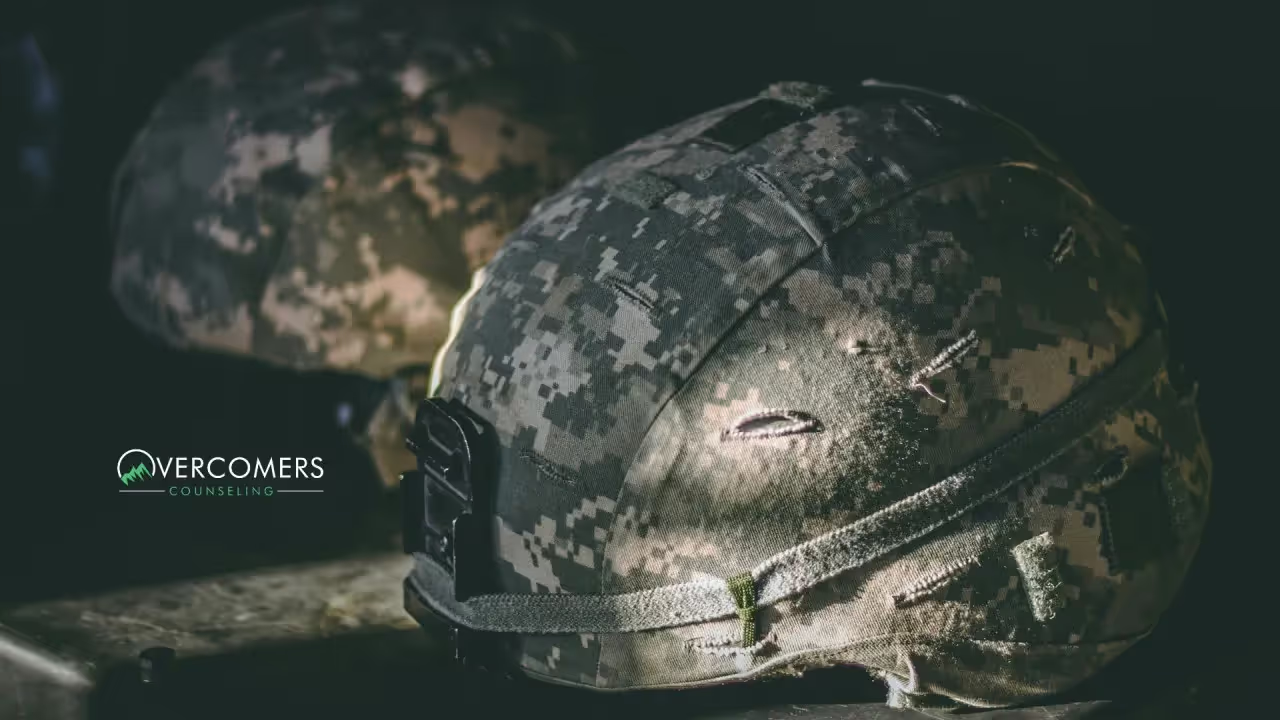
Support groups and peer networks play a crucial role in managing post-military service depression.
These platforms provide a safe and non-judgmental space where veterans can share their experiences, challenges, and coping strategies with others who are going through similar experiences.
The sense of camaraderie and understanding helps reduce feelings of isolation and alienation, which are often associated with depression.
In addition, these groups often provide resources for professional help and practical advice on navigating everyday life after military service.
The shared empathy and collective wisdom in these groups can be incredibly empowering and healing, making them an important component of the overall treatment plan.
It is paramount to reemphasize the significance of addressing depression following military service.
The effects of this condition can be far-reaching and profound, but it's important to remember that no one has to face it alone.
Veterans are strongly encouraged to seek help when needed.
There are numerous support structures in place, including professional mental health services, peer networks, and self-care strategies.
Acknowledging the problem is the first step towards overcoming it. You're not alone in this fight; together, we can navigate the road to recovery.
Therapy can help with many types of depression, including major depressive disorder, persistent depressive disorder (dysthymia), seasonal affective disorder, postpartum depression, and depression related to life transitions or grief. Your therapist will tailor treatment to your specific needs.
What is the goal of depression counseling?
Living with depression can feel like walking through thick fog every day, where the world looks muted and it’s hard to find your way. The goal of counseling isn’t to instantly make the fog disappear. It’s to give you a powerful flashlight so you can find your path again. Depression counseling helps you better understand your symptoms of depression, identify what’s contributing to them, and learn healthier ways of coping.
We work together to help you understand what's behind the fog, rediscover your sense of purpose, and rebuild your life, one step at a time. We believe in your capacity to feel joy again.
How can counseling help me get my life back?
When you're dealing with depression, even the smallest tasks can feel like climbing a mountain. Counseling helps you build the skills and stamina to make that climb. Through evidence-based approaches such as cognitive behavioral therapy (CBT), we help challenge unhelpful thought patterns and behaviors that reinforce depression.
We'll help you challenge the negative thought patterns that weigh you down and find ways to re-engage with your life. Treating depression is not about perfection; it’s about progress and learning how to support yourself with compassion.
Can therapy really help with depression?
Yes! Therapy is one of the most effective ways to treat depression. Research consistently shows that depression therapy—especially CBT—is effective for depression, including major depressive disorder and persistent depressive disorder.
We'll help you navigate the difficult emotions and challenge the unhelpful beliefs that are holding you back. You are not alone in this fight, and we'll be there to support you every step of the way.
What if I don't feel motivated to go to counseling?
We get it. Depression often drains motivation, energy, and hope. A lack of motivation is itself a common symptom of depression—not a failure. You don’t have to feel “ready” to start. Just showing up is enough. We’ll meet you where you are and move at a pace that feels manageable.