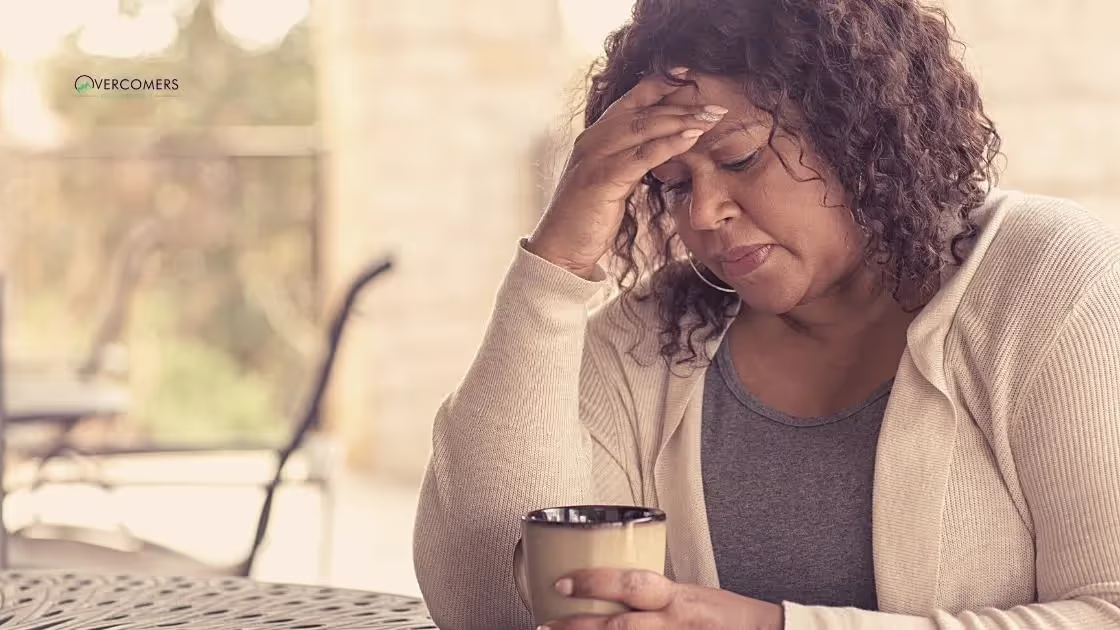
Even if you are the wronged party in a marriage, the aftermath of a divorce can be a depressing period as you experience the feeling of being single again,...


Even if you are the wronged party in a marriage, the aftermath of a divorce can be a depressing period as you experience the feeling of being single again, the fear of never finding love, and the assumption that you are less worthy as a divorcee than as a married person.Despite the heavy thoughts, you have to deal with the depression from divorce to live a better life on your terms, and one way to move on is to take care of yourself mentally and physically by investing in new relationships, going on solo dates, or vacations, and getting invested in new hobbies.
You can also seek help from other people, like a support group for divorcees where everyone comes around to talk about their experience and coping mechanisms or a certified therapist who is compassionate and has active listening skills, which they use to help you talk through your emotions.
A clever way to deal with the depression from divorce is by hitting the gym regularly, as your involvement in exercise can give you good feelings, boost your sad mood, make you healthier, enhance your self-esteem, and keep you focused on activities that slowly take away your pain.
If you also acknowledge your feelings, you are likely to move on quickly because acknowledgment will kick-start a recovery process where you will adequately mourn the loss of your marriage and accept its end, rather than denying the emotions and ending up with pent-up anger or frustration at yourself.
You may consider these ways to deal with the depression from divorce:
It's essential to care for yourself to properly deal with the depression from divorce, as it would allow you to focus on your new existence as a single being and help you quickly acclimatize to being an individual with personal goals, interests, and needs.An excellent method of taking care of yourself is to focus on the essential aspects of living like food, sleep, and shelter; and you can do this by ensuring you eat healthy meals with occasional treats, maintain good sleeping habits, and move to a new house in a comfortable location, if possible.
Similarly, practicing self-compassion and relieving yourself of guilt are ways you can employ to care for yourself as they allow you to soothe your nerves and remove the self-blame about you causing the marriage's end, thereby ensuring that you regain your self-confidence about being a good person.
You can also immerse yourself in the big picture to take your mind off the divorce, as the big picture will show you how being free from the marriage is liberating, how you have newfound freedom of self-expression, and how you can meet a better person for a more fulfilled union.
The depression can be overwhelming and may need you to get help from a depression-based group or a professional therapist to deal with the depression from divorce; the therapy is the more common option for its effectiveness at keeping issues confidential while solving them.
You may consider personal therapy with a certified therapist if you see the divorce as your failure and desire to handle the feelings yourself; the therapy can help you distill your feelings and adequately analyze the divorce to help you gain a deeper understanding of yourself.
If you and your partner prefer to address the impact of the divorce, living arrangements, parenting, and financial expectations together, you may opt for couples therapy which facilitates a constructive divorce and creates a mode of mediation between you.
And in the chance that your children are distressed and hurt by the divorce, it would be progressive to go for family therapy where all the family members talk about their emotions concerning the divorce and gain the opportunity to move on with their feelings adequately.

Exercise can be an unusual way to deal with the depression from divorce because it has likely been out of your mind during your marriage, but with the advent of the painful feelings in the aftermath of a divorce, you can consider using exercise as a coping technique as it offers excellent mental healing properties.
With the endorphins you secrete while performing an exercise regimen, exercise can help you boost your mood, fight depression, forget the painful thoughts, and make you feel better, helping you get healthier and positively impacting your self-esteem.
Considering your busy schedule, you may find it challenging to get started, but if you try to create a short period for exercise into your schedule, you are sure to get used to it and get consistent with it enough to increase the time to a longer duration.
To motivate yourself, try to get a gym buddy who will serve as your accountability partner, constantly introducing new fitness regimens and products, engaging in fun exercises with you, and checking up on your fitness motivation levels.
To properly deal with the depression from divorce, you should acknowledge the reality of your situation and understand that you lost a partner instead of refusing to accept it and burying your emotions regarding the divorce.
Once you acknowledge the pain, try to rationalize its occurrence by understanding that pain is a natural reaction to hurtful things, and that will help you realize that you have sustained an emotional injury and you’ll require different things to heal.
After the rationalization, envisage your healing process and give yourself a good time to heal the wound in your heart, ensuring that you don’t go too fast in a bid to get it over with but in a slow and methodical way that gently strips your emotional scars away.
During the recovery process, ensure you forgive yourself and your partner for the hurt you caused each other, as forgiveness can help you get rid of the past and relieve yourself of every negative emotion, allowing you to move on with a positive outlook.
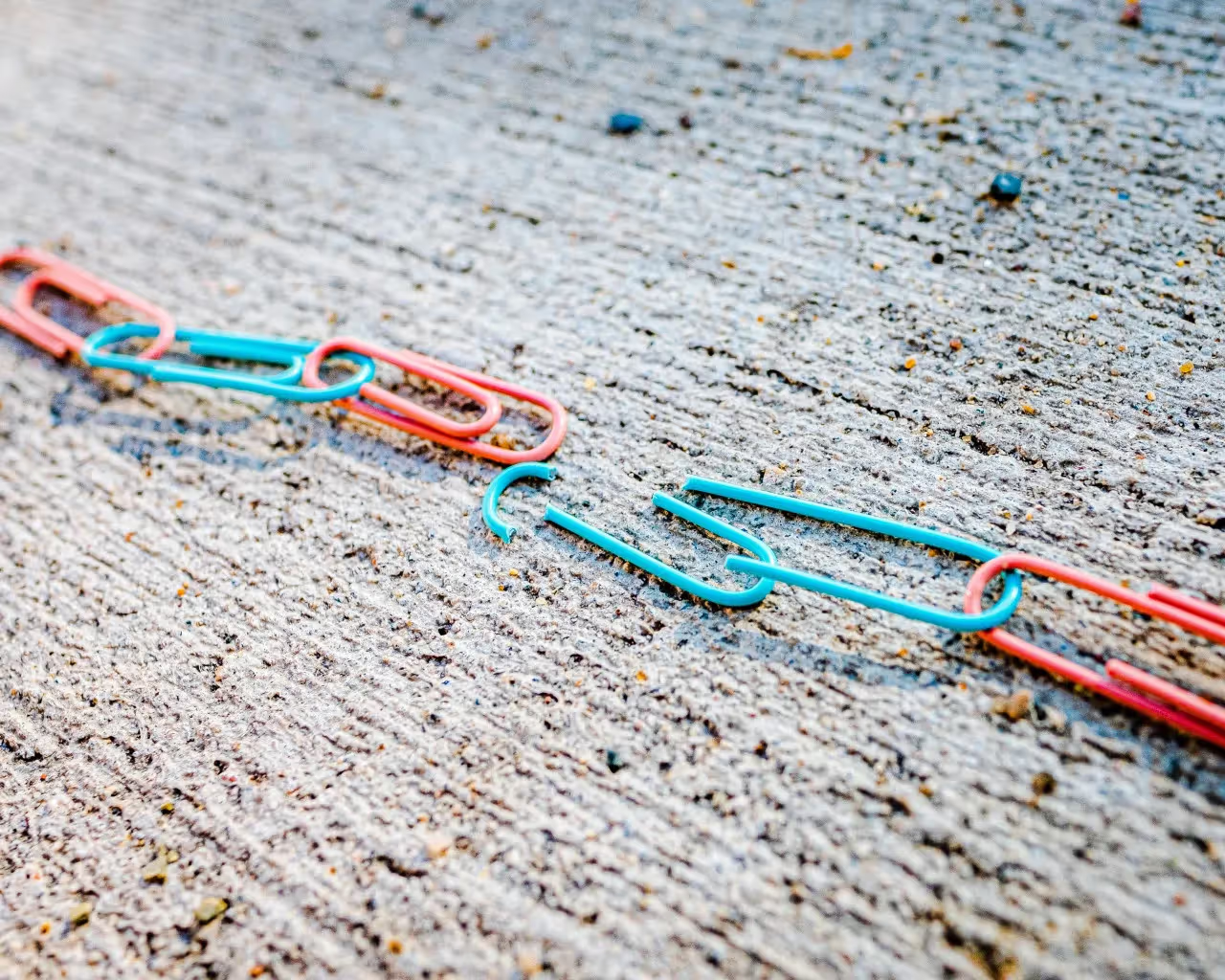
Life offers more freedom and gets better when you deal with the depression from divorce, as you have free time to yourself without considering your partner in all your decisions and moves.
You may also get an enormous confidence boost from leaving the marriage because you made a life-changing decision and moved on from the resulting pain.
Another form of freedom you may experience is the opportunity to raise your kids as you like if you have full custody, allowing you to pick the most appropriate schools, teach them about religion, talk to them about relationships, and instill some life values in them.
The post-divorce freedom also removes every eggshell you used to walk on in your marriage because you feared reprisals from your partner or you feared them getting sad.
Whenever you feel depressed because of your divorce, remember that the divorce is not the end of your life, and you can still go on to have another marriage and achieve many goals.
Also, remember that there are certain things you can try to help you deal with the depression from divorce, such as taking care of yourself, seeking professional help, exercising regularly, acknowledging your pain, and embracing your freedom.
https://www.huffpost.com/entry/how-to-care-for-yourself-_b_5719793
https://www.brides.com/21-tips-for-moving-on-after-divorce-1103025
https://www.goodtherapy.org/learn-about-therapy/issues/divorce/recovery
https://www.divorcemag.com/blog/how-to-set-and-accomplish-fitness-goals-after-divorce
https://www1.cbn.com/family/12-steps-for-overcoming-the-pain-of-divorce
https://www.huffpost.com/entry/silverlinings-to-divorce
Therapy can help with many types of depression, including major depressive disorder, persistent depressive disorder (dysthymia), seasonal affective disorder, postpartum depression, and depression related to life transitions or grief. Your therapist will tailor treatment to your specific needs.
What is the goal of depression counseling?
Living with depression can feel like walking through thick fog every day, where the world looks muted and it’s hard to find your way. The goal of counseling isn’t to instantly make the fog disappear. It’s to give you a powerful flashlight so you can find your path again. Depression counseling helps you better understand your symptoms of depression, identify what’s contributing to them, and learn healthier ways of coping.
We work together to help you understand what's behind the fog, rediscover your sense of purpose, and rebuild your life, one step at a time. We believe in your capacity to feel joy again.
How can counseling help me get my life back?
When you're dealing with depression, even the smallest tasks can feel like climbing a mountain. Counseling helps you build the skills and stamina to make that climb. Through evidence-based approaches such as cognitive behavioral therapy (CBT), we help challenge unhelpful thought patterns and behaviors that reinforce depression.
We'll help you challenge the negative thought patterns that weigh you down and find ways to re-engage with your life. Treating depression is not about perfection; it’s about progress and learning how to support yourself with compassion.
Can therapy really help with depression?
Yes! Therapy is one of the most effective ways to treat depression. Research consistently shows that depression therapy—especially CBT—is effective for depression, including major depressive disorder and persistent depressive disorder.
We'll help you navigate the difficult emotions and challenge the unhelpful beliefs that are holding you back. You are not alone in this fight, and we'll be there to support you every step of the way.
What if I don't feel motivated to go to counseling?
We get it. Depression often drains motivation, energy, and hope. A lack of motivation is itself a common symptom of depression—not a failure. You don’t have to feel “ready” to start. Just showing up is enough. We’ll meet you where you are and move at a pace that feels manageable.