How does depression affect women? It takes a toll on daily activities such as working, eating, and sleeping. It also affects how women feel and think. Women...

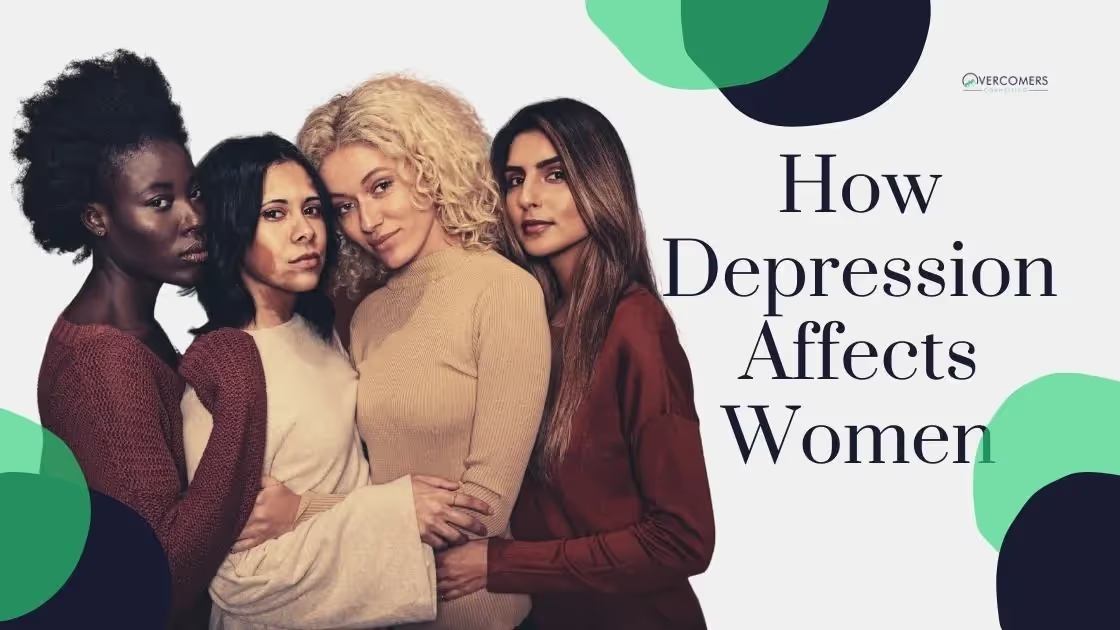
How does depression affect women?
It takes a toll on daily activities such as working, eating, and sleeping.
It also affects how women feel and think.
Women have unique social, hormonal, and biological factors to make it so that they're affected differently than men.
There are even certain kinds of depression that only people who menstruate or give birth can get.
Keep reading to learn more about depression in women.
One thing to be aware of is puberty.
This is because of hormone changes that increase some females' risk of depression.
Puberty is associated with experiences that play roles in depression.
Some of these experiences include conflicts with parents, emerging identity and sexuality issues, and increasing pressure to do well in sports and school.
Many hormonal and physical changes occur in women because of the menstrual cycle, pregnancy, the postpartum period, and perimenopause.
There is premenstrual dysphoric disorder, a type of depression in women.
This happens about seven to ten days before menstruation, then women have a huge relief once their menstrual flow begins.
It is serious and may cause joint or muscle pain, breast tenderness, bloating, appetite changes, suicidal ideation, sadness, depressed mood, irritability, and anger.
During pregnancy and after childbirth a woman may have perinatal depression.
If a woman has perinatal depression, then she may have trouble carrying out daily tasks that include caring for their child or even themselves.
During pregnancy, a woman is more likely to be depressed if she lives alone, has limited social support, is particularly young, or has a history of depression.
They may have fatigue, anxiety, or extreme sadness.
Depression during pregnancy makes it hard for a woman to follow medical recommendations, as well as eat and sleep properly.
Postpartum depression is a more specific term for what happens within the first year of childbirth.

Once a woman transitions into menopause, she has gone through perimenopause.
It usually starts in women when they are in their 40s, and lasts until they haven't menstruated for a whole year.
It happens because of a drop in estrogen levels.
During that time period, a woman is expected to have hot flashes, abnormal periods, mood swings, and sleeping problems, however, feeling depressed is abnormal.
If a woman experiences loss of enjoyment, sadness, anxiety, or irritability during this time, then she may have perimenopausal depression, a type of depression in women.
To cope with depression, fears, and mood swings during menopause, women can practice deep breathing, meditation, or yoga.
It might also be a good idea to get emotional support from family members or friends.
Don't forget to exercise regularly and eat healthy food.
We also suggest engaging in a creative hobby.
Now, how is women's depression different from men's?
Depression in women is likely to be linked to phobic and panic symptoms and eating disorders.
Women also tend to feel more guilty and have higher suicide attempt rates than men.
Also, depression usually happens earlier in a woman's life than a man's.
This is because girls generally hit puberty before boys.
Girls aged 14-18 consistently have higher depression rates than boys in the same age group.
Female depression also lasts longer, is recurrent, is tied to seasonal changes, and is a response to stressful life events.
If a woman was sexually, physically, or emotionally abused as an adult, or even as a child, then she is more likely to have depression at some point in her life than someone who wasn't abused.
Women are also more likely to be sexually abused than men.
Many women are overwhelmed by work, both outside and inside the home.
Many women are single parents and work more than one job for financial stability.
Depression in women is also more likely because women are more likely to be caretakers for sick and older family members, in addition to their own children.
Women are more likely to live in poverty than men.
Those that do may be uncertain about the future, and may not have much access to health care and community resources.
That may cause them to feel they don't have control over their lives, and have low self-esteem and negative feelings.
Women are generally more emotional than men, and when they are depressed they are more likely to think over negative thoughts.
They ruminate, and that makes the depression in women last longer and makes it worse.
Women are more likely to have body image issues, which typically start in adolescence, and experience more stress than men.
They experience more stress because they have increased levels of progesterone.
Those increased levels stop stress hormones from leveling out.
If a woman is on certain medications, that can be an increased risk factor for depression.
What can also be risk factors are divorces, relationship problems, and job losses.
If she lost a parent before age ten then that can play a role.
There are many resources to help you with treatment and thus improve your quality of life.
These include community mental health centers, private clinics, hospital psychiatry departments, family doctors, and family service/social agencies that can guide you towards the best treatment for depression in women.
Treatment may include individual psychotherapy, brain stimulation techniques, and/or antidepressants.
Be sure to let a prescriber know if you are pregnant or plan to be.
A mental health clinician can formally diagnose a person, and recommend what they feel would be the best treatment.
There is a lot to know about depression in women.
It really is interesting how changes that occur throughout a woman's life affect depression.
They have unique factors from men that affect how they feel.
Depression can affect a woman's life significantly, and that's why it's important for her to get treatment when symptoms present themselves.
We hope this has been an informative article on depression in women.
https://www.nimh.nih.gov/health/publications/depression-in-women
https://www.webmd.com/depression/guide/depression-women
https://www.mayoclinic.org/diseases-conditions/depression/in-depth/depression/art-20047725
https://www.psycom.net/depression.central.women.html
Therapy can help with many types of depression, including major depressive disorder, persistent depressive disorder (dysthymia), seasonal affective disorder, postpartum depression, and depression related to life transitions or grief. Your therapist will tailor treatment to your specific needs.
What is the goal of depression counseling?
Living with depression can feel like walking through thick fog every day, where the world looks muted and it’s hard to find your way. The goal of counseling isn’t to instantly make the fog disappear. It’s to give you a powerful flashlight so you can find your path again. Depression counseling helps you better understand your symptoms of depression, identify what’s contributing to them, and learn healthier ways of coping.
We work together to help you understand what's behind the fog, rediscover your sense of purpose, and rebuild your life, one step at a time. We believe in your capacity to feel joy again.
How can counseling help me get my life back?
When you're dealing with depression, even the smallest tasks can feel like climbing a mountain. Counseling helps you build the skills and stamina to make that climb. Through evidence-based approaches such as cognitive behavioral therapy (CBT), we help challenge unhelpful thought patterns and behaviors that reinforce depression.
We'll help you challenge the negative thought patterns that weigh you down and find ways to re-engage with your life. Treating depression is not about perfection; it’s about progress and learning how to support yourself with compassion.
Can therapy really help with depression?
Yes! Therapy is one of the most effective ways to treat depression. Research consistently shows that depression therapy—especially CBT—is effective for depression, including major depressive disorder and persistent depressive disorder.
We'll help you navigate the difficult emotions and challenge the unhelpful beliefs that are holding you back. You are not alone in this fight, and we'll be there to support you every step of the way.
What if I don't feel motivated to go to counseling?
We get it. Depression often drains motivation, energy, and hope. A lack of motivation is itself a common symptom of depression—not a failure. You don’t have to feel “ready” to start. Just showing up is enough. We’ll meet you where you are and move at a pace that feels manageable.