Toddler behaviors can leave a lot of parents scratching their heads for answers. Why does my toddler refuse to share toys? Why does my toddler laugh when...

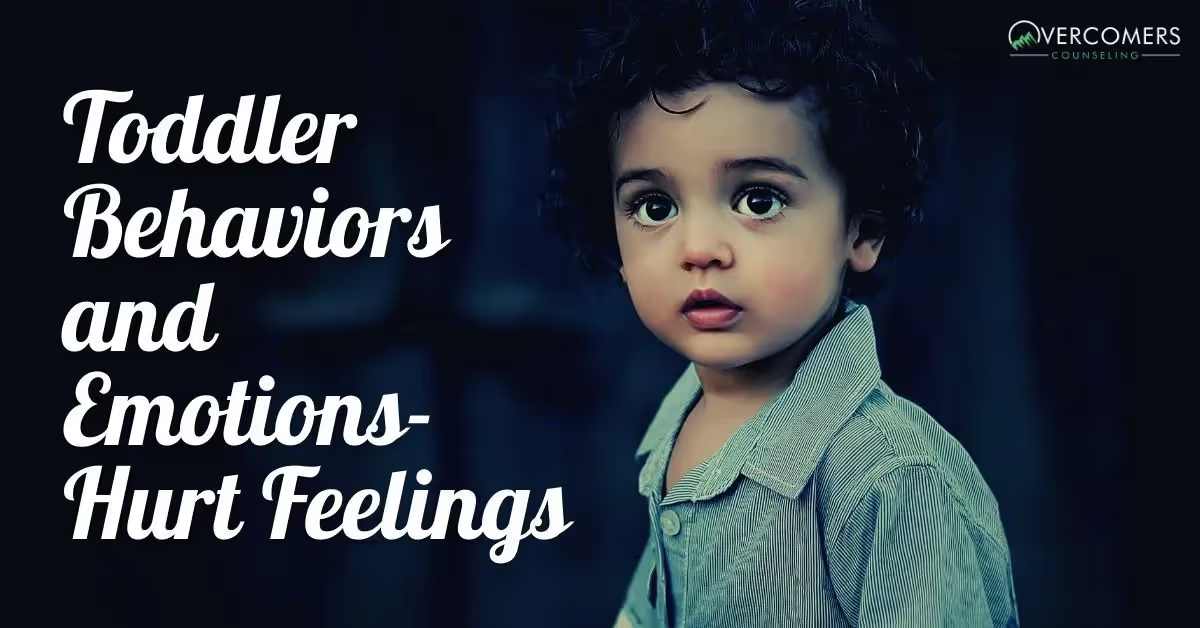
Toddler behaviors can leave a lot of parents scratching their heads for answers.
Why does my toddler refuse to share toys? Why does my toddler laugh when put in time-out? Why is my toddler hitting me while I am on the phone?
If we are consciously or subconsciously remembering what generations of our parents, their parents, and their parents have done, it is almost instinctual to think that the toddler is deliberately trying to disobey, misbehave, or act out. Once that instinct kicks in, we become frustrated, dysregulated, and may resort to punishment that ends up increasing or worsening the behavior. Then, we become REALLY frustrated and may resort to yelling, etc. What if, however, we were to practice a mindful awareness that behaviors our form(s) of communication?
Especially with tiny humans who have very limited vocabularies. Additionally, we can see a DECREASE and a lessening in the severity of these behaviors by following a few simple steps.

I am almost certain every parent of a toddler has seen their toddler laughing when scolded, crying excessively, hitting themselves or others, refusing to share, or taking toys from siblings/friends, etc. What may seem like commonplace misbehavior is actually your toddler trying to tell you they have hurt feelings or are experiencing sadness. What your toddler is unable to tell you with words, they will communicate with some of the behaviors listed above. It may be easy to assume they are trying to upset us, but in actuality, they are communicating that THEY are upset, to us.
The trick is to realize that what may seem like 'misbehavior' is really your toddler saying, "I need you to help me calm down and figure things out."
So, as parents in the year 2021, almost 2022, let's continue to break these generational cycles by listening to our toddlers, validating their emotions, helping them co-regulate, and foster the development of logic and reasoning in their growing minds.
Think of behavioral therapy as the "how-to" guide for your life, while traditional talk therapy is more like a journal. Both are incredibly valuable, but they have different purposes. Talk therapy often focuses on exploring your past and gaining insight into your emotions. Behavioral therapy, on the other hand, is action-oriented and focuses on the present. We'll work on practical skills to change specific behaviors and patterns that are causing problems. We believe in your ability to learn and change, and we’ll give you the roadmap to do it.
We all have habits we’d like to break, whether it's scrolling endlessly on your phone or procrastinating on important tasks. It can feel like your brain is on autopilot, and you're just along for the ride. Behavioral counseling is all about helping you take control of that autopilot. We’ll help you understand the triggers behind your habits and replace them with healthier routines that support your goals. You are not a helpless observer in your own life; you can learn to steer your own ship.