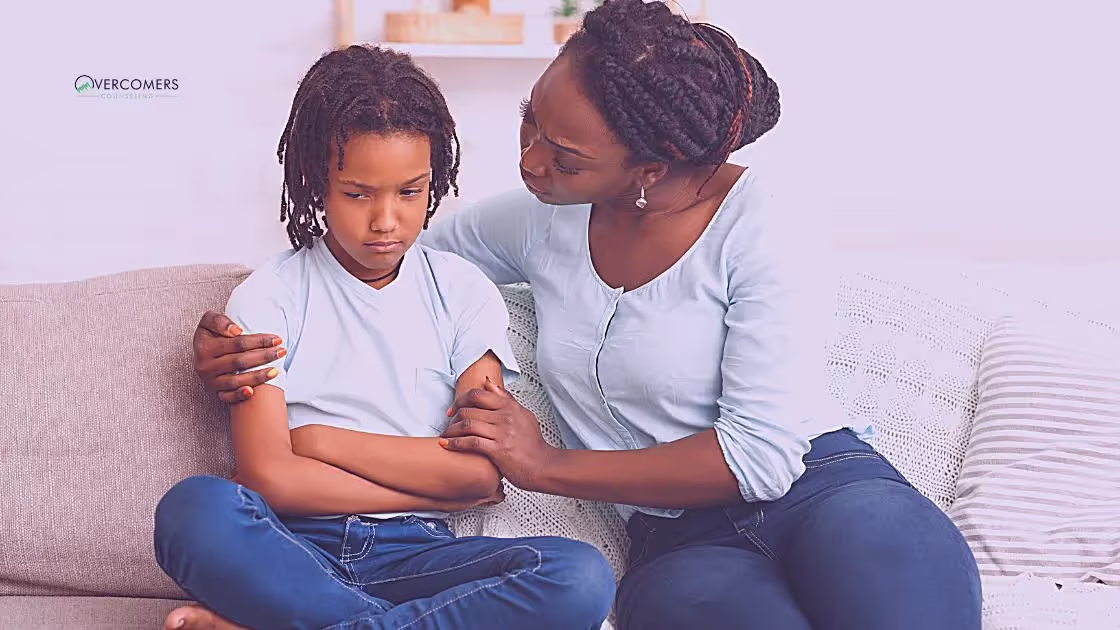
Knowing what to say or do to console a loved one after a loss can be difficult. The most important thing you can do is simply be there and offer your caring...


Knowing what to say or do to console a loved one after a loss can be difficult.
The most important thing you can do is simply be there and offer your caring presence.
Showing physical support for grief is not the only way to help them; you can also support a grieving person through the internet.
For one, you can support a bereaved person online by not tagging them in a photo of the deceased.
Receiving numerous notifications and tags from people can be emotionally draining and exhausting, so try to avoid tagging a grieving person as much as possible.
Also, do not be quick to post a farewell about the deceased immediately after receiving news of their death.
It is not your place to announce a person's death before their family and close friends.
Consider the extent of your closeness with the bereaved or deceased before announcing the death on social media.
Furthermore, spreading false information about a deceased can be detrimental to their reputation and traumatic for their family.
Incorrect information spreads fast; therefore, confirm any information before sharing it on social media.
Continue reading to learn more on how you can support a grieving person through the internet:
One way you can support a grieving person through the internet is by not tagging them when you post a photo of the deceased on your social media.
People who are grieving need not be reminded of their loss, so as much as possible, avoid tagging them in posts that serve as a reminder.
While your intentions may be good, constantly tagging a grieving friend in online posts of their loved one could be challenging for them.
Even though sharing an image or a video that reminds you of the person who died is a way for you to mourn them, it could be harmful or disrespectful to their family as they grieve.
Also, sharing your thoughts or memories of the deceased with them in their private message can be comforting for loved ones.
But being inundated with messages and tags from so many people can be overwhelming.
Furthermore, avoiding tagging a grieving person doesn't mean you can never tag them.
You can tag a grieving person on posts that uplift their spirits and show that you care and support them.
Be respectful and sensitive in your words.
The aim is to offer support, not remind them of their loss.
Another way to support a grieving person through the internet is by not being quick to make a farewell post about the deceased.
It can be really upsetting for the bereaved to learn the news of their loved one via social media, so try as much as possible not to make a farewell post until you are sure those closest to the deceased have been informed.
Some people feel compelled to write farewell messages on the deceased personal page as soon as they learn of their passing, not minding the possibility of ignorance of the news to family members and close friends.
So, if you are privy to the news of the deceased passing and you aren't a close family member, it's not your place to announce it unless you've been asked to do so.
Your silence shows your respect for the family and gives them time to alert all family members about the death personally.
Wait for the family's lead to officially announce the person's death before you make a comment or post about it.
Furthermore, even after you are certain news of the death has spread, you should still consider sticking to a simple comment of condolences on the bereaved's social media page, not a stand-alone post on your page.
One way to support a grieving person through the internet is by desisting from spreading false information.
If you ever decide to post about the news of the death on social media, make sure that whatever information you share is correct, not gossip or hearsay.
Sharing false information can be embarrassing and traumatic for the family or friends of the deceased.
The bereaved should be focused on grieving and not on working to debunk rumors and false news about the deceased.
Also, when you share false information, you lose the trust and respect of your friend.
Due to the stress your information may cause your grieving friend, they may decide to stop being friends with you because they feel like they can't trust your words or depend on you.
Furthermore, before you share any facts, ask yourself if the information is genuine or if you are in the best position to share the information.
Err on the side of caution and do not post anything you have not taken due diligence to verify.

Another way to support a grieving person through the internet is by being considerate and understanding when they refuse to reply to your messages.
Grieving is mentally and emotionally exhausting, and a grieving person may not have the time, energy, or desire to read and respond to posts and messages on social media.
Always try to be considerate and compassionate about what they are going through.
Remember ??? it's not supposed to be about you!
Try to make it known that they are not obliged to respond and can respond when they feel most comfortable.
Also, although receiving messages of condolences may be a huge comfort, it can be overwhelming for the bereaved.
Try to keep your messages short, thoughtful, and straightforward.
Do not bombard them with messages; the aim is to support and care.
Furthermore, when going through the different stages of grief, a grieving person may choose to be distant and stay away from social media and friends.
Understanding when your friend is going through the stages of grief helps you support them better.
One of the ways to support a grieving person through the internet is by offering to connect them with an online support group.
Sometimes helping a grieving friend connect with people with similar experiences can help them on their healing journey.
Support groups can help to grieve persons learn coping skills from others and exchange ideas and emotions for handling difficult grieving stages.
For people who are not comfortable grieving with their family or in front of them, having a safe space to release their emotions is good for their mental health.
Also, not all grief support groups are appropriate for a grieving person, so make it your business to conduct proper research on grief support groups and help select the ones you think would benefit your grieving friend.
Furthermore, do not force your offer on them.
It is possible that your grieving friend to refuses to join a support group.
Try not to make a big deal about it and cause them to feel guilty.
Always remember that as a friend of the bereaved, your job is to provide grief support.
They need your care, kindness, and encouragement.
Be a resource to a grieving friend. While trying to be supportive, give your friend the necessary space.
You can support a grieving person through the internet by not tagging them in a photo of the deceased, by not rushing to make a farewell post on your social media page, by not spreading false information about the dead, by being understanding when they do not reply your messages, and offering to connect them to an online support group.
https://www.health.com/mind-body/grief-support-groups
https://time.com/5118994/advice-for-helping-grieving-friend/
https://mashable.com/article/facebook-etiquette-grief
https://www.funeralbasics.org/death-social-media-10-dos-and-donts-for-social-platforms/
https://www.betterhealth.vic.gov.au/health/servicesandsupport/grief-how-to-support-the-bereaved
https://www.everplans.com/articles/the-unwritten-rules-about-dealing-with-death-on-social-media
Yes. Grief does not follow a timeline, and unresolved grief can resurface months or even years later. Grief counseling can help you process lingering emotions, make sense of your loss, and develop healthy coping strategies—no matter how much time has passed. Many people seek grief and loss counseling when they realize their grief is still affecting their daily life, relationships, or sense of peace.
Grief counseling and bereavement counseling are closely related and often used interchangeably. Both focus on helping individuals process loss and navigate the grieving process. Bereavement counseling typically refers specifically to grief after the death of a loved one, while grief counseling can also address other losses, such as divorce, miscarriage, loss of identity, or major life changes. A grief therapist will tailor support based on your unique experience and needs.
Grief can feel like a huge, overwhelming wave that just won't go away. The goal of counseling isn’t to make the wave disappear, but to teach you how to surf it. Grief counseling focuses on helping you move through the grieving process in a healthy, supported way—without pressure or judgment.
We work together to help you process your emotions, understand the stages of grief, and find a way to honor your loved one while still living your own life. Through grief therapy and bereavement counseling, many people find renewed stability and meaning, even after profound loss.
Grief is a deeply personal journey, and there’s no right or wrong way to do it. It’s a bit like a fingerprint—it's unique to you. You might feel a mix of sadness, anger, guilt, or even relief, and that's all okay. Grief and loss can affect emotions, sleep, focus, and even physical health—and all of these responses are valid.
There's no timeline or checklist for grief, and we want you to know that whatever you're feeling is valid. We provide a safe, non-judgmental space for you to process your emotions. Some people also benefit from grief support groups or additional supportive services alongside individual counseling.
After a loss, it can feel like your whole world has been turned upside down. Counseling helps you find your footing again. Grief counselors help you develop coping strategies, express emotions safely, and rebuild a sense of purpose at your own pace. We believe that healing is possible and that you can find a way to live a full and meaningful life, even in the midst of your pain.