If you're someone who experiences anxiety when flying, you're not alone. While many people feel anxious when they fly, up to 40% of flyers experience some...

If you're someone who experiences anxiety when flying, you're not alone.
While many people feel anxious when they fly, up to 40% of flyers experience some form or another.
While it may not be possible to completely eliminate all anxiety-inducing thoughts and feelings, there are things that can be done to manage them.
Below are some tips on how to deal with flying anxiety.
The first step is to understand the source of your anxiety.
It may be the result of a traumatic experience, such as a bad turbulence encounter or an emergency landing.
Or it could be that you're simply afraid of the unknown.
Regardless of the cause, it's important to understand that your anxiety is real and that it's OK to feel afraid.
Once you've identified the source of your anxiety, you can begin to take steps to cope with it.
If you're worried about turbulence, for example, try to fly during times when bad weather is less likely.
And if you're worried about the unknown, do some research on flying and airplanes before your trip.
One option is to talk to a doctor or therapist about your fears.
This can help you to understand your anxiety and develop coping mechanisms.
A medical professional will take the time to understand your specific situation and offer ideas.
If you decide to see a therapist, they can also provide you with guidance on how to deal with anxiety in general.
There are also many books and online resources that offer tips on how to deal with flight anxiety.
Deep breathing exercises are a great way to calm nerves and ease anxiety.
Practice them before your flight so that you're familiar with the techniques.
Then, when you're feeling anxious during the flight, take some deep breaths and focus on relaxing your body.
You may also want to try other relaxation techniques, such as meditation or progressive muscle relaxation.
Caffeine and alcohol are stimulants that can make anxiety worse.
So, it's best to avoid them before flying.
If you normally drink coffee or tea in the morning, switch to decaf varieties a few days before your flight.
And if you like to have a drink in the evening, have something else instead, such as water or juice.
Sitting in one spot for a long time can make anxiety worse.
So, if you're starting to feel anxious on the plane, get up and walk around.
Go to the bathroom, stretch your legs, or take a lap around the cabin.
If you're worried about feeling anxious on the plane, bring along some distractions.
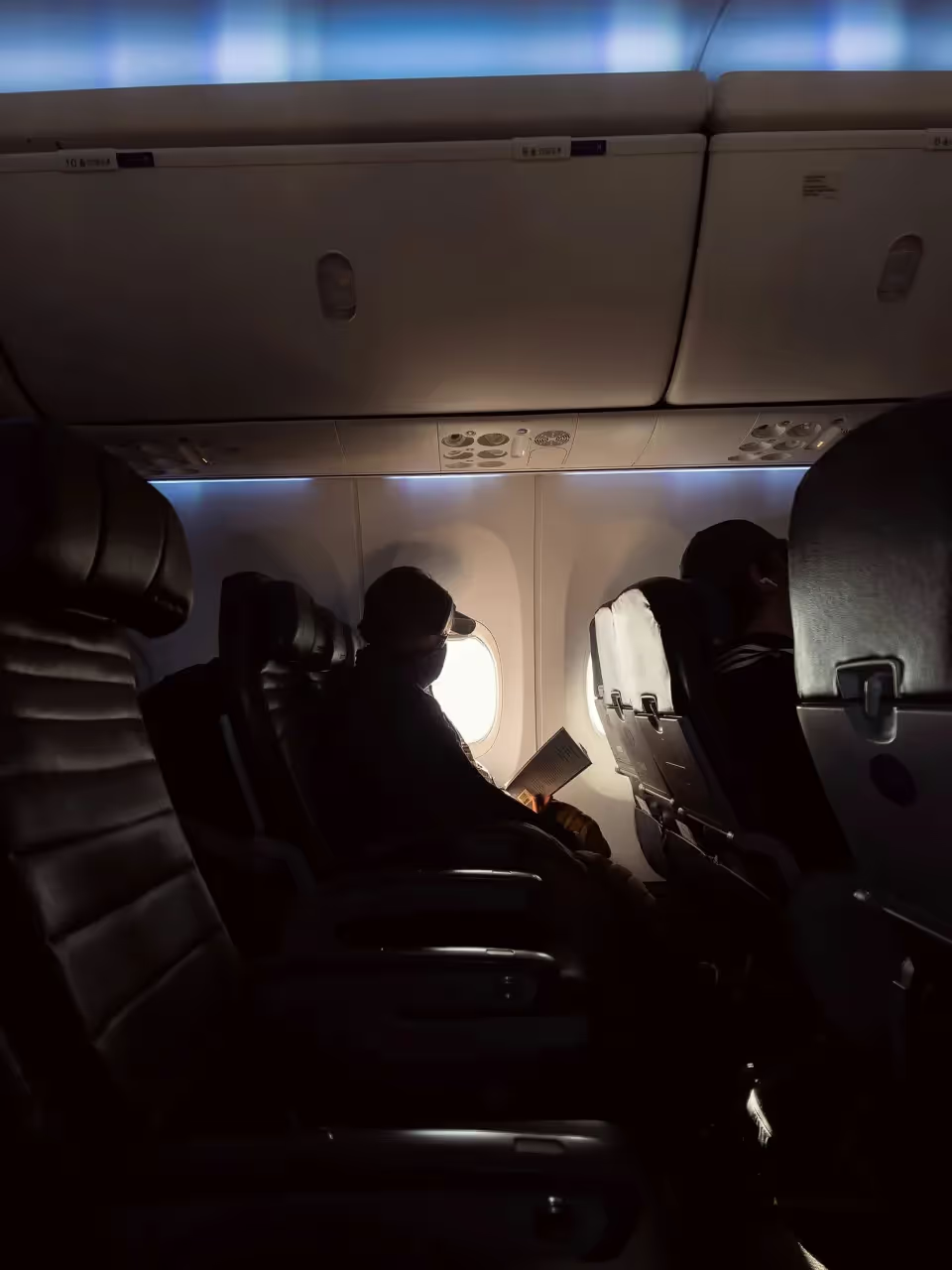
Reading a book or magazine can help take your mind off of your anxiety.
And listening to music or watching a movie can also help to keep you calm.
Some other distractions you can consider while flying are:
People who are anxious about flying can bring along distractions to help ease their anxiety.
This is one way to help deal with flight anxiety.
One key to coping with this anxiety is to make sure that you are well rested before your flight.
Flying when you are tired can magnify the stress of the experience and make it more difficult to cope with.
There are a few things that you can do to make sure that you get a good night's sleep before your flight.
First, avoid drinking caffeine in the afternoon or evening.
Second, establish a bedtime routine that will help you to relax and feel ready for sleep.
Finally, try to avoid watching television or working on your laptop in bed.
Since these types of activities tend to stimulate the brain, you should consider avoiding them if possible.
By following these simple tips, you can help ensure that you'll be well-rested and ready to face your flight ultimately helping you deal with flight anxiety.
Flying can be an anxiety-inducing experience for many people.
But by understanding the source of your anxiety and taking steps to manage it, you can help make the experience more enjoyable.
With some planning and preparation, you can help deal with your flight anxiety and make flying a more enjoyable experience.
Asking if you can get rid of anxiety is like asking if you can get rid of all the clouds in the sky. It's an emotion that's always going to be there to a degree. The goal isn’t to eliminate it entirely but to learn how to manage it so it doesn’t control your life. We'll work together to help you build resilience, giving you the power to face stressful situations without being overwhelmed. You can live a full and vibrant life, even with anxiety, and we’re here to help you take control.