At first, the idea of healing with a support group might seem intimidating. Who wants to share their story with strangers? The reality is that a group of...

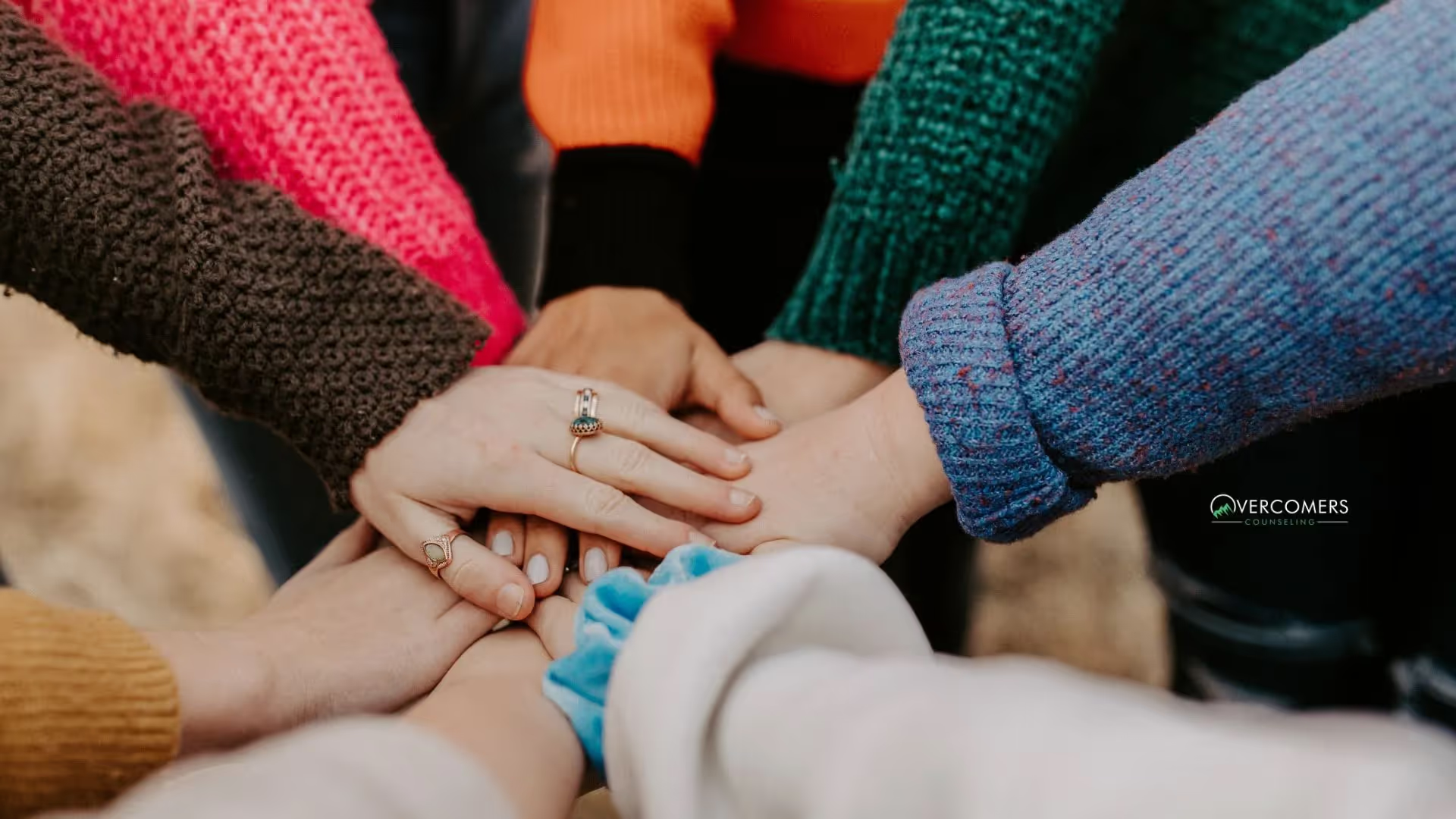
At first, the idea of healing with a support group might seem intimidating.
Who wants to share their story with strangers?
The reality is that a group of people led by a psychologist can be very beneficial.
Support groups focus on how they can help each other and how to live each day feeling better than yesterday.
In the instance that you are suffering from the loss of a loved one, grief support groups can be very beneficial.
One advantage of healing with a support group is that it makes you feel like you are not alone.
People often say that after their first meeting, they no longer feel alone or judged.
They are glad to meet other people in the group who are facing the same problems.
Another advantage of healing with a support group is learning to express yourself by hearing other people's experiences with similar issues.
Being part of a group improves one's communication and social skills.
In time, you gradually regain your confidence in your ability to socialize with others.
Below are more benefits of healing with a support group.
Dealing with a mental health issue or grief can bring about feelings of isolation and loneliness.
This is because it is very easy to feel like no one else can understand your pain or how you are feeling.
It can be helpful on the road to recovery and in dealing with adversity to surround yourself with people you view as equals and with whom you share experiences.
It's fascinating to hear people talk about the first time they attended a support group.
Until they find a support group, they often feel alone in their struggles.
As time goes on, they are taken aback to learn that everyone else in the group has experienced the same or similar problems.
Learning that others share similar worries and are willing to lend support is often a welcome one, especially if it comes as a revelation for the first time in one's life.

You will find that you are able to discuss your emotions more freely after joining a group.
This openness is beneficial to the process of your healing.
The path to recovery begins with an acknowledgment and expression of one's feelings about one's current situation.
Once you know you are not alone and you are in a safe and supportive place, you will feel more comfortable talking to the group about your feelings and experiences.
Having others listen to you without passing judgment and praising your openness and courage can be a very therapeutic and healing experience.
Many people who are part of support groups often express a sense of relief.
Developing meaningful, supportive relationships with other people is an essential part of healing with a support group.

While you certainly stand to gain something from your time spent in a group, you also have the opportunity to aid your fellow members in their development.
People around you will benefit from hearing about your experiences and achievements and also your genuine kindness and compassion towards them.
When you help another person, you'll notice that you feel better, too.
Numerous support groups will state explicitly that helping others is a central component of their mission.
When you reach a point of satisfaction with your own progress, it's time to think about how you can use that feeling to benefit others as well.
That said, you're under no obligation to participate if you don't feel up to it.
However, you can be of service by providing the necessary moral support to those around you.
Helping others will make you feel good about yourself, too.
You might feel the need to isolate yourself from people if you mourn for an extended period of time.
You will have the opportunity to practice your social skills with others in a more effective manner if you get together with other members of the group and discuss.
Therefore, being part of a group enables you to improve your ability to communicate and engage in conversation with other people.
You eventually recover your previous level of ease when interacting with a large group of people.
It is normal for people to withdraw from social situations when they are grieving or suffering from an illness.
Support groups offer a secure environment in which individuals can gradually reacclimate themselves to being in the company of others.
Participating in a group setting allows you to broaden your horizons and appreciate the things in your life that you may take for granted.
Having a regularly scheduled group session gives you something to work into your routine.
Maintaining a regular routine is crucial to your successful rehabilitation.
Through routines, you build yourself while also learning more about your abilities.
By refining your ability to deal with adversity, you can learn more about who you are and how to meet your needs and express your individuality.
You can learn more about what you've been doing wrong and what strategies might help you succeed in the future.
Having a community of people who can lean on and support one another can be a great source of strength, self-assurance, and renewed meaning in life.
The blind spots that may be impeding your ability to overcome your issues can be revealed in support group discussions.
Being part of a group can help you stay on track to achieve your objectives.
You should try out a grief support group if you haven't already.
Inquire with your doctor or other members of more established support groups for suggestions.
It takes time to settle in and feel at home in a new group, so plan to attend at least a few meetings.
Learning how to cope with your problems allows you to understand yourself and your unique characteristics better.
A better understanding of yourself can help you move one step closer to your goals.
Some advantages of healing with a support group are that: you don't feel alone, you can express your feelings, you are given the opportunity to help others, improved social skills, and increased self-understanding.
https://mentalhealth.ie/blog/the-benefits-of-joining-a-support-group-for-your-mental-health
https://highlandspringsclinic.org/the-benefits-and-importance-of-a-support-system/
https://kentuckycounselingcenter.com/advantages-of-support-groups-and-why-you-should-join-one/
http://davidsusman.com/2015/04/23/9-benefits-of-support-groups/
https://bethesdahealth.org/blog/2017/07/21/healing-grief-benefits-support-groups/
https://www.wellnesswecare.com/blog/goal-and-benefits-of-support-group
Yes. Grief does not follow a timeline, and unresolved grief can resurface months or even years later. Grief counseling can help you process lingering emotions, make sense of your loss, and develop healthy coping strategies—no matter how much time has passed. Many people seek grief and loss counseling when they realize their grief is still affecting their daily life, relationships, or sense of peace.
Grief counseling and bereavement counseling are closely related and often used interchangeably. Both focus on helping individuals process loss and navigate the grieving process. Bereavement counseling typically refers specifically to grief after the death of a loved one, while grief counseling can also address other losses, such as divorce, miscarriage, loss of identity, or major life changes. A grief therapist will tailor support based on your unique experience and needs.
Grief can feel like a huge, overwhelming wave that just won't go away. The goal of counseling isn’t to make the wave disappear, but to teach you how to surf it. Grief counseling focuses on helping you move through the grieving process in a healthy, supported way—without pressure or judgment.
We work together to help you process your emotions, understand the stages of grief, and find a way to honor your loved one while still living your own life. Through grief therapy and bereavement counseling, many people find renewed stability and meaning, even after profound loss.
Grief is a deeply personal journey, and there’s no right or wrong way to do it. It’s a bit like a fingerprint—it's unique to you. You might feel a mix of sadness, anger, guilt, or even relief, and that's all okay. Grief and loss can affect emotions, sleep, focus, and even physical health—and all of these responses are valid.
There's no timeline or checklist for grief, and we want you to know that whatever you're feeling is valid. We provide a safe, non-judgmental space for you to process your emotions. Some people also benefit from grief support groups or additional supportive services alongside individual counseling.
After a loss, it can feel like your whole world has been turned upside down. Counseling helps you find your footing again. Grief counselors help you develop coping strategies, express emotions safely, and rebuild a sense of purpose at your own pace. We believe that healing is possible and that you can find a way to live a full and meaningful life, even in the midst of your pain.