The loss of a loved one is the single most devastating experience anyone can have; checking through their personal effects comes in second. This can be...

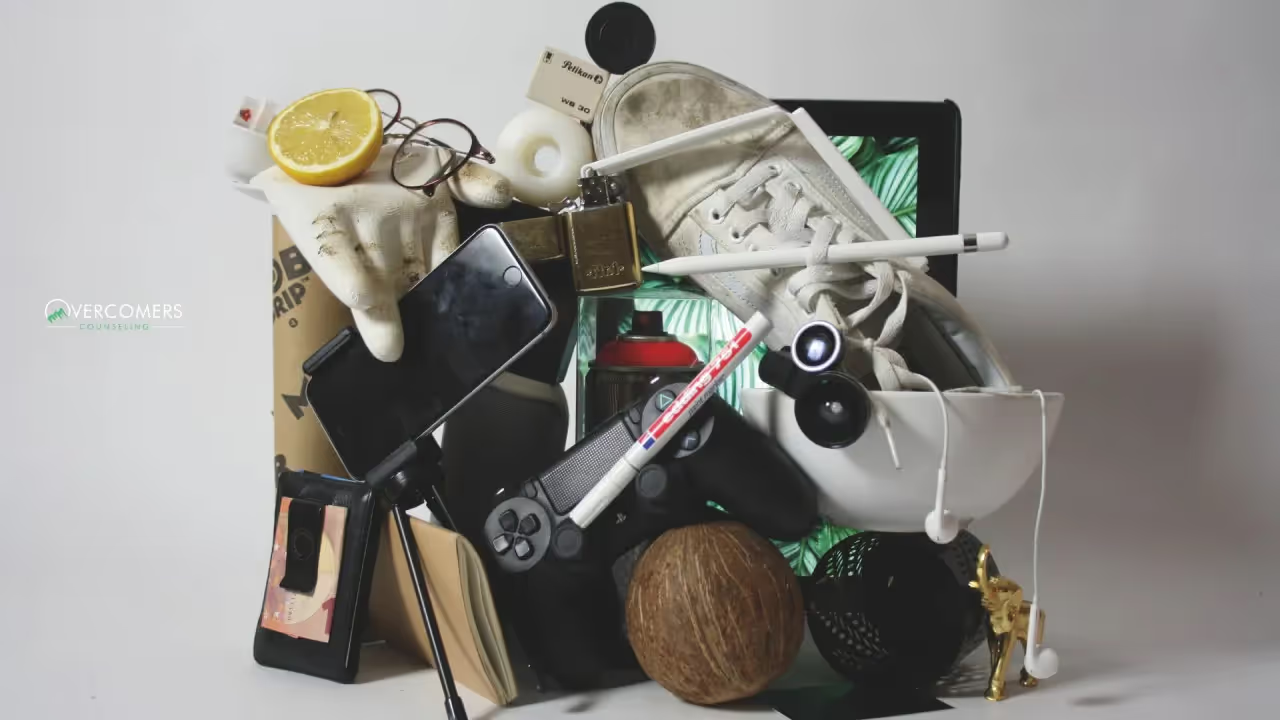
The loss of a loved one is the single most devastating experience anyone can have; checking through their personal effects comes in second. This can be emotionally taxing because you will be going through the deceased person's belongings and likely associating many of them with fond memories. Though trying, it is possible to get through it by mentally preparing yourself, seeking out grief support, and being gentle with yourself. These are some helpful tips to help you deal with sentimental belongings of a loved one. There's no need to jump into anything; take your time and figure out if and when you're ready to make a change. Moving too quickly could leave you feeling overwhelmed and ill-prepared. Always remember that things are simply things. It's inevitable that some things will have to go. Consider selling or donating items. Donating their belongings may be an option if getting rid of them is proving difficult. Below are more details on how to deal with sentimental belongings of a loved one.
Wait until you're ready, but recognize when that time comes. This is not something that can ever be done at a convenient time. However, one cannot deny the existence of a certain inevitable. While we agree there is no ideal time to tackle this task, it can eventually become more challenging the longer you put it off. Put in the time and see if you can honestly answer the question, "Do I have the strength to do this?" How will my health and happiness be affected by waiting? Eventually, when the time comes to deal with sentimental belongings of a loved one, you will feel ready to take the leap.

Always keep in mind that things are just things. If you give in to the temptation to assign significance and worth to each of your possessions, you run the risk of becoming overly preoccupied with the material world. Therefore, give yourself some time and remind yourself that the content is nothing more than that. When you realize this, it will be easier for you to get rid of things that aren't particularly special and that you don't have to keep. Another option is to think about making everything more accessible by curating a collection. Keep special paper mementos in a binder or book for easy and enjoyable access whenever you want to reminisce. If you save piles of papers or numerous pounds of clothing, you'll soon find that you can't manage the collection. The goal is to create an atmosphere that is warm and inviting without going overboard with sentimental objects that can help bring back fond memories. It's possible to limit yourself to just one box of keepsakes. You can take your time browsing the selections without feeling overwhelmed by the quantity.

One tip that can help you deal with sentimental belongings of a loved one is taking photographs of these items. The ability of photographs to preserve memories is one of their most remarkable qualities. Photographs have the ability to preserve both new and old memories, which means they can be passed down from one generation to another. Taking pictures of the things that spark happy memories is a useful way to keep those memories close at hand. This also offers the benefit of minimizing the amount of space that is required for their storage. See to it that the photographs are either filed away in a folder or printed out and arranged in a compact photo album.
Do not take on the burden of going through a loved one's belongings on your own after their death. The great thing about family and friends is that you can always rely on them. After someone's passing, it's not always easy to figure out how to declutter their home. It is perfectly normal to experience feelings such as sadness and grief, as well as a wide range of other feelings at various points throughout the process. Don't make the mistake of thinking you can handle everything by yourself. Talk about how you're feeling, and don't be afraid to ask for assistance when you need it. As you work through the process of letting go of their belongings, try your best to exercise patience and kindness toward yourself.
Letting go of things can be hard, even when we sell or donate them, especially things of sentimental value. The worry that you'll need something you've sold or donated down the road is common. But regrets are unproductive emotions, so guard yourself firmly against them. Admit that you will experience moments of regret for letting go, but remind yourself that you will be fine without it. It's possible to have too much stuff to sell or donate. It can be challenging to figure out the most appropriate recipient for a large number of donations. Also, it can be challenging to understand the best approach for selling a product. You can find a plethora of information online that will help you through the process of making a donation of any kind. If you would rather sell them, consider organizing a yard sale.
Distancing emotionally from a deceased person's possessions can be difficult during a period of intense grief. Some tips to help you deal with sentimental belongings of a loved one are; don't rush into anything; instead, recognize when you're ready to make a change, always keep in mind that things are just things, take pictures, take baby steps, and consider selling and donating things.
https://www.refinery29.com/en-us/lost-loved-one-possessions-guide
https://www.thesimplicityhabit.com/how-to-declutter-personal-belongings-after-death/
https://www.empathy.com/personal-belongings/letting-the-little-things-go
https://www.evrmemories.com/knowing-when-it-s-time-to-get-rid-of-their-things
https://whatsyourgrief.com/sorting-through-belongings/
https://www.gogreendrop.com/blog/how-to-let-go-of-sentimental-items/
Yes. Grief does not follow a timeline, and unresolved grief can resurface months or even years later. Grief counseling can help you process lingering emotions, make sense of your loss, and develop healthy coping strategies—no matter how much time has passed. Many people seek grief and loss counseling when they realize their grief is still affecting their daily life, relationships, or sense of peace.
Grief counseling and bereavement counseling are closely related and often used interchangeably. Both focus on helping individuals process loss and navigate the grieving process. Bereavement counseling typically refers specifically to grief after the death of a loved one, while grief counseling can also address other losses, such as divorce, miscarriage, loss of identity, or major life changes. A grief therapist will tailor support based on your unique experience and needs.
Grief can feel like a huge, overwhelming wave that just won't go away. The goal of counseling isn’t to make the wave disappear, but to teach you how to surf it. Grief counseling focuses on helping you move through the grieving process in a healthy, supported way—without pressure or judgment.
We work together to help you process your emotions, understand the stages of grief, and find a way to honor your loved one while still living your own life. Through grief therapy and bereavement counseling, many people find renewed stability and meaning, even after profound loss.
Grief is a deeply personal journey, and there’s no right or wrong way to do it. It’s a bit like a fingerprint—it's unique to you. You might feel a mix of sadness, anger, guilt, or even relief, and that's all okay. Grief and loss can affect emotions, sleep, focus, and even physical health—and all of these responses are valid.
There's no timeline or checklist for grief, and we want you to know that whatever you're feeling is valid. We provide a safe, non-judgmental space for you to process your emotions. Some people also benefit from grief support groups or additional supportive services alongside individual counseling.
After a loss, it can feel like your whole world has been turned upside down. Counseling helps you find your footing again. Grief counselors help you develop coping strategies, express emotions safely, and rebuild a sense of purpose at your own pace. We believe that healing is possible and that you can find a way to live a full and meaningful life, even in the midst of your pain.