With grief, there is no point at which you will never cry again, although as time goes on, the tears are bittersweet and less common.Losing someone or...


With grief, there is no point at which you will never cry again, although as time goes on, the tears are bittersweet and less common.
Losing someone or something you care about is one of life's greatest challenges.
It is an even harder challenge without grief support.
This is why finding closure is an important part of a journey through grief.
By closure, we don't mean you stop feeling any form of sorrow or pain; closure means living through grief.
It is a point of acceptance that the deceased is gone but not forgotten.
By giving yourself time to mourn, you are giving yourself the time to accept the loss.
From that point, you are gradually finding closure.
One can never go wrong with therapy.
There are different forms or types of therapy that can help you find closure.
It all depends on finding which one suits you best.
Also, holding a memorial service is a step toward finding closure.
It not only helps you celebrate the life of the deceased but also allows you to reflect on their life and death.
Below you can see more details on tips for bereaved people to find closure.
Give yourself time to mourn your loss and adjust to the changes that have occurred in your life.
After suffering a loss, it's important not to rush through the grieving process.
It may take a while before you feel ready to find closure after the death of a loved one.
Just because some people may have moved through grief more quickly than others doesn't mean your own process is sluggish or accelerated.
Don't let other people dictate your emotions.
Some people may try to counsel you to stop thinking about what happened or to stop being sad.
People who try to comfort you out of a sense of altruism are really just awkward around your feelings.
It is not their responsibility to ease your discomfort with your feelings.
It's okay to take as much time as you need to figure out what you're feeling.
This is a step towards finding closure.
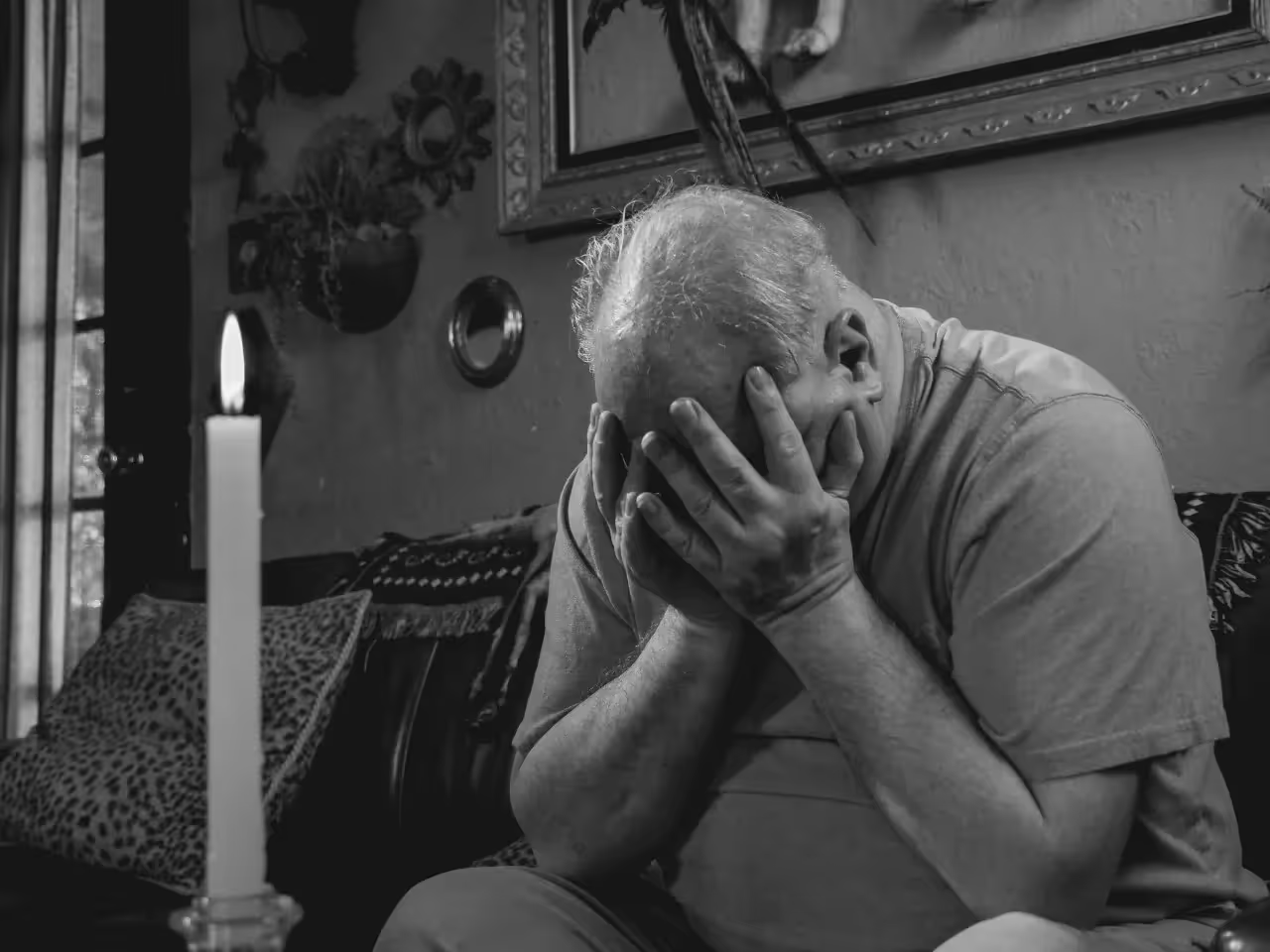
Some people find closure after the death of a loved one through funerals and memorial services; however, it may not be the case for everyone.
One of the most helpful ways you can help yourself and others during the grieving process is to give or hear a eulogy honoring the life of your deceased loved one.
Attending a memorial service for a deceased loved one can help you come to terms with their death.
By performing a funeral, it becomes more real that they are no longer present in this world.
However, for some people, the mourning process does not begin until after the funeral or memorial service.
It's the first day of their new life without their family and friends. It's also the first step in accepting and dealing with their loss.

Holding onto your feelings of resentment and anger can lead to serious problems in your personal and professional relationships.
Find new ways of looking at things if you're having trouble forgiving someone that may or may not have caused the death of your loved one.
Before asking what you might have done better, consider what you did accomplish and give yourself credit for that.
Find a way to move on from the events leading up to your loved one's death and accept that you can't change the outcome if someone else was at fault.
Holding on and not letting go will leave you going on and on in circles and finding no closure.
Some other tips for bereaved people to find closure include
seeking outside support to help.
Recovering from the death of someone is a process that takes time and can benefit from therapeutic intervention.
Counselors, therapists, and support groups are all resources you can turn to when dealing with grief.
Seeking professional help through therapy can be a good first step towards finding closure and moving on with life.
Therapy or counseling for grief can help the person deal with their feelings and begin the healing process.
At any time, you can access high-quality help from any location, thanks to the abundance of available online therapy and counseling services.
Another example of tips for bereaved people to find closure includes reconciling their grief.
To move past our sorrow, we must accept the truth that we must go on living without the deceased.
Finding closure means living, even thriving, rather than merely existing. In most cases, you'll need a few months to a few years of dedicated effort to get there.
You slowly start to see a life that is different from what you had planned, a life in which you can grieve the loss of your old self while honoring the memories you've made of it.
It's important to remember that the adage "time heals all wounds" is just a cliche.
Grief, in fact, respects neither the passage of time nor its reception.
With reconciliation comes a reignited sense of vitality and self-assurance, as well as the ability to reengage in day-to-day life.
Additionally, it is acknowledged that pain and sorrow are difficult yet necessary components of life.
Reconciliation forces you to face the reality that your life is and will remain radically altered in the absence of the deceased.
When you internalize the finality of the loss, you can begin to make peace with your grief.
There is no predetermined point after which you will no longer miss a deceased loved one.
Knowing even the most fundamental facts about the grieving process can make a significant difference in your ability to assist others and yourself in recovering from loss.
There are certain losses with which you will eventually learn to cope and move on, but which will remain a part of your life forever.
Accepting that death is unavoidable and that you must move on with your life, rather than clinging to the past, is an essential component of finding closure.
Finding closure is possible once you begin to accept the loss and receive the necessary grief support.
Some tips for bereaved people to find closure include: allowing time to mourn, holding a memorial service, finding forgiveness, trying therapy, and reconciling your grief.
https://www.joincake.com/blog/closure-after-death/
https://www.brunswickmemorialhome.com/get-closure-death/
https://chopra.com/articles/8-ways-to-heal-your-soul-after-a-loss
Yes. Grief does not follow a timeline, and unresolved grief can resurface months or even years later. Grief counseling can help you process lingering emotions, make sense of your loss, and develop healthy coping strategies—no matter how much time has passed. Many people seek grief and loss counseling when they realize their grief is still affecting their daily life, relationships, or sense of peace.
Grief counseling and bereavement counseling are closely related and often used interchangeably. Both focus on helping individuals process loss and navigate the grieving process. Bereavement counseling typically refers specifically to grief after the death of a loved one, while grief counseling can also address other losses, such as divorce, miscarriage, loss of identity, or major life changes. A grief therapist will tailor support based on your unique experience and needs.
Grief can feel like a huge, overwhelming wave that just won't go away. The goal of counseling isn’t to make the wave disappear, but to teach you how to surf it. Grief counseling focuses on helping you move through the grieving process in a healthy, supported way—without pressure or judgment.
We work together to help you process your emotions, understand the stages of grief, and find a way to honor your loved one while still living your own life. Through grief therapy and bereavement counseling, many people find renewed stability and meaning, even after profound loss.
Grief is a deeply personal journey, and there’s no right or wrong way to do it. It’s a bit like a fingerprint—it's unique to you. You might feel a mix of sadness, anger, guilt, or even relief, and that's all okay. Grief and loss can affect emotions, sleep, focus, and even physical health—and all of these responses are valid.
There's no timeline or checklist for grief, and we want you to know that whatever you're feeling is valid. We provide a safe, non-judgmental space for you to process your emotions. Some people also benefit from grief support groups or additional supportive services alongside individual counseling.
After a loss, it can feel like your whole world has been turned upside down. Counseling helps you find your footing again. Grief counselors help you develop coping strategies, express emotions safely, and rebuild a sense of purpose at your own pace. We believe that healing is possible and that you can find a way to live a full and meaningful life, even in the midst of your pain.