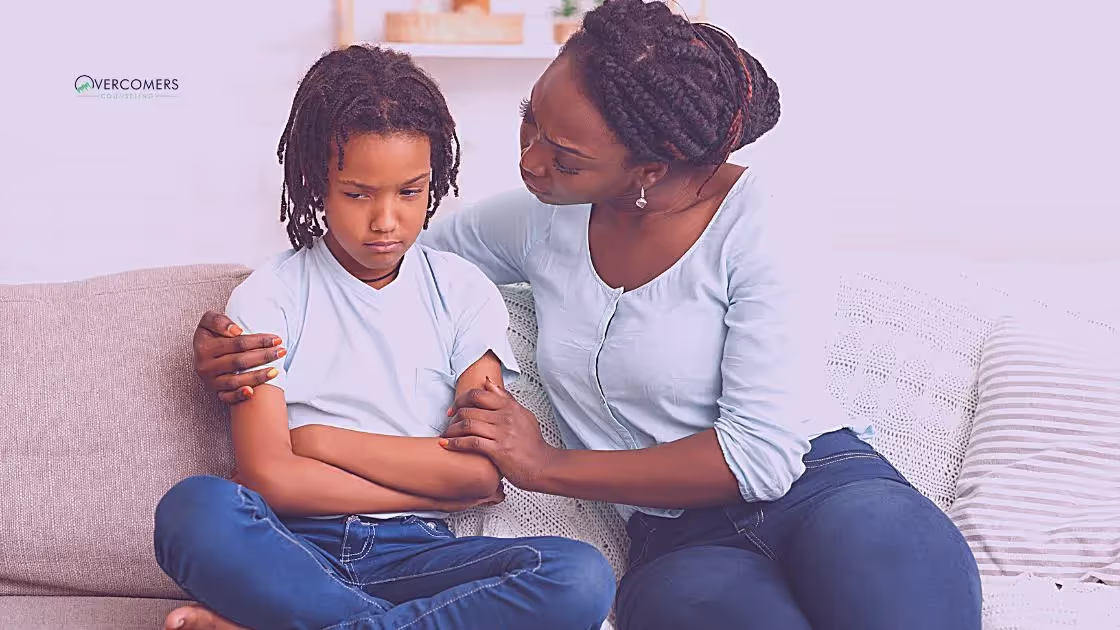
Perhaps you felt a mixture of emotions, including grief, after hearing the news of your cancer diagnosis or that of a loved one.Grief is a normal reaction...


Perhaps you felt a mixture of emotions, including grief, after hearing the news of your cancer diagnosis or that of a loved one.
Grief is a normal reaction to loss or transformation, whether that be the loss of your pre-diagnosis identity or the loss of a physical body part.
As a result of the many lives lost to cancer, both expected and unexpected, grief is an integral part of the cancer experience.
You may be shocked to find that you continue to experience waves of grief, even after a significant amount of time has passed.
If perhaps this is something you are currently feeling, it can benefit you to know about cancer grief.
Grief is not solely about death, and this is the first thing you should know about cancer grief.
Someone or something doesn't have to die to feel a sense of grief; it encompasses all forms of loss.
Also, everyone responds to cancer grief in their own way.
Life-changing experiences associated with cancer can cause numerous reactions in people; it is simply about figuring out methods for moving forward.
Having grief support can make a difference in how you can cope with cancer grief.
Support can come in the form of family and friends, cancer support groups, or even professional therapists.
Subsequent paragraphs detail more information you should know about cancer grief.
Grief is something that most people associate with the loss of a loved one, but it can also be caused by other things.
When you lose something that was significant to you or valuable to you in some way, you will experience a sense of loss known as grief.
Cancer survivors may experience a range of emotions, including grief over the loss of a body part and a sense of health and security.
Others may include the inability to have children, changes to future plans, or financial difficulties as a result of time away from work.
Although with a cancer diagnosis, the first thing that may come to mind is death, cancer grief also encompasses the life-altering changes that will occur.
Fear of the unknown can exacerbate the despair associated with impending change.

One thing you should know about cancer grief is that everyone responds to grief in their own way and in their own time.
Some people take it with courage and hope that everything will be fine, some get frightened about "what next?" and others are somewhere in the middle.
No one has the right to dictate your grieving process or the timing or sequence in which your emotions should surface.
As you process your grief, you may find that spending time alone is comforting.
Your feelings of grief are unique to you, and there is no one correct method for handling them.
What matters is that you grieve in your own way.
Any loss in your life may cause you to grieve.
In some cases, this is the result of your health; sometimes, it's the changes to your life.
Sometimes it's the passing of a loved one.
Although grief is not a disease and does not require treatment, it can be an extremely distressing and difficult time for those who are going through it.
Understanding the typical responses to loss and methods for moving forward can be helpful.
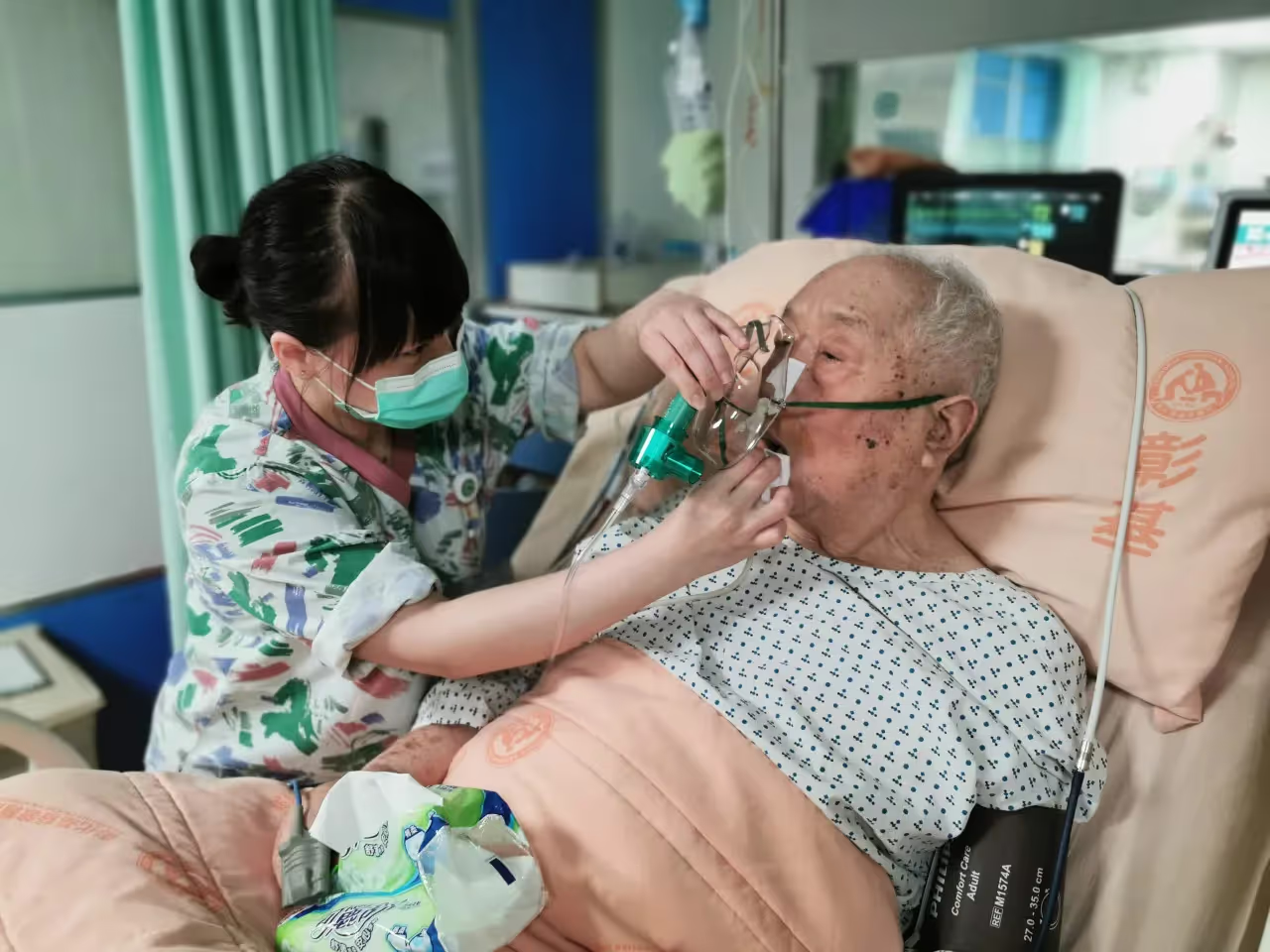
Another thing you should know about cancer grief is that grief support is essential to getting through that period.
Grief is a human experience, and no one is immune to its pain.
Those who have strong social networks in place are less likely to experience negative health effects as a result of grief.
However, professional grief support and counseling may be useful for some bereaved individuals.
Counseling, support, and education are all available through grief support groups for those dealing with the loss of a loved one.
Grieving is a natural human experience, and support groups help make it more manageable.
It's normal to experience a wide range of emotions during times of intense grief, despite the widespread perception that such feelings indicate mental instability.
Attending a support group can help those experiencing grief realize that their feelings are common and that they should be expected to feel hard.
You may find it easier to understand your emotions if you talk them over with a trained counselor.
Cancer grief can be overwhelming.
A variety of emotions are typical components of the grieving process.
In some instances, one may feel hopeful that things may get better.
One may experience unprecedented bouts of melancholy after learning that cancer is terminal.
They might feel the urge to cry frequently and at odd times.
A lack of appetite and low energy levels are common reactions to feeling sad.
When feelings of sadness or despair become overwhelming, depression may set in.
You may experience sadness over being diagnosed with terminal cancer and the prospect of dying soon.
Also, it's common to experience anger.
For instance, you may consider it unfair that such a thing happened to you or a loved one.
These are just some of the many feelings cancer grief can cause affected persons to experience.
Despite the belief that grief is solely an emotional state, the stress and anxiety caused by grief and loss can emerge in a variety of physical manifestations.
The heart can be overworked in extremely stressful situations.
The grief of a profound nature does not induce specific physical symptoms but rather a massive stress response that activates the autonomic nervous system.
Chronic or acute symptoms may result from this stress, but as long as the stress response is activated, cumulative damage to the body may occur.
Importantly, if you experience severe or long-lasting physical effects of grief, you should consult a physician.
Although cancer can leave a feeling of helplessness, your mental and emotional fortitude may surprise you.
Seek assistance if you are having a hard time adjusting or if your grief seems to be getting worse.
A few things you should know about cancer grief are: grief is not limited to the concept of death, grief support is essential, and everyone responds to cancer grief in their own way, there can be physical symptoms, and it can be overwhelming.
https://www.cancervic.org.au/living-with-cancer/grief/grief-overview.html
https://www.cancer.gov/about-cancer/advanced-cancer/feelings
https://www.cancer.net/blog/2020-09/grieving-your-old-life-after-cancer
https://www.cancer.org.nz/cancer/living-with-cancer/talking-about-grief-and-loss/
Yes. Grief does not follow a timeline, and unresolved grief can resurface months or even years later. Grief counseling can help you process lingering emotions, make sense of your loss, and develop healthy coping strategies—no matter how much time has passed. Many people seek grief and loss counseling when they realize their grief is still affecting their daily life, relationships, or sense of peace.
Grief counseling and bereavement counseling are closely related and often used interchangeably. Both focus on helping individuals process loss and navigate the grieving process. Bereavement counseling typically refers specifically to grief after the death of a loved one, while grief counseling can also address other losses, such as divorce, miscarriage, loss of identity, or major life changes. A grief therapist will tailor support based on your unique experience and needs.
Grief can feel like a huge, overwhelming wave that just won't go away. The goal of counseling isn’t to make the wave disappear, but to teach you how to surf it. Grief counseling focuses on helping you move through the grieving process in a healthy, supported way—without pressure or judgment.
We work together to help you process your emotions, understand the stages of grief, and find a way to honor your loved one while still living your own life. Through grief therapy and bereavement counseling, many people find renewed stability and meaning, even after profound loss.
Grief is a deeply personal journey, and there’s no right or wrong way to do it. It’s a bit like a fingerprint—it's unique to you. You might feel a mix of sadness, anger, guilt, or even relief, and that's all okay. Grief and loss can affect emotions, sleep, focus, and even physical health—and all of these responses are valid.
There's no timeline or checklist for grief, and we want you to know that whatever you're feeling is valid. We provide a safe, non-judgmental space for you to process your emotions. Some people also benefit from grief support groups or additional supportive services alongside individual counseling.
After a loss, it can feel like your whole world has been turned upside down. Counseling helps you find your footing again. Grief counselors help you develop coping strategies, express emotions safely, and rebuild a sense of purpose at your own pace. We believe that healing is possible and that you can find a way to live a full and meaningful life, even in the midst of your pain.