Children have different learning styles and capabilities.Some subjects might seem easy for them, while they may struggle with understanding others.Thus, as...

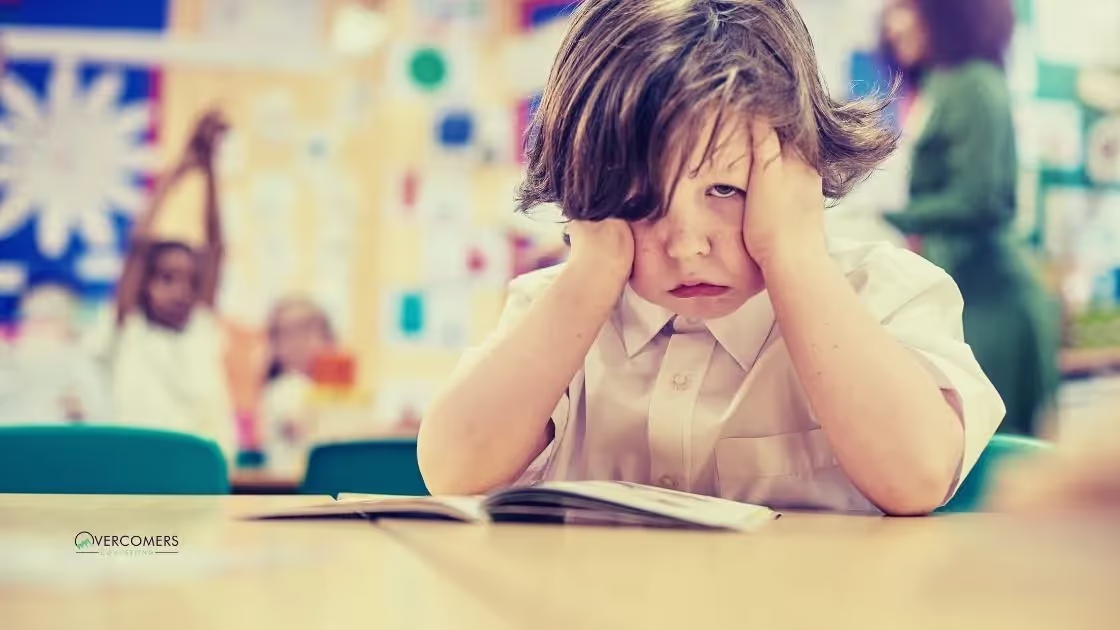
Children have different learning styles and capabilities.Some subjects might seem easy for them, while they may struggle with understanding others.Thus, as parents, it is essential to support your child and assist them when they need help with their academics.To do this, you need to know the signs your child is struggling academically.One sign your child is having difficulty at school is their sudden refusal to attend school.Although some children look forward to going to school every day, others are usually not enthusiastic about it.However, if your child shows a sudden change in attitude, throws tantrums, and becomes angry or irritated every school morning, it may be a cause for concern.It could be their academic struggle, relationships with friends, or both.Also, if your child receives bad grades persistently, it indicates they need help with their academics.Asides from your child's learning capability, other factors can influence their concentration and assimilation in school, resulting in bad grades.Similarly, if your child shows a changed pattern in their sleeping or eating habits, it could be a result of school stress.If this behavior persists, it could cause more damage to their academic performance.Thus, it is important to note changes in your child's behavior about school-related matters to help when needed.Continue this overview to learn signs your child is struggling academically:
Children tend to avoid uncomfortable situations by throwing tantrums or misbehaving.Likewise, one of the signs your child is struggling academically is when there's a drastic change in their attitude concerning school-related matters.When you notice this change, it is essential to have a conversation with your child to pinpoint the problem.Ask them how they are fairing at school if they understand what they are taught, and what they like/dislike about the school.If you are not getting any information from your child, you might want to talk to your child's teacher or contact the school guidance counselor for help.Children refuse to go for various reasons, including bullying, embarrassment, learning disorders, peer relationships, and physical or mental health issues.In the event of any of these reasons, a child's academic performance can degrade.Therefore, as parents, it is vital to take note of your child's attitude towards school and be invested in their school life.
One of the apparent signs your child is struggling academically is poor grades.Children have strong and weak points in school, so it's not unusual for them to get bad grades once in a while.However, if your child's report card is full of red ink or they continuously get low grades, it can indicate that they are struggling academically.To help, you can speak to your child about their grades.Blaming your child or getting angry with them can cause many unnecessary problems that won't help your child's grades.Instead, talk to your child about their difficulties in school and how you can help them improve.After discussing with your child, the next thing to do is to devise a plan.You can choose to get them a lesson teacher at home, reach out to their teachers in school, and also be involved with their homework and learning at home.Spending too much time on TV, poor sleep, or bad nutrition could reduce a child's attention span at school and make it difficult for them to retain information.Learning is a critical process for your child, so you need to develop the proper schedule to assist them.
It may seem pleasing to watch your child dedicate hours to completing their homework; however, when a student takes long hours to complete an assignment, it usually means they are struggling.Kids can get stuck trying to complete assignments due to attentional or learning difficulties.Hence, it is essential to look out for your child's homework pace as it may be one of the signs your child is struggling academically.If your child is finding it difficult to focus on their homework, there are steps you can take as a parent to support your child.You can set aside a separate space for them to do their homework, remove all distractions, create planned breaks, help them divide their task and, more importantly, support and encourage them.Once in a while, you can give them a small treat for diligently finishing their homework.If the problem is with your child's ability to understand the homework, you can get involved with them.Many kids are slow learners, but with their parent's help in understanding their tasks, they will find it easier to complete them.You can also contact your child's teachers to inform them of your child's learning difficulties so they can look out for them.Similarly, endeavor to know your child's homework policy as it may vary among schools or teachers.Some teachers give their students lots of homework requiring long hours and attention; some give out less.Before you worry about your child's homework pace, familiarize yourself with the teacher's homework policy.

Often, parents dismiss a teacher's poor reports on their child because the child behaves differently at home.However, it is essential to note that teachers spend more time with your child in school and notice their academic behavior more than you will.One of the pressing signs your child is struggling academically is if you get bad reports from their teachers.Your child's teacher reporting to you about your child's academic performance and behavior in school is their way of asking you to help address your child's difficulties.Usually, teachers are likely to suggest possible methods to help your child.When they do, it is crucial to take their suggestions seriously and develop a plan of action to help your child.Whatever your child has difficulties with, there is always a way to help.You can consult your child's guidance counselors, enroll them in tutoring programs, and ensure they have a good after-school routine where they get enough studying, fun and rest.It is important to ask for feedback on your child's performances on tests, quizzes, and classwork and their behavior in school from time to time.
The stress and pressure of not keeping up with schoolwork can cause children to have difficulties sleeping or eating.Older children may worry about their grades because of college entries, while the younger ones may stress about not meeting up with their peers.As a parent, you should note any changes in your child's eating or sleeping patterns as it could be one of the signs your child is struggling academically.You can relieve your child's school stress by supporting and encouraging them.Talk to your child about their experience and endeavor to listen and sympathize with them before offering solutions.Also, you can practice relaxation exercises with your child.Muscle relaxation exercises, deep breathing, and yoga are proven ways to help your child relax and increase their sleep quality.Similarly, you can ease up work for them at home.Handling many after-school activities can put a heavy burden on your child and affect their academic progress.Lessen their after-school work, so they have enough time to study, do homework, destress, and connect with the family.
As a parent, noticing your child struggling with academic performance can be overwhelming.However, you can support your child to succeed in school by looking out for signs your child is struggling academically.With the right support and encouragement, your child can get back on track and succeed in school.The signs to look out for include bad grades, trouble sleeping or eating, bad teacher reports, refusal to go to school, and when your child spends excessive time on homework.
https://www.verywellfamily.com/warning-signs-your-child-is-struggling-in-school-2601436
https://www.foxnews.com/health/10-ways-to-help-your-child-handle-school-stress
https://www.pbs.org/parents/thrive/tips-for-helping-your-child-focus-and-concentrate
https://learningworksforkids.com/2018/04/my-child-spends-too-much-time-on-homework/
https://www.waltonacademyk5.com/5-warning-signs-your-child-is-struggling-in-school/
Think of behavioral therapy as the "how-to" guide for your life, while traditional talk therapy is more like a journal. Both are incredibly valuable, but they have different purposes. Talk therapy often focuses on exploring your past and gaining insight into your emotions. Behavioral therapy, on the other hand, is action-oriented and focuses on the present. We'll work on practical skills to change specific behaviors and patterns that are causing problems. We believe in your ability to learn and change, and we’ll give you the roadmap to do it.
We all have habits we’d like to break, whether it's scrolling endlessly on your phone or procrastinating on important tasks. It can feel like your brain is on autopilot, and you're just along for the ride. Behavioral counseling is all about helping you take control of that autopilot. We’ll help you understand the triggers behind your habits and replace them with healthier routines that support your goals. You are not a helpless observer in your own life; you can learn to steer your own ship.