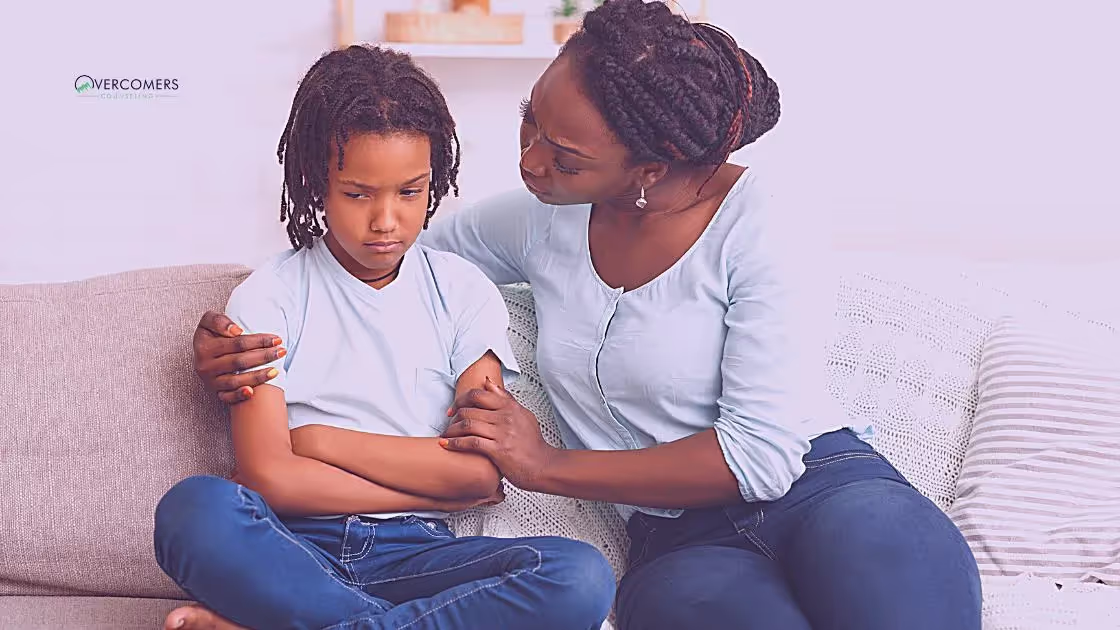
Our loved ones hold a special place in our hearts.When they hurt you with their words or actions, it's easy to be filled with bitterness, anger, and...

Our loved ones hold a special place in our hearts. When they hurt you with their words or actions, it's easy to be filled with bitterness, anger, and resentment toward them. This would definitely put a strain on your relationship with them. Whatever strained relationship you have with your loved ones, you have a choice to forgive them. Forgiving loved ones has numerous benefits. It fosters reconciliation and gives room to develop a healthy relationship. The benefits of forgiving loved ones also include helping you to let go of the hurt and bitterness you must have felt towards them. Forgiveness also helps you to release anxiety and stress. It has immense health benefits. And helps you to grow as an individual. Here are 5 benefits of forgiving loved ones.
One of the benefits of forgiving loved ones is that it opens the room for reconciliation between you. When you've been hurt by your loved ones, your negative feelings towards them are difficult. The awkwardness between you people, especially when there are family gatherings, puts you in an awkward situation. For instance, your family members may not want to bring up their names during conversations with you. They may not also want to invite either of you to family events. At times it may be you or the other person declining an invite because you are aware you will be there. This creates tension in the family and affects other members of your family as well. Rather than have a relationship where everyone is walking on edge around one another, it is better for you to forgive the person. This helps you to reconcile with each other and work towards restoring your relationship. Note that you cannot force reconciliation. You must be sure that the other person is open to reconciliation and committed to restoring the broken relationship. Whichever disposition the person has to reconcile, know that forgiveness on your own part is important. And commit yourself to treating the person with compassion and kindness.
Holding on to the hurt and bitterness you feel as a result of a broken relationship with your loved ones can be difficult. Focusing on the pain they've caused you it makes much more difficult for you to let go. Letting go is one of the benefits of forgiving loved ones. It is also the best decision you can make for yourself when someone hurts you. Holding on to the hurt will do you no good. Letting go can also help you let go of the control the hurt and other negative emotions you feel have over you. It is also you embracing peace, guarding your mental health, and choosing to move forward from the hurt. One important thing you should note is that the situation that has caused you hurt amounts to a crime, letting go doesn't mean you don't report the incident to the Police. It means you're willing to put the incident in the past and move from it. In some cases, you have to examine yourself also to see how you have hurt the other person. You might have done or said hurtful things, affecting your relationship with your loved one. If that's the case, you must also forgive yourself and reach out to the person. Nonetheless, the person is not under any obligation to accept your offer. Forgiving yourself is the most important thing.

Recognizing how important forgiveness is to you and working towards repairing a broken relationship with your loved one helps to reduce anxiety and stress. A strained relationship might be filled with hostility, anger, and bitterness. For instance, the mere mention of the person's name in a discussion would trigger these emotions or make you anxious and stressed when you have to be around each other. Being caught up with these emotions can increase your stress levels. It would also deprive you of so many joys and pleasant memories you can share with the person. One of the benefits of forgiving loved ones is that it reduces your stress levels and removes the anxiety you feel when you think or have to deal with the person. Forgiving your loved ones gives room for hope, compassion, and happiness.
Improved health is one of the major benefits of forgiving loved ones. Holding grudges is harmful to your mental and physical health. The underlying cause of many sicknesses is unforgiveness. When you forgive and free your heart from the hurt, bitterness, and anger you feel towards a person, your body is better for it. Forgiving your loved ones has lasting benefits for your physical and mental health. It lowers the risk of depression, stroke, heart attack, heart disease, high blood pressure, hypertension, and cancer. The happiness you feel from improving your relationship with them also boosts your immune system, helps you to sleep better, and lowers cholesterol levels. In general, forgiving your loved ones helps to improve your overall health.
Forgiving your loved ones when they hurt you helps you grow in many ways. It helps your people management skills and conflict resolution skills. This is because it increases your understanding of people, improves your relationship with others, and makes it easy for you to forgive people when they hurt you. Growth also means that the hurt no longer has power over you. Rather than desiring revenge, you're cool with maintaining a peaceful situation and healthy relationship. Time wasted agonizing over your strained relationship with your loved ones can also be channeled into productive activities. You also get to examine yourself and grow as an individual. Irrespective of the person's disposition, whether they think they have offended you or not, it's a personal decision for you and benefits you.
Forgiveness is intentionally letting go of anger, hurt, and resentment. Reconciliation, letting go easily, reduced anxiety and stress, improved health, and growth as an individual are all benefits of forgiving loved ones.
https://www.healthline.com/health/how-to-forgive#when-to-start
https://georgesjournal.net/2019/08/21/the-benefits-of-forgiveness/
https://www.hopkinsmedicine.org/health/wellness-and-prevention/forgiveness-your-health-depends-on-it
https://www.mayoclinic.org/healthy-lifestyle/adult-health/in-depth/forgiveness/art-20047692
https://www.verywellmind.com/the-benefits-of-forgiveness-3144954
https://www.wisdomtimes.com/blog/health-benefits-of-forgiveness/
Yes. Grief does not follow a timeline, and unresolved grief can resurface months or even years later. Grief counseling can help you process lingering emotions, make sense of your loss, and develop healthy coping strategies—no matter how much time has passed. Many people seek grief and loss counseling when they realize their grief is still affecting their daily life, relationships, or sense of peace.
Grief counseling and bereavement counseling are closely related and often used interchangeably. Both focus on helping individuals process loss and navigate the grieving process. Bereavement counseling typically refers specifically to grief after the death of a loved one, while grief counseling can also address other losses, such as divorce, miscarriage, loss of identity, or major life changes. A grief therapist will tailor support based on your unique experience and needs.
Grief can feel like a huge, overwhelming wave that just won't go away. The goal of counseling isn’t to make the wave disappear, but to teach you how to surf it. Grief counseling focuses on helping you move through the grieving process in a healthy, supported way—without pressure or judgment.
We work together to help you process your emotions, understand the stages of grief, and find a way to honor your loved one while still living your own life. Through grief therapy and bereavement counseling, many people find renewed stability and meaning, even after profound loss.
Grief is a deeply personal journey, and there’s no right or wrong way to do it. It’s a bit like a fingerprint—it's unique to you. You might feel a mix of sadness, anger, guilt, or even relief, and that's all okay. Grief and loss can affect emotions, sleep, focus, and even physical health—and all of these responses are valid.
There's no timeline or checklist for grief, and we want you to know that whatever you're feeling is valid. We provide a safe, non-judgmental space for you to process your emotions. Some people also benefit from grief support groups or additional supportive services alongside individual counseling.
After a loss, it can feel like your whole world has been turned upside down. Counseling helps you find your footing again. Grief counselors help you develop coping strategies, express emotions safely, and rebuild a sense of purpose at your own pace. We believe that healing is possible and that you can find a way to live a full and meaningful life, even in the midst of your pain.