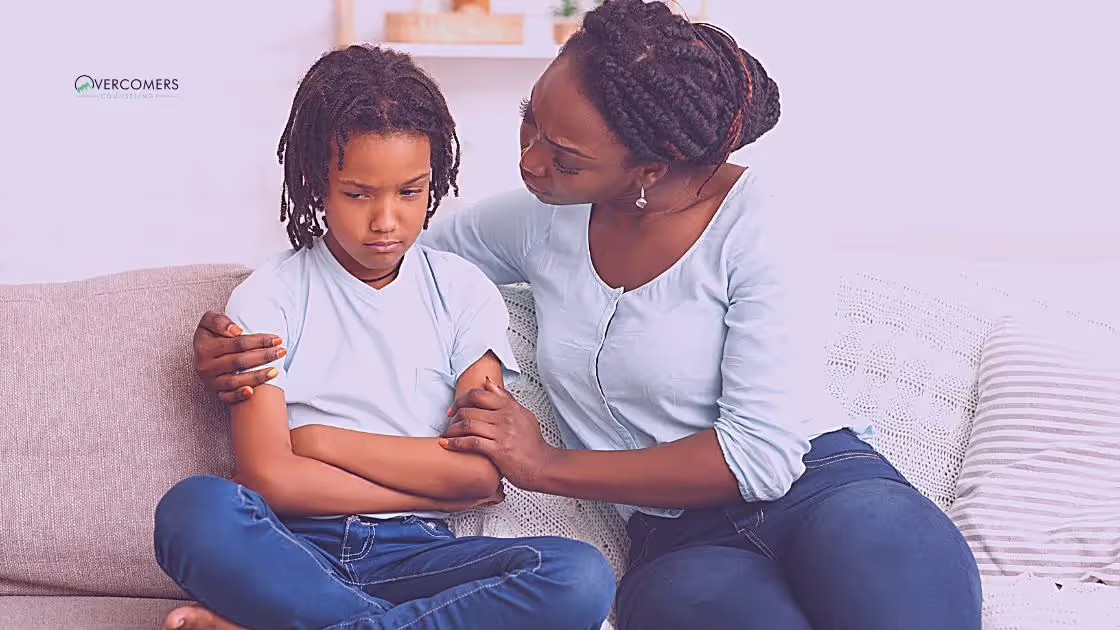
Crying is a universal human experience, one that can be prompted by anything from profound sadness and grief to overwhelming happiness and joy.To what...


Crying is a universal human experience, one that can be prompted by anything from profound sadness and grief to overwhelming happiness and joy.
To what extent, though, does crying help when one has suffered a loss?
To put it simply, it helps greatly.
Not only is crying after a loss a part of therapy for grief, but it also has several benefits that will contribute to your journey of healing and well-being.
One way crying after a loss is beneficial is how crying allows you to express the various emotions of grief.
Crying can help you cope with the overwhelming range of emotions that accompany a loss, including isolation, fear, and others.
One of the great ways to relieve stress and calm yourself is through a good cry.
When someone close to you dies, there are many details to attend to and arrange.
When you cry, the hormones in your body that cause feelings of stress and anxiety are released.
Also, crying after a loss offers a means to cry out for help.
The tears you shed may signal to those around you that you need their comfort as you work through your sorrow.
Read on to learn more details about the benefits of crying after a loss.
The effects of suppressed feelings can be devastating.
It's risky business to try to bottle up your emotions like grief.
Repressing emotions- what psychologists call repressive coping, can be detrimental to one's health, which is why crying serves as an important safety valve.
Mental health conditions like anxiety or health issues like cardiovascular disease and hypertension have been linked to repressive coping strategies.
Tears are a powerful form of communication, especially when words fail to convey how you really feel.
Crying can be a good way to deal with the pain of loss and the emotions that come with it.
When crying is used to let out pent-up feelings and make room for the discovery of healthy ways to cope, you are gradually healing from the pain of loss.

One effective method of self-soothing may be crying.
Researchers have found that crying turns on the parasympathetic nervous system (PNS).
The benefits won't be seen right away, though.
It might take a few minutes of crying before you feel the soothing effects.
This may also be why many people, whether they've lost someone or not, feel better after a good cry.
Also, when people cry because they are upset or sad, their tears contain a number of chemicals and stress hormones.
Researchers think that crying could lower the amount of these chemicals in the body, which could make the person feel less stressed.
Crying helps you calm down when you're feeling very upset and keeps that energy from turning into mental health problems.

Our bodies produce several powerful painkilling chemicals when we experience intense emotional distress, such as the death of a loved one.
Crying after a loss, in a way, dulls the pain.
Bouts of crying have been shown to produce endorphins and the feel-good hormone oxytocin.
The release of these endorphins has been shown to reduce both physical and psychological distress.
When endorphins are released, the body may experience a period of numbness.
Oxytocin can induce feelings of calm and well-being.
This is another instance in which crying is a self-soothing behavior.
One of the ways these chemicals are distributed throughout the body is through tears.
The tears transport the chemicals to the surface of our eyeballs, where they are absorbed and may serve to alleviate emotional pain.
Do you know how good it feels after a good cry?
That's because of this one thing.
Crying is an expression of strong emotion, and releasing pent-up feelings through tears rather than internalization can be therapeutic.
Crying, and especially sobbing, after a loss can be therapeutic for many reasons.
When crying, you take in a several rapid breaths of cool air.
Inhaling cooler air can help regulate and even decrease brain temperature.
When compared to when it is warm, the sensation of having a cool brain is more pleasant to the body and the mind.
This may explain why some people find that crying helps lift their spirits.
Crying is a way to communicate to others that you need support when you are grieving.
This is referred to as an interpersonal benefit.
Crying has been an attachment behavior since you were an infant.
In numerous ways, its purpose is to receive comfort and care from others.
In other words, when times are difficult, it is beneficial to have a strong social support system.
As a display of emotional feelings, it brings you closer to those around you.
Especially in cases of shared grief or any other dreadful event, in the majority of cases, crying in the presence of another person will strengthen your bond.
They are aware that you are feeling sad and make every effort to cheer you up or help you through your grieving.
Sadness and grief are normal human experiences, and a good way to deal with them is to accept and embrace them.
Some ways crying after a loss can benefit you includes: providing a way to express yourself, helping you self-soothe and release stress hormones, tears are like painkillers, improving your mood, and rallying grief support.
https://www.mentalhelp.net/blogs/let-the-tears-flow-crying-is-the-ultimate-healer/
https://www.healthline.com/health/benefits-of-crying
https://www.womenshealthmag.com/health/a38150358/benefits-of-crying/
https://www.webmd.com/balance/features/is-crying-good-for-you
https://www.cnet.com/health/medical/the-benefits-of-crying-and-why-its-good-for-your-health/
Yes. Grief does not follow a timeline, and unresolved grief can resurface months or even years later. Grief counseling can help you process lingering emotions, make sense of your loss, and develop healthy coping strategies—no matter how much time has passed. Many people seek grief and loss counseling when they realize their grief is still affecting their daily life, relationships, or sense of peace.
Grief counseling and bereavement counseling are closely related and often used interchangeably. Both focus on helping individuals process loss and navigate the grieving process. Bereavement counseling typically refers specifically to grief after the death of a loved one, while grief counseling can also address other losses, such as divorce, miscarriage, loss of identity, or major life changes. A grief therapist will tailor support based on your unique experience and needs.
Grief can feel like a huge, overwhelming wave that just won't go away. The goal of counseling isn’t to make the wave disappear, but to teach you how to surf it. Grief counseling focuses on helping you move through the grieving process in a healthy, supported way—without pressure or judgment.
We work together to help you process your emotions, understand the stages of grief, and find a way to honor your loved one while still living your own life. Through grief therapy and bereavement counseling, many people find renewed stability and meaning, even after profound loss.
Grief is a deeply personal journey, and there’s no right or wrong way to do it. It’s a bit like a fingerprint—it's unique to you. You might feel a mix of sadness, anger, guilt, or even relief, and that's all okay. Grief and loss can affect emotions, sleep, focus, and even physical health—and all of these responses are valid.
There's no timeline or checklist for grief, and we want you to know that whatever you're feeling is valid. We provide a safe, non-judgmental space for you to process your emotions. Some people also benefit from grief support groups or additional supportive services alongside individual counseling.
After a loss, it can feel like your whole world has been turned upside down. Counseling helps you find your footing again. Grief counselors help you develop coping strategies, express emotions safely, and rebuild a sense of purpose at your own pace. We believe that healing is possible and that you can find a way to live a full and meaningful life, even in the midst of your pain.