Have you ever questioned if there was any truth to social anxiety therapy and does it work?Social anxiety therapy typically falls into one of two camps:...

Have you ever questioned if there was any truth to social anxiety therapy and does it work?
Social anxiety therapy typically falls into one of two camps: talk therapy and medication. Both have been shown to be effective in the treatment of social anxiety disorder, and in some cases, patients may undergo both forms of treatment simultaneously to receive optimal results.
Given the complex nature of social anxiety disorder and its causes, the appropriate treatment for each case will vary from patient to patient, so it is crucial that those who struggle with social anxiety disorder seek out the guidance of a trained professional who can point them in the right direction.
"I wondered how many people there were in the world who suffered, and continued to suffer, because they could not break out from their own web of shyness and reserve, and in their blindness and folly built up a great distorted wall in front of them that hid the truth." Daphne du Maurier
Talk therapy involves speaking with a trained professional about your condition. Talk therapy typically involves different treatment modalities, such as Cognitive Behavioral Therapy or Exposure Therapy. A full course of therapy typically lasts anywhere from 12 to 16 sessions, although the length of treatment may be extended depending on the severity of an individual's condition.
With talk therapy, trained professionals help those who struggle with social anxiety disorder to reframe and reassess the negative thought patterns that hold them prisoner.
Anxiety disorders are fueled by negative, catastrophizing thoughts, and by challenging these thoughts when they occur, patients begin to rewire their brains to view previously threatening stimuli (such as a fear of social situations) as harmless.
Additionally, Exposure Therapy helps patients get comfortable with uncomfortable situations by gradually exposing them to their fears, little by little. While this form of treatment is highly effective in the negative stimulus at once can have the opposite effect and reinforce an individual's anxiety.
"When all by myself, I can think of all kinds of clever remarks, quick comebacks to what no one said, and flashes of witty sociability with nobody. But all of this vanishes when I face someone in the flesh: I lose my intelligence, I can no longer speak, and after half an hour I just feel tired. Talking to people makes me feel like sleeping. Only my ghostly and imaginary friends, only the conversations I have in my dreams, are genuinely real and substantial." Fernando Pessoa
Although medication is still viewed with skepticism and fear by many, studies have overwhelmingly shown that modern medical therapies for anxiety disorders are both safe and effective. Antidepressant drugs, despite their name, are often the first line of pharmacological therapy for anxiety disorders, and for patients who struggle with both anxiety and depression, they may be an ideal choice of treatment.
While no medication is free of side effects, many patients who begin a course of antidepressants in order to treat their anxiety find that whatever benefits they receive from medication greatly outweigh the negatives.
Not all medication may be appropriate for you, they must be taken only as directed under the supervision of a doctor.
Roughly cognitive behavioral therapy. Studies show 85% of participants drastically improve or recover with cognitive behavioral therapy.
If you need help, please call (719) 345-2424.
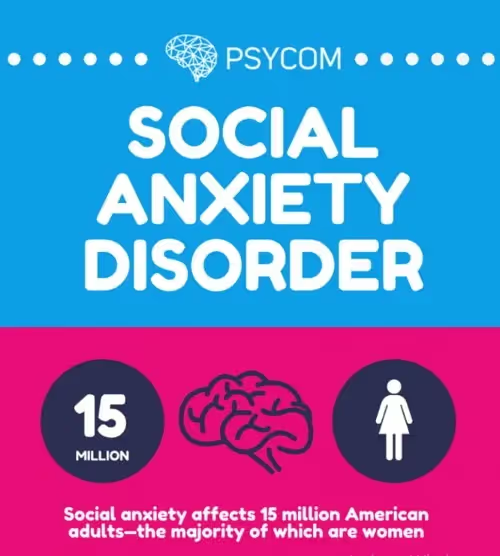
Source: Psycom
The goal of counseling for bipolar disorder isn’t to erase who you are. Instead, it’s about giving you a personalized roadmap to navigate the ups and downs. Bipolar disorder can feel like you're on an emotional rollercoaster that you can't get off of. Counseling helps you learn how to better manage those high-speed turns and sudden drops. We work together to help you regulate your mood, understand your triggers, and find a stable, sustainable pace so you can feel more in control of your journey.
Think of counseling as a vital piece of the puzzle, but not the whole picture. For many people, a comprehensive approach is most effective, much like building a balanced meal. Counseling is a crucial ingredient, helping you develop coping skills and understand your emotions. However, it’s often combined with medication, which can help regulate the brain’s chemistry, and lifestyle changes. We can work with you to find the right combination of tools that help you feel supported and empowered on your journey to wellness.
Sometimes, a mood swing can feel like a brief, passing storm. With bipolar disorder, it’s more like a dramatic shift in climate, from a powerful, sunny day to a long, dark winter. These aren't just normal mood swings; they can be episodes of intense highs (mania) and deep lows (depression) that significantly impact your life. The best way to know for sure is to speak with a professional. We can help you understand your experience, get a clear diagnosis, and develop a personalized plan to take control.
Living with bipolar disorder can feel like you’re trying to balance on a tightrope. It's an incredible challenge. The biggest struggles often involve managing the extreme shifts in mood, which can impact work, relationships, and daily life. You may find yourself with too much energy and feeling on top of the world during a manic episode, followed by a period of crushing depression that makes it difficult to even get out of bed. We can work together to help you navigate these challenges and find a sense of balance.