In the whirlwind of heated debates, relentless news cycles, and the high stakes of political outcomes, a new psychological phenomenon has emerged on the...

In the whirlwind of heated debates, relentless news cycles, and the high stakes of political outcomes, a new psychological phenomenon has emerged on the horizon - Political Election Anxiety.
This intriguing form of stress, often simmering beneath our daily lives, bubbles up during election seasons, casting its shadow over our collective psyche.
It's an emotional rollercoaster, fueled by the uncertainty of election results, concern over societal changes, and the polarized dance of political discourse.
As it grips individuals with a sense of unease and apprehension about the future, Political Election Anxiety has become a fascinating topic of study in the realm of psychology, reflecting the profound impact of politics on our mental well-being.
Political election anxiety refers to the feelings of unease, worry, and fear that arise in relation to political elections.
These feelings can be triggered by various aspects of elections, such as the nature of the campaigns, the potential outcomes, or the effect of the results on one's personal life, community, or nation.
The term is often used to describe the heightened levels of stress and apprehension experienced by individuals during election seasons, particularly when the stakes are perceived to be high.
The impact of political election anxiety varies from individual to individual, depending on their personal circumstances, political beliefs, and coping mechanisms.
Some may experience mild discomfort or restlessness, while others may encounter severe anxiety that can interfere with daily activities.
This form of anxiety can lead to emotional exhaustion, sleep disturbances, strained relationships, and reduced productivity.
Moreover, it can cause individuals to become overly absorbed in election coverage, leading to an unhealthy consumption of news and social media.
In severe cases, it might even deter individuals from participating in the voting process itself, thereby affecting democratic participation.
Visualization: Visualization is a powerful tool that can help calm the mind. Imagine a peaceful place or situation. Close your eyes, take slow, deep breaths, and focus on the image for several minutes.
Progressive Muscle Relaxation: This involves tensing and then relaxing each muscle group in your body. Start from your toes and work your way up to your head. This technique can help you become more aware of physical sensations and achieve a state of deep relaxation.
54321 Method: This grounding exercise involves identifying five things you can see, four things you can touch, three things you can hear, two things you can smell, and one thing you can taste. It's a useful way to reconnect with the present moment when feeling anxious.
Square Breathing: Also known as box breathing, this involves inhaling, holding your breath, exhaling, and pausing for an equal count of 4. This technique can help slow your heart rate and promote calmness.
Mindful Meditation: Spend a few minutes each day focusing on your breath or a word or phrase that helps you relax. Let go of negative thoughts and refocus on your breathing if your mind starts to wander.
Yoga: Regular yoga practice can help reduce stress and anxiety. Choose a style that focuses on slow movements, deep breathing, and mindfulness.
Balanced Diet: Eating a well-balanced diet can help manage anxiety. Limit caffeine and alcohol, which can increase feelings of anxiety and trigger panic attacks.
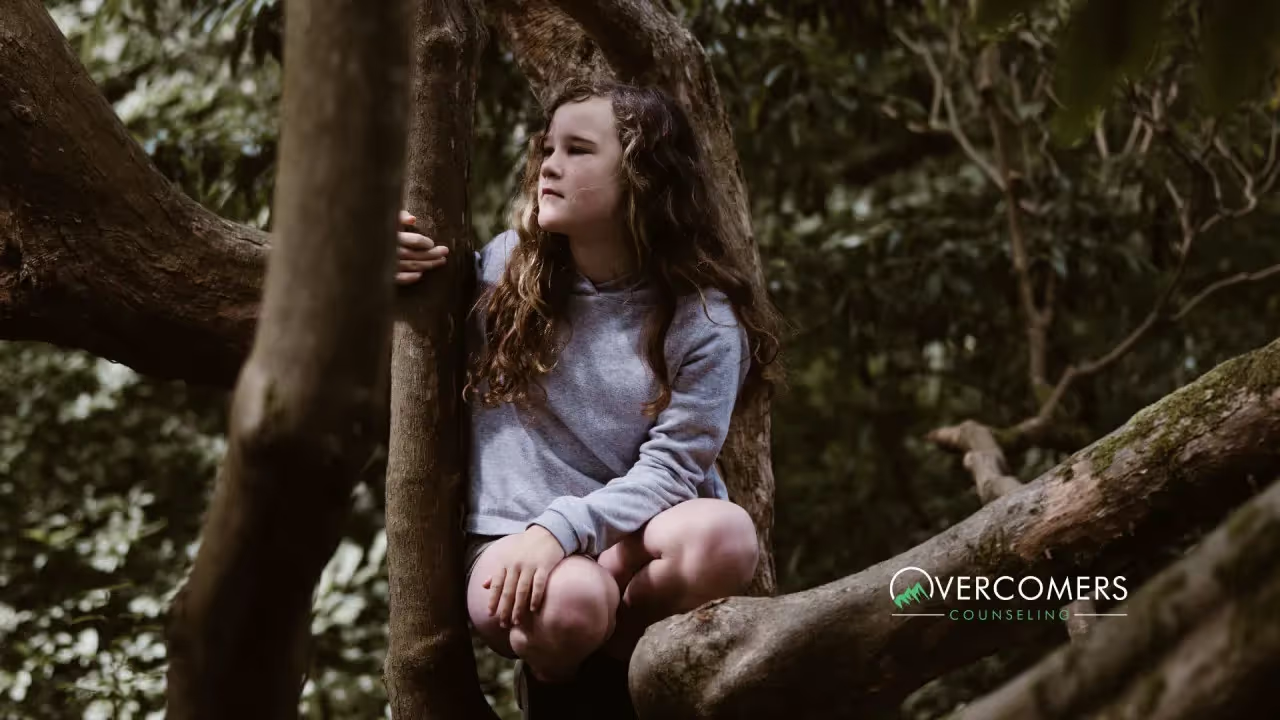
Walking in Nature: Spending time in nature can have a calming effect. Try to incorporate regular walks in a park or forest into your routine.
Grounding Exercises: These exercises can help you refocus on what's happening in the present moment. This could be as simple as feeling the texture of an object or focusing on your breath.
Pursed Lip Breathing: Sit in a comfortable position, and keep your neck and shoulders relaxed. Breathe in through your nose for 2 counts, then breathe out slowly through pursed lips for 4 counts.
Remember, it's important to seek professional help if you're struggling with anxiety. These techniques are aids and not substitutes for professional treatment.
Understanding Political Election Anxiety is crucial in today's polarized political climate.
It's completely normal to feel anxious during these times; you're not alone in this experience.
It's important to manage these feelings effectively, through methods like limiting news consumption, practicing mindfulness, and engaging in healthy discussions.
Don't hesitate to seek professional help if the anxiety becomes overwhelming.
Your mental health is paramount, and there's no shame in reaching out for support.
Continue to stay informed and participate in the political process, but remember to take care of yourself too.
Asking if you can get rid of anxiety is like asking if you can get rid of all the clouds in the sky. It's an emotion that's always going to be there to a degree. The goal isn’t to eliminate it entirely but to learn how to manage it so it doesn’t control your life. We'll work together to help you build resilience, giving you the power to face stressful situations without being overwhelmed. You can live a full and vibrant life, even with anxiety, and we’re here to help you take control.