Anxiety gets a lot of attention and rightfully so.In fact, anxiety is one of the single most common human experiences on the planet.It is so ubiquitous that...

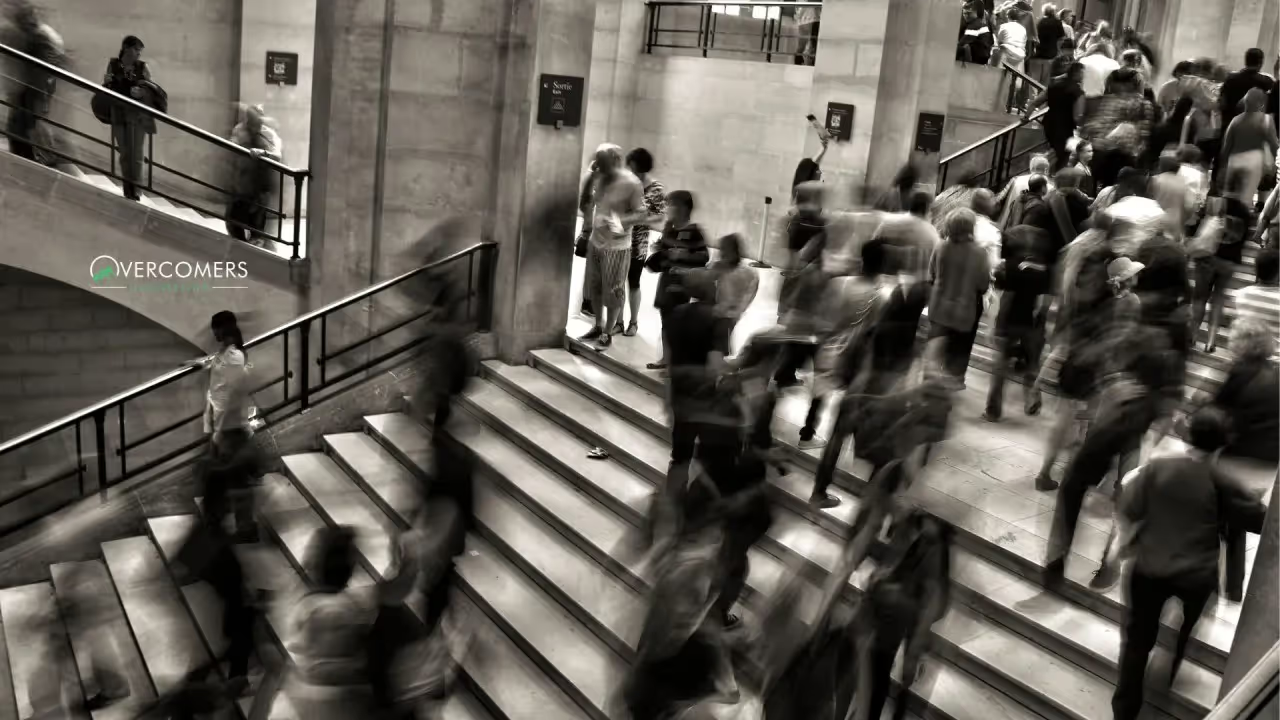
Anxiety gets a lot of attention and rightfully so.
In fact, anxiety is one of the single most common human experiences on the planet.
It is so ubiquitous that the experience of anxiety is found in mythological stories, religious parables, and fairy tales thousands of years old.
Philosophers from the early 19th Century began taking the experience of anxiety extremely seriously.
One of those philosophers actually invented the word angst!
Now, those great thinkers, storytellers, and philosophers did not have access to the highly developed imaging technology that we have today which allows us to look directly at brain activity, but they were able to develop some really great ideas.
That deserves a blog all of its own, today we'll keep it a little more straight and narrow and answer some of the basic questions first.
Now, there are plenty of blogs and videos about how to treat anxiety and tools for decreasing anxiety, which is great.
But, what is anxiety?
What is happening in the brain and body?
Why do some people have more anxiety than others?
These questions don't get quite as much attention.
But today, we're fixing that to help you understand anxiety.
To understand anxiety let's start with a brief overview and then we can get more into the nitty gritty.
Essentially, anxiety is an alarm system.
Which is really fantastic because otherwise none of us would be here today!
Also, the alarm system works extremely effectively, that's partly why we have 8 billion people on the planet right now (and growing).
Think about this scenario- you're alone at night in a big city and you have a choice to take a shortcut through a dark alley or take a longer route where it's more well-lit.
Which path are you going to take?
Chances are, if you start going down the dark alley you'll start to sweat, your heart rate will increase, and your muscles will tense- that's your alarm system telling you to turn back!
So, alarm system, but it's a very, very old alarm system.
It has helped our species survive for hundreds of thousands of years.
It has been literally essential to our survival.
But, because it's so old, it has a hard time being in such a modern and nuanced world.
It's a threat detection response that misinterprets what is actually threatening in today's world.
What did a great job when humans were scrambling to survive against enormous predators, doesn't do so great at recognizing how harmless public speaking is, for instance.
Let's look at how to understand anxiety from the brain's perspective.
Now that we know what anxiety is from a general perspective let's understand anxiety from inside the brain itself.
Anxiety is an alarm system, check, but how does it work?
Imagine you have to stand in front of a group of people and give a speech; you've spoken to people every day of your life, but suddenly the spotlight is on you and everyone is watching.
The fear sets in and you are hyper-aware of the crowd in front of you.
That fear is an impulse sent from your amygdala to the dorsolateral prefrontal cortex.
In other words, fear intrudes on your sense of self.
Your amygdala interprets the event as a threat to your security and alerts your sense of self.
Your prefrontal cortex then begins to imagine all the threats that are possible which then induces more fear and your limbic system starts sending impulses to the body to get you out of that situation.
What you know is a simple interaction with a group of people your brain's very old alarm system interprets as a life-threatening encounter.
This has a direct impact on the physical response which brings us to our next step to understand anxiety.
To understand anxiety we need to understand the bodily response to anxiety.
The brain and body are so intricately intertwined that science is still discovering how interrelated they truly are.
We now understand what's happening in the brain when anxiety hits, so how does that impact the body?
Well, when the limbic system starts sending impulses to "run away" those impulses activate the sympathetic nervous system (SNS).
The SNS turns on certain bodily functions and turns off others to prioritize mobility and focus.
That means your pupils dilate to focus on the physical environment, your digestion turns off, your breathing quickens to flood the body what oxygen, and your muscles tense to increase reaction time.
Your body automatically turns into an enhanced escape artist (or fighting machine) to get you out of the threat as quickly as possible.
How cool is that!
Very cool if your life is in danger, but not so cool if you need to give a public speech.
And now, you understand anxiety in a totally comprehensive manner that not very many people know.
Let's briefly recap.
Your anxiety is actually a built-in alarm system that has helped the human species stay around for billions of years.
Unfortunately, it's a little outdated and often misinterprets events as threatening when in reality we aren't under any threat at all (minus the dark alley analogy).
This alarm system is activated by your amygdala after receiving information from your surroundings
Your amygdala starts turning off certain body functions while turning on others which we know as the fight or flight system.
Some people have a more active amygdala than others which results in more frequent or intense bouts of anxiety.
And that about does it.
You now understand anxiety better than the vast majority of people out there.
Every tool to reduce anxiety is centered on the understanding that you now have.
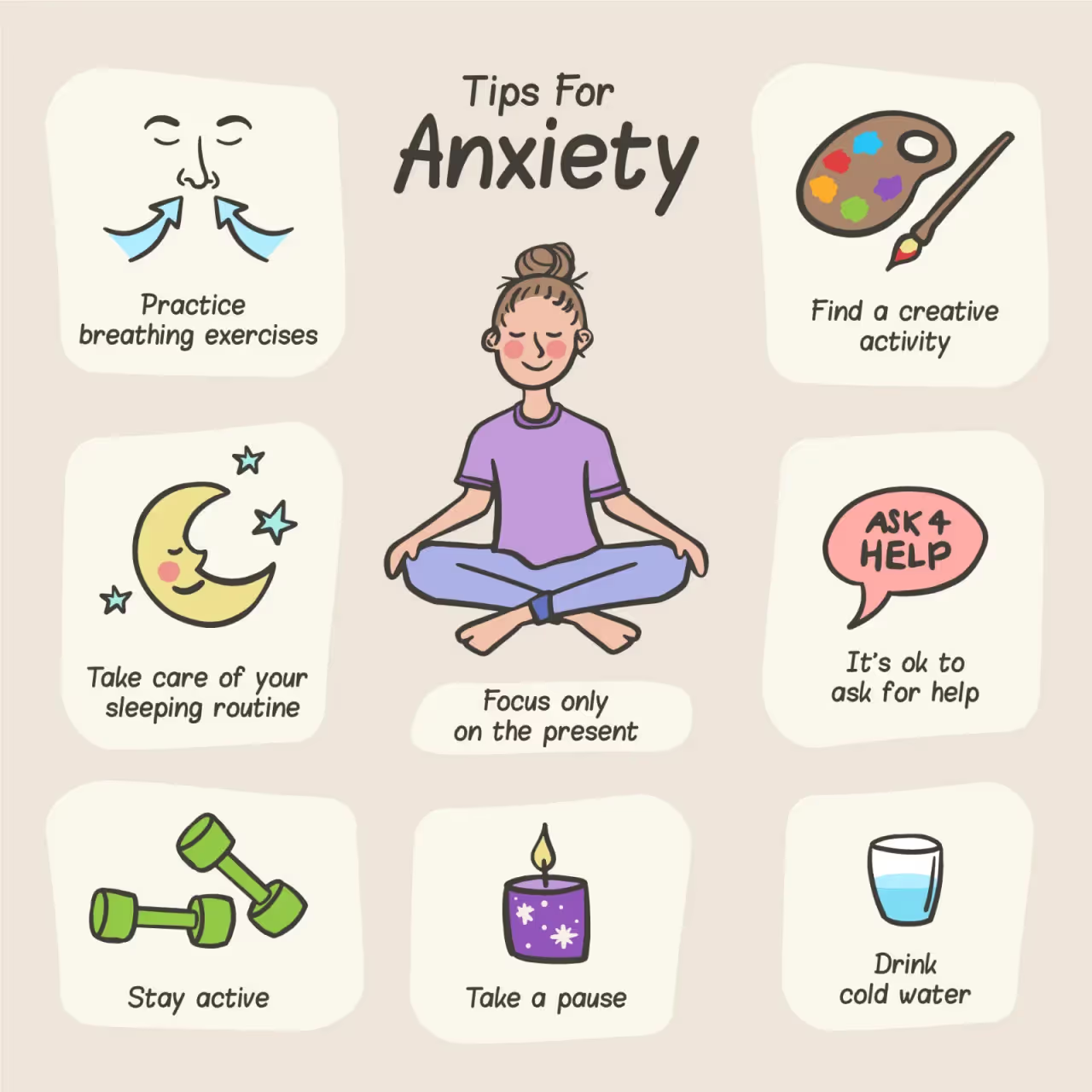
Breathing techniques, mindfulness training, relaxation tools, etc. are all an attempt to disengage the SNS and calm the amygdala down.
When you get anxious all of those tools redirect your focus in order to turn off the SNS and allow the brain to relax so it can be in the situation without feeling the need to fight or flee.
Check out my other blogs to get some ideas on specific tools you can use today to conquer anxiety.
Other activities which have been found helpful in reducing both immediate feelings of anxiousness and long-term anxieties associated with chronic disorders include yoga, journaling, nature walks, art therapy, volunteering, and other low-stress activities. Additionally, developing a healthy lifestyle incorporating adequate sleep, physical activity, and nutritious meals can help reduce overall stress levels.
Yes, Medicaid provides insurance coverage for therapy services specifically designed to help individuals struggling with anxiety, depression, and other mental health conditions.
We all get a little anxious sometimes—like a sudden jolt of nerves before a big presentation or a first date. But if that nervous feeling has become a constant companion, like an uninvited roommate that won’t leave, it might be time for counseling. Signs that it's more than a passing worry include persistent fear, difficulty sleeping, or avoiding situations that trigger your anxiety. We understand how exhausting this can be. We can work together to help you get your living space back.
Think of anxiety counseling as your personal guide to untangling a complicated knot of thoughts and fears. While it may feel impossible right now, you have the power to conquer it. We'll give you a toolkit of strategies, from understanding what's triggering your worry to practicing deep breathing exercises that calm your nervous system. Through counseling, you'll learn to recognize your thought patterns and challenge them, so you can stop being a passenger in your own life and start being the one in the driver’s seat.
The most effective approach to treating anxiety is like finding the perfect pair of shoes—what works for one person might not work for another. However, a common and effective therapy is Cognitive Behavioral Therapy (CBT). It helps you identify negative thought patterns and behaviors that feed your anxiety. We also use other approaches, like exposure therapy, to help you gradually face your fears in a safe and supportive way. We'll help you find the right fit for your unique needs.