What is PTSD?PTSD is short for Post-Traumatic Stress Disorder; a mental health condition that is in response to a traumatic or deeply disturbing event.There...


What is PTSD?
PTSD is short for Post-Traumatic Stress Disorder; a mental health condition that is in response to a traumatic or deeply disturbing event.
There are many causes of PTSD so each treatment plan will look different.
If you suffer from PTSD, you are not alone.
Approximately 3.5 percent of American adults are affected by PTSD every year.
Although it is difficult, you can learn to manage PTSD.
Every case is different, so each individual will have different symptoms.
With that being said, here are some of the most common symptoms people experience when living with PTSD:
-Anxiety/panic attacks
-Flashbacks/intrusive thoughts of the disturbing event
-Sleep disturbances
-Changes in mood or behavior
Many people who have experienced a disturbing event will experience these symptoms after the event occurs.
Although, these symptoms must be present for at least a month after the event occurs and be causing extreme difficulty in the individual's daily life.

As mentioned in the paragraph above, the symptoms of Post-Traumatic Stress Disorder can become incredibly difficult to manage when they are being experienced on a daily basis.
Suffering from panic attacks and mood changes each day is not only stressful mentally and emotionally, but it is also physically exhausting.
Taking care of your body, as well as your mind and spiritual self is one of the most important parts of learning to manage PTSD.
Setting a daily self-care routine for yourself will make a big difference in how you feel while navigating this difficult time.
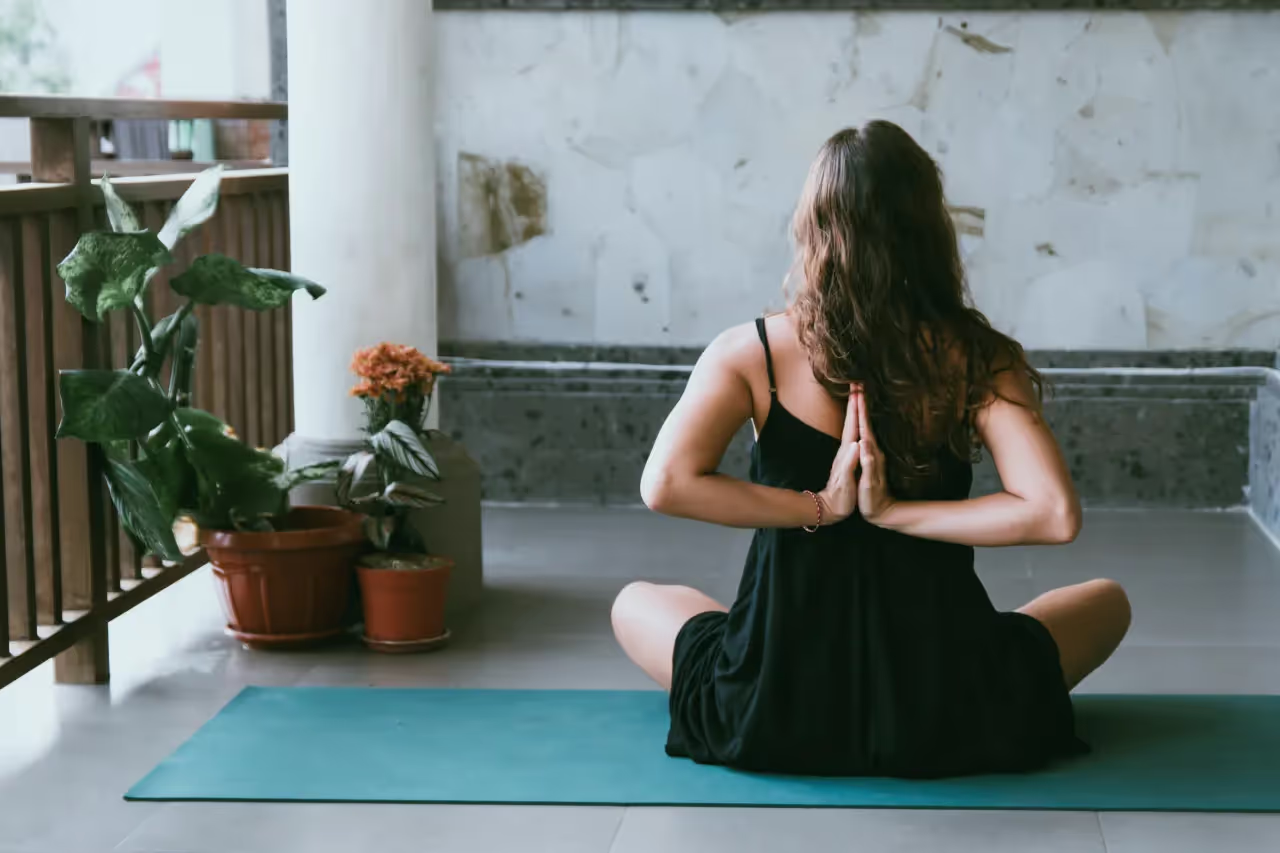
Some things you can add to this routine for your body are exercising, showering, eating healthy meals, and practicing yoga or stretching.
Moving your body can help release excess stress and will help you work through difficult times.
Yoga can act as a tool for your body and your mind, as it is also relaxing and helps relieve stress.
When your body feels better, your mind tends to follow suit.
It is important to note that this routine will take time to get just right, so be patient with yourself and play around with it!
The mind is a very powerful tool, and when exercised a certain way, it can be one of the most helpful tools in managing PTSD.
That's right, your mind needs exercise too!
Some ways you can exercise your mind are by practicing mindfulness, meditating, reading books, or doing a daily puzzle.
Sometimes, mindfulness and meditating can go hand-in-hand.
Mindfulness is the practice of being aware of your thoughts and redirecting them to more positive ones when needed.
This takes practice but can be beneficial in managing PTSD symptoms.
Meditation is also a very powerful tool because when meditating, you are essentially coming out of your thoughts and into the awareness of your body.
This helps you feel more grounded, which in turn, makes you feel more physically and emotionally stable.
You can find hundreds of guided meditations on YouTube for free.
There are guided meditations for many different topics, but finding a stress relief meditation will be beneficial, as managing stress helps manage PTSD.
Check this one out!
For many people, faith or spirituality is something that gives them hope for the future.
If this is something you practice, whether you believe in God, the Universe, or something else, it is important to make time for your spiritual side during this time.
When you live with Post-Traumatic Stress Disorder, oftentimes you may have a lack of hope or faith.
When you connect with your spiritual side, it is common to feel like life has more of a purpose.
That is why adding spiritual practices to your healing journey is so important.
If you don't believe in a certain religion or don't consider yourself to be a spiritual person, try to take time each day to appreciate the beauty of life around you instead of practicing spirituality.
Spending time in nature, or spending time with your friends, family or pets is a great way to appreciate the beauty of life around you.
Keeping a gratitude journal is another way to keep yourself accountable for recognizing the good in your life.
Every evening, write down a minimum of three things that you were grateful for that day.
When you make a conscious effort to be grateful for the things in your life, even if it is something small, it gives you a renewed sense of faith in your future.
Even if you do not consider yourself religious or spiritual, adding these practices to your daily routine will add positivity to your life and will help your further manage PTSD symptoms.

Overall, struggling with and learning to manage PTSD is not an easy task.
When adding these practices mentioned, you will feel less stress and feel that you have more control over your symptoms.
Incorporating wellness activities regarding your mind, body and spiritual self will increase your ability to manage your symptoms.
The mind, body, and spiritual self all work together as a whole, so be sure to add something from each category to your daily self-care routine.
Keeping your body moving, feeding it healthy foods, meditating, and practicing journaling exercises are just a few tools that will help you greatly in the long run.
Post-Traumatic Stress Disorder is incredibly difficult to navigate at times, so be patient with yourself and reach out for help if you need extra support.
Try to take things one day at a time, incorporate these few tools into your daily routine, and most importantly, remember that you are not alone.
What is the goal of trauma counseling?
Trauma can feel like you're carrying a heavy, invisible backpack full of painful memories. It's exhausting, and it can be difficult to move forward. The goal of counseling isn't to get rid of the backpack immediately. It's to help you gently unpack it, one item at a time, so you can feel lighter and more confident. Trauma counseling focuses on helping you safely process traumatic experiences, reduce distressing symptoms, and regain a sense of control over your life.
We believe you have the power to live a life that is full and rewarding, and we are here to help you get there.
How can a counselor help me with my trauma?
Trauma can feel like you're in a movie with a strange script and a set of rules that no one else can see. Counseling helps you find your footing in a world that can feel confusing and overwhelming. A therapist specializing in trauma is trained to help you understand how trauma affects the brain and body, including symptoms related to post-traumatic stress disorder (PTSD).
We work together to help you understand your thoughts and feelings, build a sense of self, and find a sense of peace and security. Trauma therapy may also support healing related to grief, loss, and therapy for grief and trauma that overlap after painful life events.
What are some common signs of trauma?
Trauma is a deeply personal journey, and there’s no right or wrong way to feel. It's a bit like a fingerprint—it's unique to you. You may feel a mix of sadness, anger, guilt, emotional numbness, or even fear. Other signs may include hypervigilance, difficulty sleeping, intrusive memories, avoidance, or feeling disconnected from others—especially after traumatic events.
We want you to know that whatever you're feeling is valid. We provide a safe, non-judgmental space for you to process your emotions. You are not alone in this, and we're here to help you every step of the way.
How do I begin to heal from my trauma?
Healing from trauma can feel like trying to fix a broken bone without a cast—it’s difficult and painful without the right support. We want to be your support. The healing process often begins by recognizing that what you experienced was overwhelming and that your reactions make sense.
We'll work with you to process the past trauma and find new ways to cope with the stress and fear. With the right trauma therapist and mental health care, healing is possible—even after complex trauma.