Identifying family trauma can be a painful process.The effects of trauma manifest in various painful ways. No two people are alike, and therefore the...


Identifying family trauma can be a painful process.
The effects of trauma manifest in various painful ways. No two people are alike, and therefore the effects of trauma on individuals vary.
Trauma affects your everyday life, decisions, relationships, career, and mood. The debilitating effects of trauma can be long term, bubbling beneath the surface or explosive.
Suffering from the effects of trauma can make you feel like you've fallen into a deep, dark hole. Trauma robs you of hope, happiness, and peace of mind.
The effects of trauma manifest in your mental and emotional health, the aging process, sex life, and even intellectual acumen.
What are the signs and symptoms of trauma? How do you identify personal trauma and how it may be manifesting in your life?
Many people suffering from the effects of family trauma are unaware of the source of their experiences. You might ask yourself, "Why do I feel this way?"
Trauma can make you feel a bevy of confusing emotions and physical sensations. As a result, people often seek alternate solutions or cures, instead of choosing professional trauma counseling.
What are some signs and symptoms of suffering the effects of family trauma? How does family trauma manifest itself in everyday life?
Irregular sleep patterns, overwhelming feelings of sadness, regrets about the past, low self-esteem, feelings of inadequacy, change in appetite, lack of motivation, and low libido are just some of the signs of suffering from trauma.
Other symptoms include an inability to laugh, pessimism, social awkwardness, anxiety, lack of concentration, inability to grieve or deal with loss, depression, and feeling trapped by a sense of duty.
If you experience these signs and symptoms in your everyday life, do not ignore them. Seek professional counseling.
Identifying family trauma can mean different things to different people. The effects of family trauma are as individual as the trauma suffered by the individual.
Family trauma can manifest as disappointment or hurt resulting from seemingly minor problems. Or family trauma can manifest as an overwhelming, debilitating feeling that prevents you from functioning.
People suffering from family trauma often live in denial. They are either unable or unwilling to identify it and call it by name.
Others deem the effects of family trauma as being the sign of a 'weak or broken person'. Denial only exaggerates the debilitating effects of family trauma and increases suffering.
A good working definition of family trauma is an overarching feeling of sadness and dejection which causes feelings of pessimism in all areas of life.
Identifying Family Trauma: Dealing with Others
Identifying family trauma is challenging because more often than not, family members do not want to discuss family trauma.
It is difficult to reveal to others when you are suffering, or how exactly you are suffering from family trauma. Especially if they do not know you are suffering.
Family members may dismiss the effects of suffering from family trauma. They may tell you to "solve your own problems" or to simply "get over it."
It can be difficult to reveal your suffering to family members because they may be either directly involved in the source of the trauma, or have direct knowledge of the incident.
Sometimes when you reveal trauma, others will respond by selfishly describing their own instead of really listening. This can be discouraging.
You might feel, "The more my family member talked about herself, the less I wanted to reveal about myself." Suffering the effects of family trauma can be very lonely.
Identifying family trauma is about identifying stressors- incidents that propel you mentally, emotionally, and physically towards suffering.
Have you experienced the death of a family member?
Have you been divorced or endured a separation?
Have you been the victim of infidelity or domestic violence?
Do you have a family member(s) who struggles with alcoholism or substance abuse?
Do you have ongoing strains with children or siblings?
Are you experiencing "empty nest syndrome"?
If you have experienced any of these stressors (or more than one at once), you may be suffering the effects of family trauma. Take your feelings seriously and seek professional counseling.
Everyone likes a certain degree of predictability in their life. We create our comfort zones to help us cope with stress.
Stressors thrust you outside your comfort zone.
Stressors are not just events or incidents. Family members may also be stressors, living breathing stressors who contribute to family trauma.
Identifying family trauma is often about identifying family members.
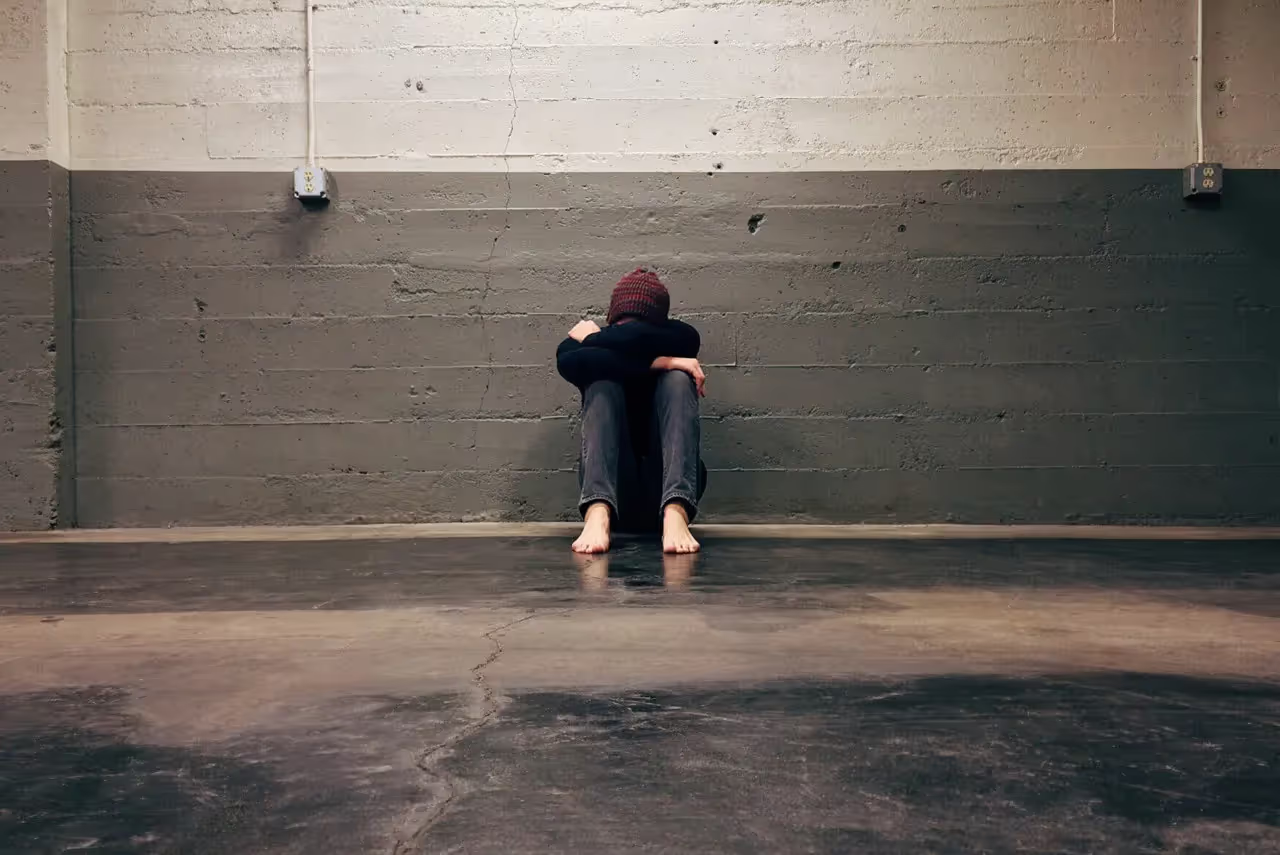
Identifying family trauma is only the first step toward recovery and healing.
People who suffer the effects of family trauma are in a real dilemma.
Do you confide in family members, knowing it may cause further frustration or deeper wounds in already wounded relationships? Or, do you continue to bury feelings in order to maintain the 'one big happy family' façade?
A vital part of recovery and healing is honesty. You need to be honest with as many family members as common sense will allow.
Never submit yourself to further abuse at the hands of a stressor family member. Family trauma is the result of unaddressed emotions, but family members may exploit your vulnerability.
Never feel ashamed of your feelings. And never allow a family member to make you feel ashamed.
You need to be able to trust the person in which you confide. You need to feel safe.
Identifying family trauma is about identifying the correct person in which to confide. If you are suffering from family trauma, seek the help of a professional counselor.
A professional counselor will help you discern when to be vulnerable, and with whom.
Identifying family trauma is a choice. It is a choice that leads to healing and freedom.
Identifying family trauma, like most recovery and personal growth, is a challenge. But it is a worthwhile, life-changing challenge.
Family trauma is a particularly challenging kind of suffering because it involves, you guessed it, family. Get help from a professional counselor, an outside opinion, and an objective viewpoint.
There is healing and forgiveness that can be found for those suffering from family trauma.
https://www.amazon.com/Family-Therapy-Workbook-Interventions-Families/dp/1683732995/ref=sr_1_1?crid=6G2VDIMF1DQP&keywords=family+counseling&qid=1656957485&sprefix=family+counseling%2Caps%2C112&sr=8-1
https://www.amazon.com/Essential-Skills-Family-Therapy-Third/dp/1462533434/ref=sr_1_4?crid=6G2VDIMF1DQP&keywords=family+counseling&qid=1656957545&sprefix=family+counseling%2Caps%2C112&sr=8-4
https://www.amazon.com/Didnt-Start-You-Inherited-Family/dp/1101980389/ref=sr_1_1?crid=2Q55FMWW45CLO&keywords=family+trauma&qid=1656957628&sprefix=family+trauma%2Caps%2C93&sr=8-1
What is the goal of trauma counseling?
Trauma can feel like you're carrying a heavy, invisible backpack full of painful memories. It's exhausting, and it can be difficult to move forward. The goal of counseling isn't to get rid of the backpack immediately. It's to help you gently unpack it, one item at a time, so you can feel lighter and more confident. Trauma counseling focuses on helping you safely process traumatic experiences, reduce distressing symptoms, and regain a sense of control over your life.
We believe you have the power to live a life that is full and rewarding, and we are here to help you get there.
How can a counselor help me with my trauma?
Trauma can feel like you're in a movie with a strange script and a set of rules that no one else can see. Counseling helps you find your footing in a world that can feel confusing and overwhelming. A therapist specializing in trauma is trained to help you understand how trauma affects the brain and body, including symptoms related to post-traumatic stress disorder (PTSD).
We work together to help you understand your thoughts and feelings, build a sense of self, and find a sense of peace and security. Trauma therapy may also support healing related to grief, loss, and therapy for grief and trauma that overlap after painful life events.
What are some common signs of trauma?
Trauma is a deeply personal journey, and there’s no right or wrong way to feel. It's a bit like a fingerprint—it's unique to you. You may feel a mix of sadness, anger, guilt, emotional numbness, or even fear. Other signs may include hypervigilance, difficulty sleeping, intrusive memories, avoidance, or feeling disconnected from others—especially after traumatic events.
We want you to know that whatever you're feeling is valid. We provide a safe, non-judgmental space for you to process your emotions. You are not alone in this, and we're here to help you every step of the way.
How do I begin to heal from my trauma?
Healing from trauma can feel like trying to fix a broken bone without a cast—it’s difficult and painful without the right support. We want to be your support. The healing process often begins by recognizing that what you experienced was overwhelming and that your reactions make sense.
We'll work with you to process the past trauma and find new ways to cope with the stress and fear. With the right trauma therapist and mental health care, healing is possible—even after complex trauma.