If you or someone you love has experienced an overwhelming life event, you may be left wondering: how does this trauma affect the brain?When we go through...

If you or someone you love has experienced an overwhelming life event, you may be left wondering: how does this trauma affect the brain?
When we go through situations that leave us feeling unsafe and powerless, the brain will try to send signals to help us reestablish security, typically through the "flight or fight" response.
However, when such reactions fail, there may be longer-term changes in specific regions of the brain--specifically the amygdala, hippocampus, medial prefrontal cortex, and dysregulated norepinephrine and cortisol levels.
Traumatic events are not black-and-white.
There are many forms of trauma at varying degrees of intensity and long-term impact.
However, there are specific instances that are commonly recognized to be traumatic.
This includes: various forms of abuse and violence such as sexual, domestic, mental/verbal, emotional, and religious; witnessing a violent crime or event; war and terrorism; bodily incapacitation such as losing a limb or becoming paralyzed; being kidnapped or taken hostage.
Some counselors also recognize the traumatic impacts of more common events such as betrayal/infidelity, car accidents, and sudden losses.

Before addressing the specific ways trauma affects the brain, it is important to review the body's "stress response."
The body's nervous system can be divided into the central nervous system (CNS) and peripheral nervous system (PNS).
The PNS is divided further into the autonomic (ANS) and somatic nervous systems. The ANS includes the sympathetic, parasympathetic, and enteric nervous systems which interact with the hypothalamic-pituitary-adrenal (HPA) axis to regulate stress and physiological responses.
This interaction between the CNS, ANS, and HPA is what helps the body maintain homeostasis and adapt to its environment.
They do this through the chemical/hormonal mediators norepinephrine (noradrenaline), epinephrine (adrenaline), and cortisol.
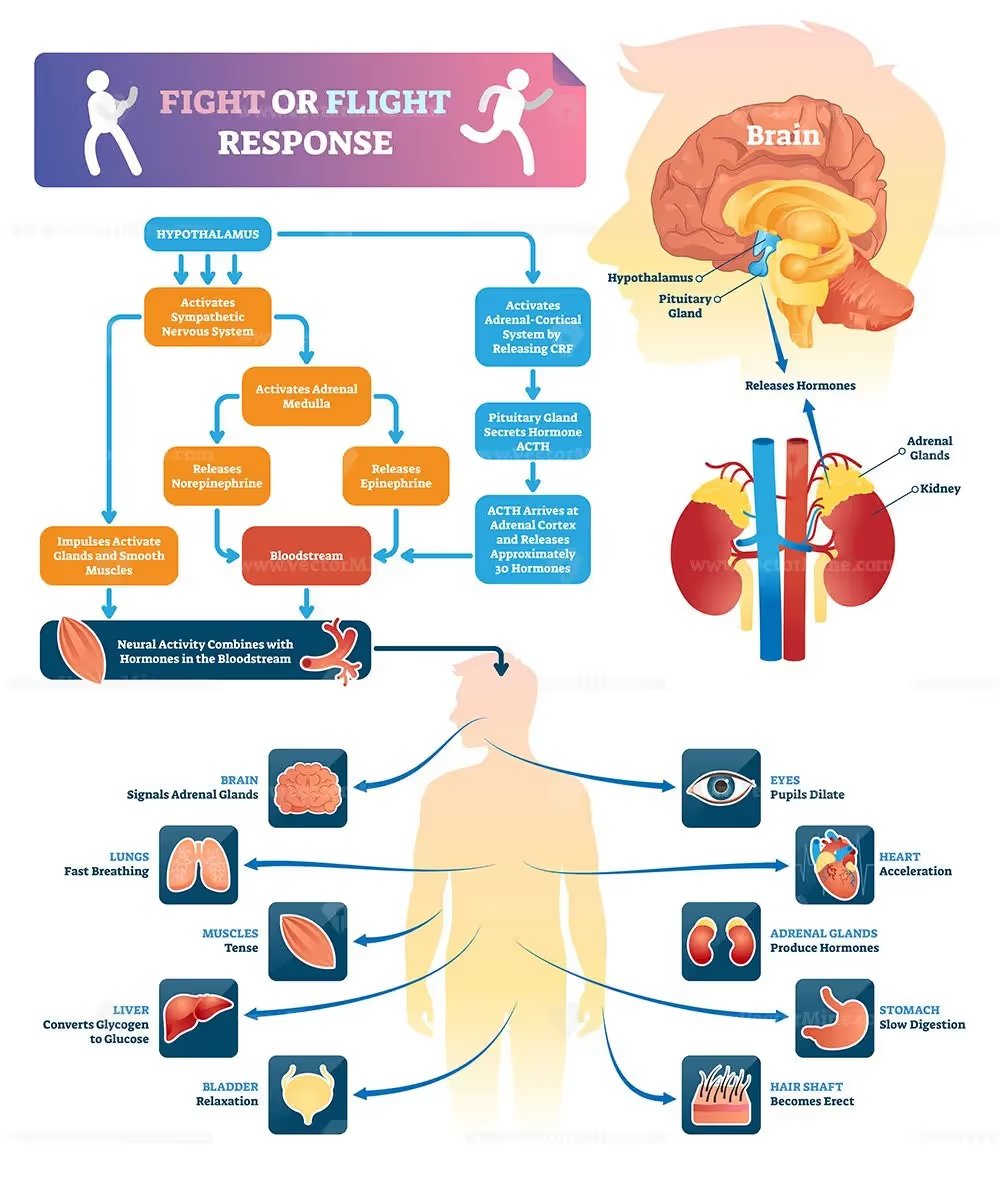
When our brain's perceive a stressor, the CNS signals to the sympathetic nervous system to release norepinephrine and epinephrine into the bloodstream.
These chemicals attach to receptors in bodily tissues and trigger physiological responses intended to aid survival--i.e., to either fight or flee.
Such responses include increased blood pressure and heart rate, dilation of lung bronchi to increase oxygen output, and dilation of pupils.
Finally, after the initial activation of the stress response, the HPA releases cortisol into the bloodstream which triggers the release of stored glucose, fats, and amino acids to be used in sustaining the heightened physiological state.
Ultimately, all these reactions are geared towards survival, and once the threat is dealt with or escaped, the parasympathetic nervous system releases further chemical transmitters to bring the body back into equilibrium.
However, trauma is a unique type of stressor that may result in the PNS not being able to bring about normal homeostasis.
Traumatic events are unique stressors in that they are extreme, cumulative, and/or prolonged. Unlike short-term stressors such as, say, an upcoming exam or speaking in public, the continual or extreme activation of the stress response alters brain "circuits" or neural pathways.
This is particularly true when the trauma occurs in childhood, as the developing mind is highly elastic and susceptible to changes.
It is important to note that "trauma at different stages in life will presumably have different effects on brain development" (Bremner, 2006).
Studies done with animals showed that increased stress in infancy and youth, such as neglect or abuse, decreased cortisol receptors in the hippocampus, hypothalamus, and frontal cortex while increasing the levels of fluid activating the body's "stress response."
This means that trauma increases the brain's rate of reacting to stressors while decreasing its ability to eliminate the threat and/or calm down.
Cortisol plays a critical role not only in reacting to threats, but signaling to the body that the threat has been dealt with and it is okay to calm down.
This hyper-elevation of cortisol during traumatic experiences leads to lower levels in the future, while the brain is also becoming more sensitive to perceived threats and releasing norepinephrine/epinephrine.
Many trauma survivors develop Post-Traumatic Stress Disorder (PTSD).
PTSD manifests in specific symptoms, "including intrusive thoughts, hyperarousal, flashbacks, nightmares, and sleep disturbances, changes in memory and concentration, and startle responses" (Bremner 2006).
Perhaps one of the most well-known symptoms of PTSD is memory alterations.
Victims often experience flashbacks that feel as if they are happening in the present moment, triggering the stress response to a non-existent threat.
According to various studies, it is unclear how the dysfunction with verbal declarative memory is related to trauma, for it seems to vary between single-event trauma and repeated trauma, as well as environmental factors and genetic predispositions.
The brain is a complex organ, constantly adapting to internal and external factors.
The body has a highly regulated "stress response" which activates upon perceiving a stressor, signaling the release of chemicals/neurotransmitters in preparation for fight or flight.
When we experience a traumatic event or series of events, the stress response can become dysregulated, with higher sensitivity to perceived threats, while having lower levels of cortisol to alleviate the stress.
Over time this can develop into PTSD or other cognitive disorders, further impacting memory and emotional regulation.
https://www.zrtlab.com/blog/archive/creating-balance-stress-response/
https://www.ncbi.nlm.nih.gov/pmc/articles/PMC3181836/
https://pubmed.ncbi.nlm.nih.gov/8625891/
What is the goal of trauma counseling?
Trauma can feel like you're carrying a heavy, invisible backpack full of painful memories. It's exhausting, and it can be difficult to move forward. The goal of counseling isn't to get rid of the backpack immediately. It's to help you gently unpack it, one item at a time, so you can feel lighter and more confident. Trauma counseling focuses on helping you safely process traumatic experiences, reduce distressing symptoms, and regain a sense of control over your life.
We believe you have the power to live a life that is full and rewarding, and we are here to help you get there.
How can a counselor help me with my trauma?
Trauma can feel like you're in a movie with a strange script and a set of rules that no one else can see. Counseling helps you find your footing in a world that can feel confusing and overwhelming. A therapist specializing in trauma is trained to help you understand how trauma affects the brain and body, including symptoms related to post-traumatic stress disorder (PTSD).
We work together to help you understand your thoughts and feelings, build a sense of self, and find a sense of peace and security. Trauma therapy may also support healing related to grief, loss, and therapy for grief and trauma that overlap after painful life events.
What are some common signs of trauma?
Trauma is a deeply personal journey, and there’s no right or wrong way to feel. It's a bit like a fingerprint—it's unique to you. You may feel a mix of sadness, anger, guilt, emotional numbness, or even fear. Other signs may include hypervigilance, difficulty sleeping, intrusive memories, avoidance, or feeling disconnected from others—especially after traumatic events.
We want you to know that whatever you're feeling is valid. We provide a safe, non-judgmental space for you to process your emotions. You are not alone in this, and we're here to help you every step of the way.
How do I begin to heal from my trauma?
Healing from trauma can feel like trying to fix a broken bone without a cast—it’s difficult and painful without the right support. We want to be your support. The healing process often begins by recognizing that what you experienced was overwhelming and that your reactions make sense.
We'll work with you to process the past trauma and find new ways to cope with the stress and fear. With the right trauma therapist and mental health care, healing is possible—even after complex trauma.