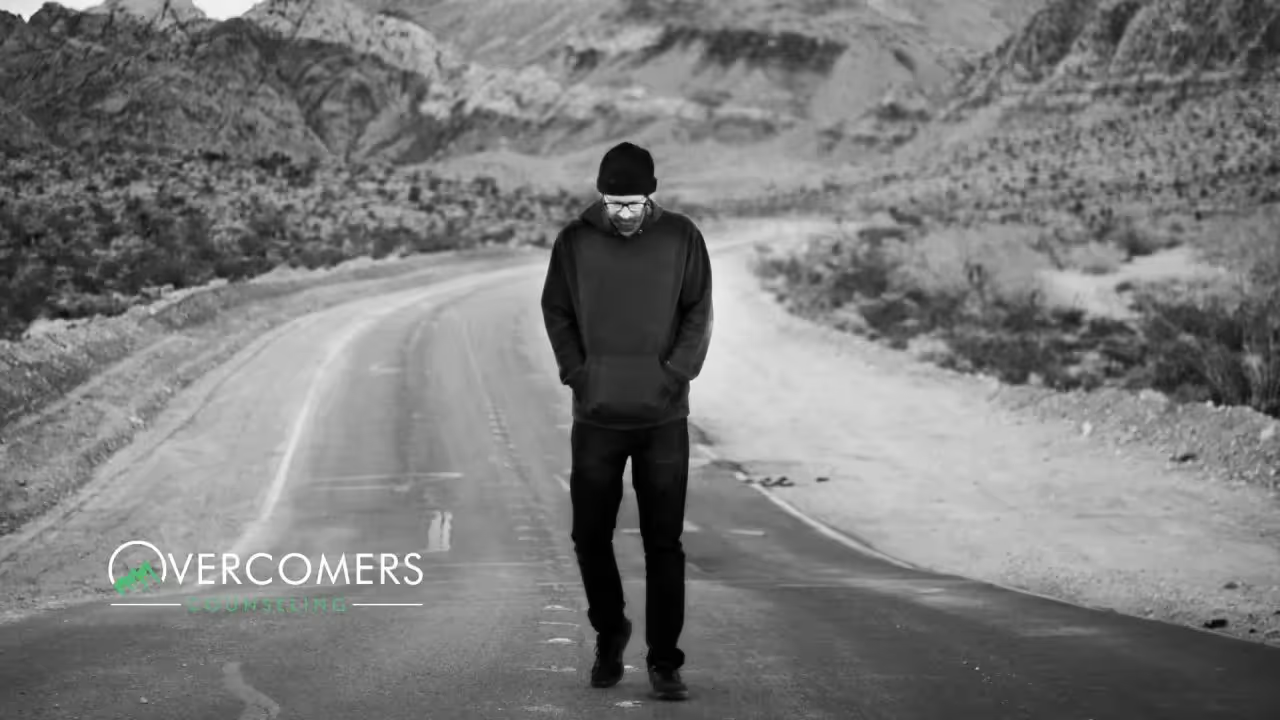
Growing up in a sheltered life involves an upbringing where children are heavily shielded from the harsh realities and challenges of the real world by...


Growing up in a sheltered life involves an upbringing where children are heavily shielded from the harsh realities and challenges of the real world by helicopter parents.
This type of sheltered environment often restricts a sheltered kid's exposure to diverse experiences and the chance to make independent decisions at a young age.
While a sheltered childhood might offer security and comfort, it may result in difficulties later on, such as limited social skills and a struggle with handling adversity or making decisions.
Not everyone who experiences a sheltered life faces these challenges, but many sheltered children find it tough to break free into the real world.
As we explore this subject, we'll discuss strategies for a sheltered person to overcome these limitations and encourage personal growth and resilience.
Overcoming a sheltered childhood first begins with the step of acceptance.
This involves acknowledging that your upbringing, while it may have been overly protective or limiting, has shaped who you are today.
You may need to confront feelings of resentment or confusion about why your parents chose to raise you in such a manner.
For example, consider the story of Jane, who grew up in a strict household where her parents made all the decisions for her.
As an adult, Jane struggled with making choices on her own, often feeling overwhelmed.
It was only when she accepted her past, acknowledging the effects of her sheltered upbringing, that she could begin to address these issues.
She started by taking small steps, like deciding what to cook for dinner or which movie to watch, gradually building up her decision-making skills and confidence.
Acceptance doesn't mean approval of the past, but rather understanding its impact and using this knowledge as a tool for personal growth.
Education is the key that unlocks the door to the vast world beyond the confines of a sheltered existence.
It's more than just textbooks and exams; it's about gaining a comprehensive understanding of our diverse world, its cultures, its history, and its evolving future.
It's about developing critical life skills that empower you to navigate through life's challenges with confidence and resilience.
Imagine being brought up in an isolated bubble, only to step out into a world teeming with diversity, pulsating with change, and echoing with countless different perspectives.
Through education, you learn to understand these perspectives, to appreciate this diversity, and to adapt to this change.
You learn practical skills like managing finances, making healthy choices, and collaborating effectively with others.
This journey of education doesn't merely equip you with knowledge and skills, it transforms you into a well-rounded individual, ready to seize the opportunities life has to offer.
A trained professional can provide a safe space to unpack the complex emotions and experiences associated with growing up in a restrictive environment.
They can help identify patterns of behavior that may have developed as a coping mechanism, and guide you towards healthier responses.
Through therapeutic techniques like Cognitive Behavioral Therapy or Narrative Therapy, individuals can learn to reframe their past experiences and develop new narratives for their future.
The support of a therapist or counselor can be invaluable in addressing feelings of anxiety, inadequacy, or fear that often accompany the transition from a sheltered upbringing to a more independent life.
This process, while challenging, can ultimately lead to a deeper understanding of oneself and foster personal growth and resilience.
Overcoming a sheltered childhood often involves stepping out of comfort zone and seeking new experiences to broaden one's perspective.
A key aspect of this journey is building social skills, which are crucial for improving communication and fostering stronger relationships.
This process can start with active listening, a skill that requires full engagement with the speaker and thoughtful responses.
By practicing empathy, individuals can better understand others' perspectives, fostering deeper connections.
Non-verbal communication, such as maintaining eye contact and using open body language, can also be beneficial in conveying sincerity and interest.
Additionally, learning how to resolve conflicts in a respectful manner can lead to healthier interactions.
These strategies can aid in overcoming the limitations of a sheltered upbringing and pave the way for enriched social interactions.

Fostering independence involves cultivating self-reliance and honing decision-making abilities.
This begins with setting personal goals and developing the discipline to achieve them. By taking responsibility for one's actions and decisions, individuals can learn from their mistakes and successes, which is a key aspect of self-reliance.
Decision-making abilities, on the other hand, can be enhanced by weighing the pros and cons of different options, seeking advice when necessary, and trusting one's instincts.
Learning to say no and setting boundaries is also an important part of becoming independent.
These steps not only promote self-confidence but also empower individuals to take charge of their lives and navigate challenges with resilience and determination.
Tools and Resources
Idea
Therapy and Counseling
Professional help can provide guidance, tools, and strategies to overcome the impacts of a sheltered childhood. outside world
Self-Help Books
Resources like "Daring Greatly" by Brené Brown or "The Gifts of Imperfection" can provide insights into personal growth and overcoming limitations. real life
Support Groups
Connecting with others who have had similar experiences can offer understanding and shared strategies for growth. younger age
Mindfulness Apps
Tools like Headspace or Calm can help manage anxiety and promote self-awareness, important aspects of overcoming a sheltered upbringing. sheltered kid
Journaling
Writing about experiences and emotions can foster self-understanding and healing. unrealistic expectations
Mentorship Programs
Having a mentor can provide guidance and support in navigating new experiences. lack awareness
Volunteer Work
Engaging in community service can broaden horizons and foster empathy and connection. sheltered means
Travel
Exploring different cultures and environments can provide a broader perspective on life. sheltered people
Physical Activity
Regular exercise can reduce stress and improve mental health, supporting overall well-being during this journey. moving forward
Overcoming a sheltered childhood can be a challenging journey, but it's absolutely achievable with the right tools and resources at your disposal.
We've discussed the importance of therapy and counseling, self-help books, support groups, mindfulness apps, online courses, journaling, mentorship programs, volunteer work, travel, and physical activity.
Each of these elements can play a crucial role in broadening your perspectives and enriching your experiences.
For those on this path, remember that every step forward, no matter how small, signifies progress.
Personal growth and resilience are not overnight achievements but lifelong commitments.
Embrace your journey with an open heart and mind, as it's through these challenges that we often discover our true strength and potential.
Childhood trauma can make it difficult to trust people and to form new relationships.
It can also lead to conflict in existing relationships. Trauma can also make it difficult to communicate and be intimate with others.
If you have experienced childhood trauma, it's important to seek help from a therapist or counselor who can help you heal and develop healthy relationships.
The effects of childhood trauma can include anxiety, depression, addiction, and difficulty in relationships.
If you're struggling with the effects of childhood trauma, there are many ways to get help.
You can talk to your partner about what you're going through, seek help from a therapist or counselor, join a support group, or take care of yourself both physically and emotionally.
Inform your therapist immediately if you experience a trigger during a session.
They can help guide you through grounding techniques or adjust the session's focus to ensure you feel supported and safe.
Develop a plan for coping with triggers in social or public settings.
This may include having grounding techniques or a self-soothing toolkit readily available, identifying exit strategies if needed, or enlisting the support of a trusted friend or family member.
While it is natural to want to avoid triggers, complete avoidance is not always possible or productive.
Instead, focus on developing coping strategies and building resilience to help manage triggers when they arise.
The timeline for reducing the impact of triggers varies for each individual and depends on factors such as the nature of the trauma and the progress made in therapy.
Be patient with yourself and work closely with your therapist to monitor your progress.
Yes, it is possible for new triggers to emerge as you delve deeper into your healing journey. Discuss any new triggers with your therapist, who can help you develop strategies for managing them effectively.
Work with your therapist to develop coping strategies and desensitization techniques to help reduce the impact of triggers related to everyday situations or objects.
While some triggers may diminish over time as you progress in therapy and healing, others may persist but become more manageable through the development of coping strategies and increased resilience.