Everyone has experienced anxiety to some degree.Maybe it was before a big play, a presentation at work or school, or meeting someone for the first time.We...

.avif)
Everyone has experienced anxiety to some degree.
Maybe it was before a big play, a presentation at work or school, or meeting someone for the first time.
We know that anxiety is the feeling of worry, usually worrying about something that will be embarrassing and that we don't want to do.
But many times, the anxiety comes when there's nothing to be embarrassed about.
Grocery shopping, running to the store, talking on the phone, asking for directions…
There are a lot of everyday things that provoke anxiety in a lot of us for seemingly no reason at all.
The good news is, there are a lot of tools that can help reduce anxiety, and we'll talk about a couple at the end.
But first I want to discuss how anxiety impacts the body.
For a lot of people, a little anxiety doesn't seem like a big deal.
But, even a little anxiety over a long period can have big effects on the body.
For a lot of other people experiencing high levels of anxiety frequently can lead to other mental health disorders like major depression.
So, whether you have a little anxiety or a lot, it's really important to know how anxiety impacts the body and what you can do about it.
The first stop on how anxiety impacts the body is the brain.
"The brain is the brain though, it's not the body, is it?"
The brain is absolutely part of the body as much as your arms, legs, eyes, hands, and feet are.
We just don't normally think of it that way because we think of "thoughts" or "the mind" when we think of the brain, not the physical brain itself.
But, it is the physical brain that creates our thoughts and that's why it is the best place to start.
Specifically, it starts with our Visual Cortex which is the very back of the brain.
It receives information from our eyes and then sends that information to our Amygdala.
The amygdala is responsible for our fear response, so when we see something that might be threatening our amygdala responds first by blasting fear response.
Then the amygdala communicates with the Dorsal Lateral Pre-frontal Cortex which determines if what we see (or hear) is an actual threat or not.
The problem is the Amygdala does a poor job of knowing if something is a real threat, it acts so quickly that data can't be accurately understood and before we know it, we're anxious.
To make matters worse, all we need to do to activate the Amygdala is think about something threatening (like an upcoming presentation for instance) and it starts firing fear signals right away.
Our brain is so powerful it can stimulate regions of the brain just by thinking about different situations.
This can be helpful because that means we can improve our mood and calm down by choosing relaxing things to think about too; not just fearful things.
So, all those firings are going on in the brain, how does anxiety impact the body from there down?
A whole range of different things happen.
Anxiety impacts the body from your appetite, pupils, skin, muscles, stomach, intestines, adrenal glands…everything!
Once that fear response from the Amygdala is sent it starts a cascade of events in the body.
Our adrenaline kicks on which tells the body to turn on certain functions and turn off a bunch of other functions.
The functions that turn on and off do so to prioritize our ability to fight off danger or escape from danger.
Digestion, appetite, and sexual arousal are the biggest systems that turn off.
Meanwhile, our vision becomes focused, our muscles become tense, our senses increase, our memory is enhanced, our reflexes are quicker, our heart rate increases, and our breathing quickens.
This combination of systems turning off while other systems turn on is what helps maximize our ability to protect ourselves and get to safety.
Of course, this is a generalized breakdown of how anxiety impacts the body, and there are more nuanced things going on that we don't have time to get into here.
But this should paint a pretty good picture of how anxiety impacts the body.
And, all of this happens within seconds, fractions of seconds even!
Luckily there are tools you can use that interrupt this process and shorten its duration allowing you to return to normal quickly and efficiently.
Now you are an expert, more or less, on how anxiety impacts the body- don't forget that includes the brain.
Now that we know what is happening we can turn our attention to what to do about it.
Since all the stuff we covered happens so quickly, the best thing to start with is getting better and better at noticing that you are, in fact, anxious.
The next time you become anxious, take note, tell yourself what is happening in your brain and body and remind yourself that what you are experiencing is how anxiety impacts the body.
That alone will start to reduce your anxiety.
Take note each time you become anxious because after a little while you'll start to notice patterns of when you become anxious and you can narrow down the specific cause.
Once the specific trigger becomes known, then you can begin addressing the trigger itself, and in many cases that insight is enough to eliminate the trigger altogether.
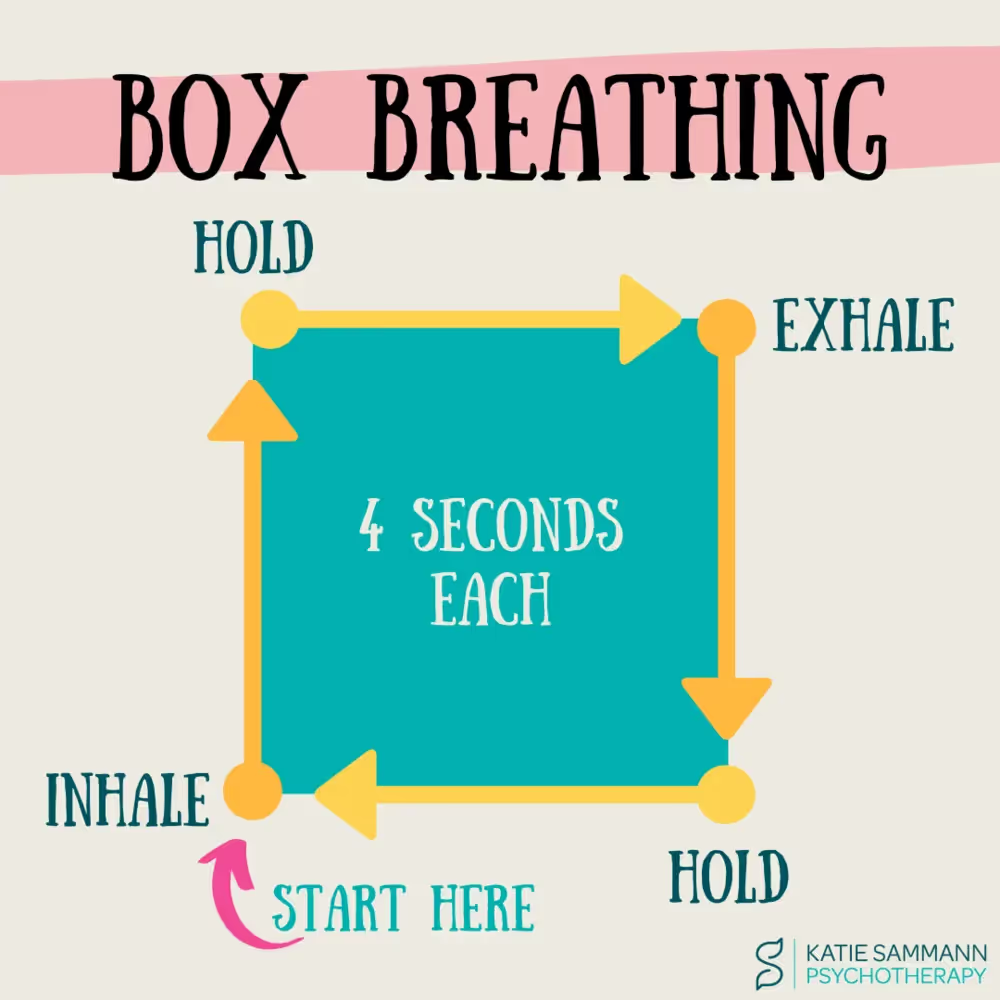
But, if it isn't enough then here is a breathing tool you can use immediately to reset your nervous system, it's called the physiological sigh.
It's that simple.
The sharp inhales inflates your lungs maximizing oxygen intake, and the long exhale slows your heartbeat sending signals that you are safe and that it is okay to relax.
It's the simplest most effective way to decrease anxiety, it just takes consistency.
Anxiety impacts the body in a number of different ways.
It activates specific parts of the brain, causes a chain reaction of neurochemicals, turns off certain bodily functions while turning on other bodily functions, improves memory and reflexes, and so much more.
Anxiety is a normal response but it can be a very serious burden when it happens way more than it should (which is the case for a huge number of people around the world).
Now you know how to talk yourself down when you feel anxious by telling yourself exactly what is going on in your body and you know how to track how frequently you become anxious in order to find the specific triggers.
But, perhaps most importantly, you have the best tool available to decrease anxiety at the moment; the physiological sigh.
Remember, long extended exhales as if you're breathing through a straw it is the best way to slow your heartbeat down to tell your body that you are safe.
But practice makes perfect, unless you do these things regularly they aren't going to help you when you need them, because you won't be thinking of them.
Now, go get breathing!
Other activities which have been found helpful in reducing both immediate feelings of anxiousness and long-term anxieties associated with chronic disorders include yoga, journaling, nature walks, art therapy, volunteering, and other low-stress activities. Additionally, developing a healthy lifestyle incorporating adequate sleep, physical activity, and nutritious meals can help reduce overall stress levels.
Yes, Medicaid provides insurance coverage for therapy services specifically designed to help individuals struggling with anxiety, depression, and other mental health conditions.
We all get a little anxious sometimes—like a sudden jolt of nerves before a big presentation or a first date. But if that nervous feeling has become a constant companion, like an uninvited roommate that won’t leave, it might be time for counseling. Signs that it's more than a passing worry include persistent fear, difficulty sleeping, or avoiding situations that trigger your anxiety. We understand how exhausting this can be. We can work together to help you get your living space back.
Think of anxiety counseling as your personal guide to untangling a complicated knot of thoughts and fears. While it may feel impossible right now, you have the power to conquer it. We'll give you a toolkit of strategies, from understanding what's triggering your worry to practicing deep breathing exercises that calm your nervous system. Through counseling, you'll learn to recognize your thought patterns and challenge them, so you can stop being a passenger in your own life and start being the one in the driver’s seat.
The most effective approach to treating anxiety is like finding the perfect pair of shoes—what works for one person might not work for another. However, a common and effective therapy is Cognitive Behavioral Therapy (CBT). It helps you identify negative thought patterns and behaviors that feed your anxiety. We also use other approaches, like exposure therapy, to help you gradually face your fears in a safe and supportive way. We'll help you find the right fit for your unique needs.