Abusive relationships are a grave societal issue, often hidden behind closed doors yet leaving a trail of devastation in their wake.The importance of...


Abusive relationships are a grave societal issue, often hidden behind closed doors yet leaving a trail of devastation in their wake.
The importance of understanding the subtle tactics used by abusers cannot be overstated.
These tactics, often shrouded in manipulation and control, create a complex web of fear, guilt, and confusion.
One such insidious strategy is isolation, a silent weapon that slowly but surely erodes the victim's self-esteem, personal connections, and sense of self.
By shedding light on these covert mechanisms, we can empower victims to recognize their situation, bystanders to intervene effectively, and society at large to challenge and change the narrative around abusive relationships.
Isolation, a disturbingly common tactic used in abusive relationships, is an insidious strategy designed to erode the victim's support network and sense of independence.
The abuser systematically severs the ties that the victim has with the outside world by creating physical or emotional barriers between them and their loved ones.
This could range from discouraging or outright forbidding contact with friends and family, to manipulating situations to cause conflict within their social circles.
The ultimate goal is to make the victim entirely reliant on the abuser, enhancing the abuser's control and making it significantly harder for the victim to leave the abusive situation.
The psychological reasoning behind the use of isolation by abusers is rooted in the desire to exert power and maintain control.
When victims are isolated, they become more susceptible to the abuser's distorted reality where they are made to believe that they are at fault, that they are alone, and that no one else can be trusted.
This further solidifies the abuser's dominance and makes the victim feel trapped and helpless, intensifying their dependence on the abuser.
It's a vicious cycle, where the isolated individual starts doubting their own judgment, which only serves to further entrench them in the abusive relationship
The early signs of isolation in relationships are often discreet, slowly weaving themselves into the fabric of your daily life.
Ask yourself - are you seeing less and less of your friends and family? Does your partner seem overly critical or dismissive of the people you care about, subtly driving a wedge between you and them?
Do they display an unwarranted amount of jealousy when you spend time with others?
These could be the initial warning signs of isolation, subtly veiled under the guise of love and concern.
Over time, this subtle control can escalate, becoming more overt and dominating.
The isolation becomes blatant, with your partner exerting control over your movements, interactions, and even financial resources.
Are you finding that your freedom to go out, meet people, or make purchases is being curtailed without your consent?
Is your partner monitoring your personal communications, breaching your privacy?
If these scenarios sound familiar, you could be experiencing obvious isolation. These are significant red flags that indicate an unhealthy power dynamic in your relationship, and it's crucial to address them promptly.
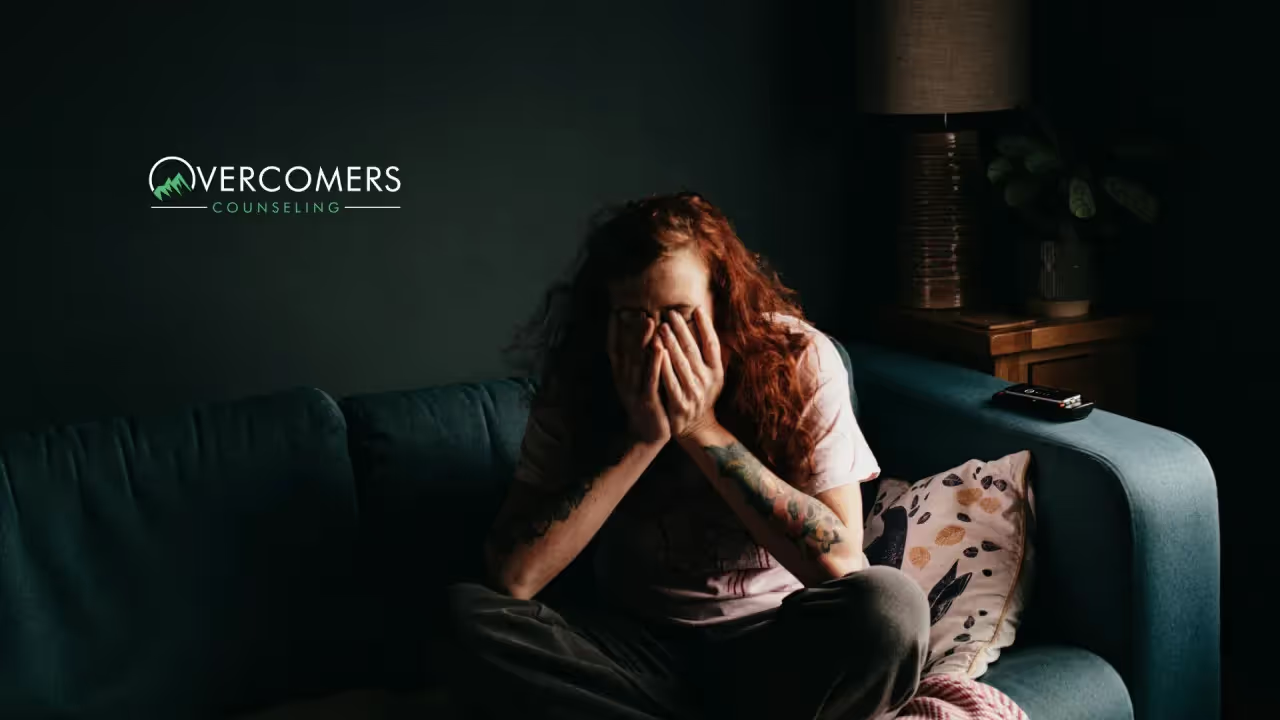
Isolation, especially in a relationship, can leave a victim grappling with profound emotional and psychological consequences that seep into every aspect of their life.
This isolation often manifests as a crushing sense of loneliness, a disconnection from social circles, and an ever-present feeling of being trapped.
It's not uncommon for victims to experience symptoms of depression and anxiety, struggle with low self-esteem, or even display signs of post-traumatic stress disorder.
The emotional landscape becomes a stormy sea of despair and hopelessness, casting long shadows over the victim's perception of self and reality.
Breaking free from isolation is a monumental task, akin to climbing a mountain without a guide.
The journey is riddled with obstacles - guilt, fear, self-doubt - each one more daunting than the last.
The isolation has a way of entangling itself around the victim's thoughts and emotions, creating a mental prison that seems impossible to escape from.
Yet, despite the difficulty, it's crucial to remember that liberation is possible.
Isolation in abusive relationships is a subtle yet damaging phenomenon, often starting as a barely perceptible shift in dynamics but escalating into a powerful tool of control.
It leaves deep emotional and psychological scars, creating a debilitating sense of loneliness and despair that can make breaking free seem insurmountable.
However, it's crucial to remember that no one should endure such isolation and there are ways out.
Victims, as well as bystanders, are encouraged to seek help, reach out to support networks, or contact professionals who can provide guidance.
With courage, resilience, and the right assistance, it is entirely possible to reclaim freedom, restore self-esteem, and rebuild a life marked by hope, self-love, and healthy relationships.
What is the goal of trauma counseling?
Trauma can feel like you're carrying a heavy, invisible backpack full of painful memories. It's exhausting, and it can be difficult to move forward. The goal of counseling isn't to get rid of the backpack immediately. It's to help you gently unpack it, one item at a time, so you can feel lighter and more confident. Trauma counseling focuses on helping you safely process traumatic experiences, reduce distressing symptoms, and regain a sense of control over your life.
We believe you have the power to live a life that is full and rewarding, and we are here to help you get there.
How can a counselor help me with my trauma?
Trauma can feel like you're in a movie with a strange script and a set of rules that no one else can see. Counseling helps you find your footing in a world that can feel confusing and overwhelming. A therapist specializing in trauma is trained to help you understand how trauma affects the brain and body, including symptoms related to post-traumatic stress disorder (PTSD).
We work together to help you understand your thoughts and feelings, build a sense of self, and find a sense of peace and security. Trauma therapy may also support healing related to grief, loss, and therapy for grief and trauma that overlap after painful life events.
What are some common signs of trauma?
Trauma is a deeply personal journey, and there’s no right or wrong way to feel. It's a bit like a fingerprint—it's unique to you. You may feel a mix of sadness, anger, guilt, emotional numbness, or even fear. Other signs may include hypervigilance, difficulty sleeping, intrusive memories, avoidance, or feeling disconnected from others—especially after traumatic events.
We want you to know that whatever you're feeling is valid. We provide a safe, non-judgmental space for you to process your emotions. You are not alone in this, and we're here to help you every step of the way.
How do I begin to heal from my trauma?
Healing from trauma can feel like trying to fix a broken bone without a cast—it’s difficult and painful without the right support. We want to be your support. The healing process often begins by recognizing that what you experienced was overwhelming and that your reactions make sense.
We'll work with you to process the past trauma and find new ways to cope with the stress and fear. With the right trauma therapist and mental health care, healing is possible—even after complex trauma.