We hear all the time on the news, social media, blog posts, and online searches how bad stress is, but did you know there's good stress too?It is well...

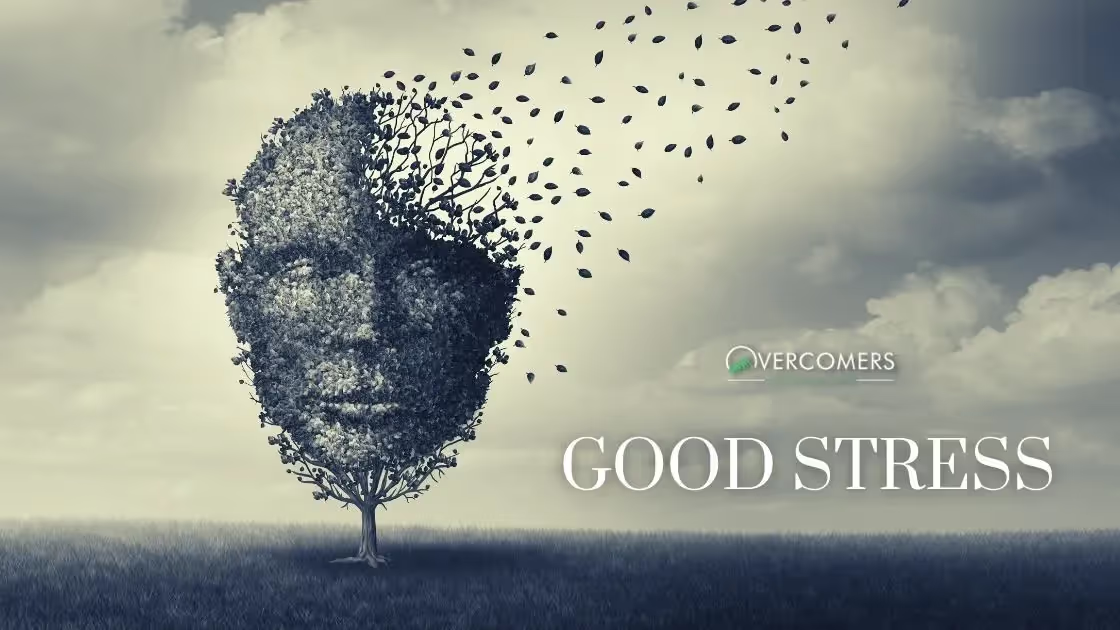
We hear all the time on the news, social media, blog posts, and online searches how bad stress is, but did you know there's good stress too?
It is well documented that chronic stress leads to all sorts of health issues, including heart disease, however, there are a number of benefits to short-term, or acute, stress.
Without stress our bodies wouldn't be able to fight off viruses, our immune system would be more vulnerable to infection and disease, and we now know that stress is the most effective nootropic for learning new things and increasing neuroplasticity.
Additionally, there are a number of safe ways to consciously activate your stress response to access the incredible benefits that stress can offer, as well as methods to combat chronic stress.
Stress plays a vital role in our daily lives and is immensely important to our health and wellness.
Stress is what makes us feel concerned about failure, and is our desire to succeed.
The key is to be able to turn stress off when we need to, not to avoid it all together.
Controlling stress allows us the ability to become receptive as opposed to merely reactive.
This means instead of being anxious, making poor decisions, and feeling overwhelmed, we will be able to handle external circumstances with a clear head while being engaged and effective.
Acute stress in particular is good for our immune systems. It's our body's first responders to viruses and illness.
Acute stress response activates epinephrine (adrenaline) and allows the spleen to release killer cells that combat viruses.
There are a lot of ways to voluntarily stimulate our acute stress response and unlock the benefits.
The two most effective are cold water exposure and Tummo, also known as Wim Hof Method, breathing.
Coldwater exposure, such as ice-baths, or cold showers, is one of the quickest ways to stimulate your acute stress response.
Exposure to cold showers for a minimum of 30 seconds is all it takes to start improving immune functions.
Tummo or Wim Hof Method is a cyclic breathing exercise in which you take a series of sharp inhales and exhales followed by holding your breath. NOTE: Tummo/Wim Hof Method should never be done in water or while driving; for more detailed explanation on this exercise visit www.wimhofmethod.com/breathing-exercises.
Our body also has what is called a Stress Threshold, which can be conceptualized as our ability to respond effectively to stressors.
Our threshold is subject to change, however.
We can voluntarily increase our Stress Threshold in order to decrease our reactivity to stressors, therefore improving our ability to manage and engage with stress.
We can do this by voluntarily increasing adrenaline and then cognitively calming the mind.
How?
The easiest way is to increase your heart rate by running, breathing, or cold water exposure, followed by mindfulness techniques to calm down (long exhales, soft gaze, etc.).
The goal is to relax the mind while the body is being stimulated.
This teaches our body and mind to cope with stressors in a way that promotes receiving instead of reacting.
Taking control of the mind while the body is under stress will improve our ability to handle all stress more effectively.
Additionally, increasing our heart rate and activating our stress response system primes the mind to retain information, which makes stress a useful tool when trying to learn something new.
Stress acts as a nootropic that increases brain function as well as retention of novel information.

Chronic stress can be devastating to overall health, create heart disease, and contribute to multiple mental and physical health concerns.
So far everything that you have learned above will decrease the risk of chronic stress by fighting infection and viruses and increasing your Stress Threshold.
However, chronic stress is often a result of an unhealthy lifestyle.
The best preventative measures a person can engage in that will eliminate chronic stress is getting regular, adequate, sleep, 150 minutes of moderate aerobic exercise every week (~21 minutes/day), and social connection- not social media.
We hear all the time about diet and exercise, and now you know how and why the stress of exercise is so important to your Stress Threshold and acute stress response, but you may not have expected sleep and social connection to make the list.
If you begin to notice you can't get good sleep that is a major indicator of a shift from acute or medium stress to chronic stress.
Engaging in social connections such as seeing your friends, family, taking your dog for a walk, etc. has been found to increase serotonin, a neuromodulator, which decreases stress, anxiety, and depression.
You are now a master of stress.
You know what stress is, how to use it, and how to combat it through exercise, cold water exposure, breathing exercises, sleep, and social connection.
By combining a healthy lifestyle with the tools to voluntarily access your acute stress response and the tools to increase your Stress Threshold you can take control of your life. It's time to start receiving, and stop reacting.
Other activities which have been found helpful in reducing both immediate feelings of anxiousness and long-term anxieties associated with chronic disorders include yoga, journaling, nature walks, art therapy, volunteering, and other low-stress activities. Additionally, developing a healthy lifestyle incorporating adequate sleep, physical activity, and nutritious meals can help reduce overall stress levels.
Yes, Medicaid provides insurance coverage for therapy services specifically designed to help individuals struggling with anxiety, depression, and other mental health conditions.
We all get a little anxious sometimes—like a sudden jolt of nerves before a big presentation or a first date. But if that nervous feeling has become a constant companion, like an uninvited roommate that won’t leave, it might be time for counseling. Signs that it's more than a passing worry include persistent fear, difficulty sleeping, or avoiding situations that trigger your anxiety. We understand how exhausting this can be. We can work together to help you get your living space back.
Think of anxiety counseling as your personal guide to untangling a complicated knot of thoughts and fears. While it may feel impossible right now, you have the power to conquer it. We'll give you a toolkit of strategies, from understanding what's triggering your worry to practicing deep breathing exercises that calm your nervous system. Through counseling, you'll learn to recognize your thought patterns and challenge them, so you can stop being a passenger in your own life and start being the one in the driver’s seat.
The most effective approach to treating anxiety is like finding the perfect pair of shoes—what works for one person might not work for another. However, a common and effective therapy is Cognitive Behavioral Therapy (CBT). It helps you identify negative thought patterns and behaviors that feed your anxiety. We also use other approaches, like exposure therapy, to help you gradually face your fears in a safe and supportive way. We'll help you find the right fit for your unique needs.