Humans think they can do anything correctly regarding mental health, but when you're escaping trauma bonds, is there a right and wrong way to do it?Trauma...


Humans think they can do anything correctly regarding mental health, but when you're escaping trauma bonds, is there a right and wrong way to do it?Trauma bonds are difficult to escape and heal from, and doing it without a support network or counseling can prolong your suffering.This keeps you blaming yourself for the abuse you suffered. When you do this, you're giving your abuser power and excusing their behavior simultaneously.Or you might hope that the abuser will somehow change, especially if you love them enough, which keeps you returning to them instead of moving on and setting boundaries.There is a right and wrong way to escape trauma bonds, but you will need professional help occasionally to do so.
You won't escape a trauma bond if you keep blaming yourself for the abuse that's happened.An abuser's main goal is to shift the blame for the abuse to you, the victim, as a way of controlling you.If they can get you to accept the blame, they are justified in their actions, and they walk away like they did the honorable thing–to ensure that you're controlled and disciplined.But that can get into your psyche and wreak havoc with your sense of reality.When you're brainwashed by your abuser, and you think that you're the one who brought on the abuse, you rationalize everything that happened to you, keeping your trauma bond alive.Blaming yourself for the abuse is not the correct way to escape a trauma bond.
To truly escape a trauma bond, you need to put the blame where it belongs–on your abuser. You didn't do anything to deserve that treatment, regardless of what you might have been told.Your sense of reality might be a little skewed right now, as your abuser gave you a false sense of reality.But looking at the abuse from an outsider's perspective, you'd see that it was never your fault.Escaping a trauma bond means that you need to shift the blame. Acknowledge that, while you might have reacted negatively to the abuse, you never deserved the horrible treatment to begin with.Putting the blame on the abuser frees you to heal and forgive yourself.Why do you need to forgive yourself? In a trauma bond relationship, victims often hold themselves responsible for getting into the relationship in the first place.But you didn't know this would happen, so forgive yourself and extend yourself the same grace as another person in a similar situation.Shifting blame to where it belongs, especially if you tell others about the abuse, also causes public opinion about him or her to change.This creates difficulty for the other person, especially if they have a high-profile position in their career or if they hold a highly respected position in a church or in society.But as the saying goes, "If someone wanted you to speak warmly of them, they shouldn't have treated you that way."
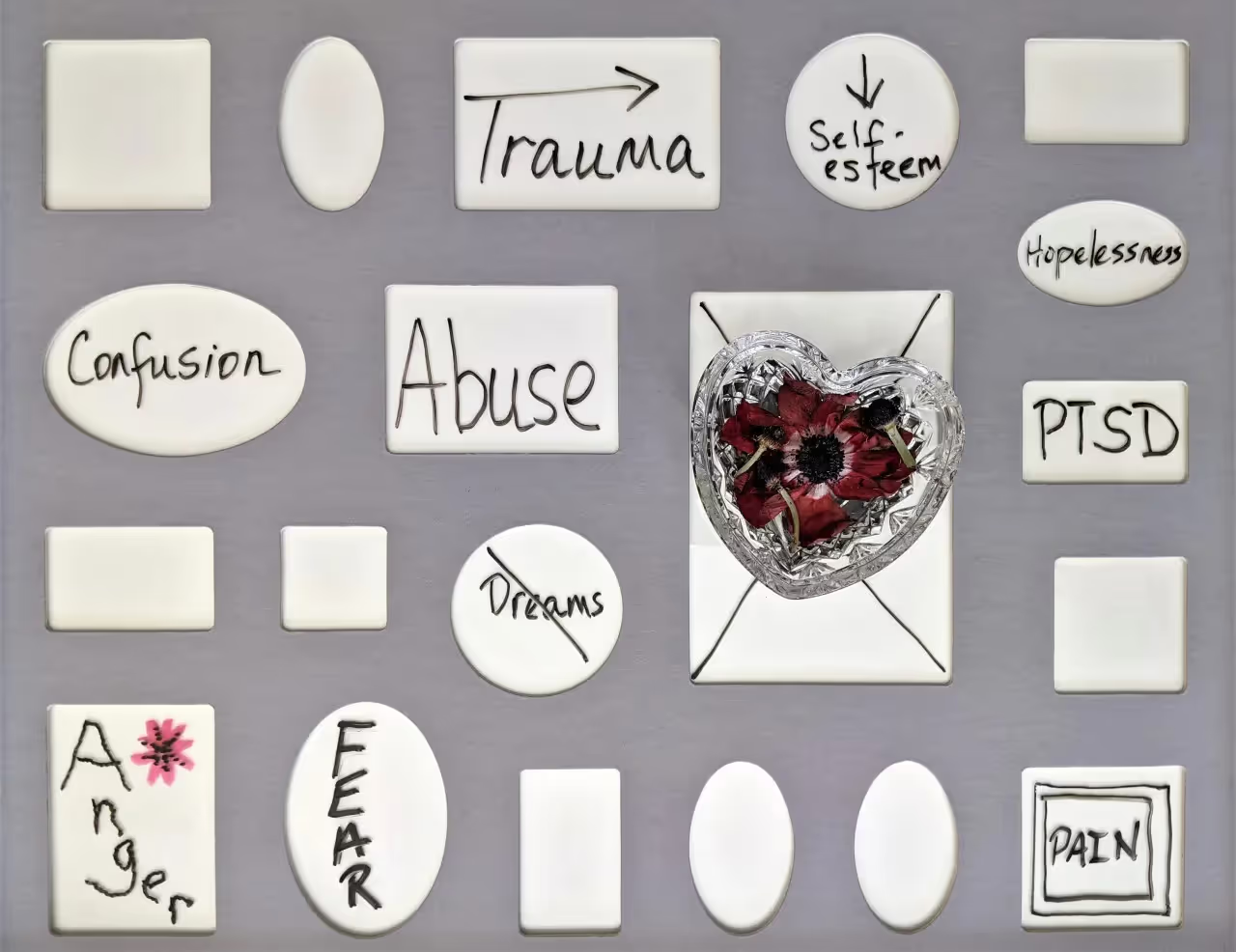
When you're in a trauma bond, you hold out hope that the person will change and that you'll live happily ever after together. But that's not what happens.Instead, the abuser becomes emboldened by your compliance and gets away with more and more until the situation is way out of control.Meanwhile, you hope and believe the person will change, keeping the trauma bond alive.Before escaping a trauma bond, you must first physically leave the relationship, or you'll never escape or heal from the trauma bond.Hoping that the abuser will change keeps you stuck in a situation that continuously erodes your self-esteem, confidence, mental health, and sense of reality.You'll eventually lose yourself because you want the person to change
Accepting that the abuser will never change is the next step to escaping a trauma bond.Once you've placed the blame on the abuser and chosen to let the relationship go, you can establish some boundaries.Regardless of how you feel about the person right now, it's much healthier to cut the cord now.And if the person wants you back or starts love-bombing you again, you must stick to your guns and refuse no matter how much you want to go back.Boundaries allow you to fully escape the trauma bond and start the healing process.Think about it–if you're constantly listening to the person telling you how horrible you are with finances or if you're still getting physically or sexually abused, your mind won't be focused on healing. Instead, it will be focused on survival. So establishing boundaries early after letting the relationship go will assist you in escaping the trauma bond.
Dealing with the trauma from a trauma bond on your own might not be a great idea.The reason is that when you get stuck in your head, you don't have the outside perspective to change the thinking patterns that were set during the relationship.Put simply, you might believe that you're a terrible friend when, in reality, you're actually a great person and a good listener. But the abuser made you believe this.An outside perspective can get you out of your head and start believing the positives that other people see in you.You can deal with the trauma bond on your own, but you might not see the same results that you would if you worked with a counselor.
Talking with a counselor to deal with a trauma bond is the ideal place to start when you want to start the healing process. Keep in mind that a counselor is not going to do the work for you, but they have the resources and perspectives that you might not have considered.Of course, you're going to need to do the work, but if you have someone that you can check in with or point you in the right direction, your healing journey can proceed differently.
You might be tempted to avoid counseling or getting help escaping a trauma bond because you might feel ashamed that you got yourself in this situation.But remember–it's never your fault. You need to make yourself a priority and remove from your life that which is causing you harm.
What is the goal of trauma counseling?
Trauma can feel like you're carrying a heavy, invisible backpack full of painful memories. It's exhausting, and it can be difficult to move forward. The goal of counseling isn't to get rid of the backpack immediately. It's to help you gently unpack it, one item at a time, so you can feel lighter and more confident. Trauma counseling focuses on helping you safely process traumatic experiences, reduce distressing symptoms, and regain a sense of control over your life.
We believe you have the power to live a life that is full and rewarding, and we are here to help you get there.
How can a counselor help me with my trauma?
Trauma can feel like you're in a movie with a strange script and a set of rules that no one else can see. Counseling helps you find your footing in a world that can feel confusing and overwhelming. A therapist specializing in trauma is trained to help you understand how trauma affects the brain and body, including symptoms related to post-traumatic stress disorder (PTSD).
We work together to help you understand your thoughts and feelings, build a sense of self, and find a sense of peace and security. Trauma therapy may also support healing related to grief, loss, and therapy for grief and trauma that overlap after painful life events.
What are some common signs of trauma?
Trauma is a deeply personal journey, and there’s no right or wrong way to feel. It's a bit like a fingerprint—it's unique to you. You may feel a mix of sadness, anger, guilt, emotional numbness, or even fear. Other signs may include hypervigilance, difficulty sleeping, intrusive memories, avoidance, or feeling disconnected from others—especially after traumatic events.
We want you to know that whatever you're feeling is valid. We provide a safe, non-judgmental space for you to process your emotions. You are not alone in this, and we're here to help you every step of the way.
How do I begin to heal from my trauma?
Healing from trauma can feel like trying to fix a broken bone without a cast—it’s difficult and painful without the right support. We want to be your support. The healing process often begins by recognizing that what you experienced was overwhelming and that your reactions make sense.
We'll work with you to process the past trauma and find new ways to cope with the stress and fear. With the right trauma therapist and mental health care, healing is possible—even after complex trauma.