If you or someone you know has suffered trauma, you might be wondering can trauma cause memory loss? Yes, research does show that trauma can affect your...


If you or someone you know has suffered trauma, you might be wondering can trauma cause memory loss?
Yes, research does show that trauma can affect your memory. It also shows that trauma can affect the parts of the brain related to memory.
Memory loss is frightening.
It might undermine your sense of trust in yourself. It might undermine your perceptions of things that are happening now or in the past.
It might affect your ability ti work or to be there for family members.
Trauma-related memory loss is actually one of your brain's ways of coping.
Temporary memory loss is a common effect of physical trauma.
For example, many people who are in life-threatening car crashes often don't remember what caused the crash.
This is the brain's way of protecting you.
However, these effects can last long after the event.
Understanding how trauma affects memory is the first step to getting your life - and your memory - back.
When you experience trauma, it also affects your brain's ability to function and remember.
In fact, research has shown that the parts of the brain most affected by trauma are also the parts of the brain most commonly associated with memory.
Your brain's hippocampus, amygdala, and prefrontal cortex are the areas of the brain that control memory.
Trauma and depression can cause these portions of your brain to become affected by stress-related inflammation, shrinkage, and lack of regeneration.
This means that trauma doesn't just affect your memory in the short term: it can also cause long-term health problems and cognitive impairment.

Your hippocampus is the major memory center of the brain.
The left side of your hippocampus processes facts and recognition.
This means it controls your ability to learn and remember facts.
For example, if you have trouble remembering facts you used to easily know, it could be your hippocampus.
Stress caused by trauma can cause this area to lose oxygen and shrink.
This means that the amount of memory you have available will also shrink.
The right side of the hippocampus regulates spatial memory: spatial memory handles information about places, routes, and where you left your keys.
This is the part of your brain that lets you navigate familiar streets, remember where you parked your car, or where your first date with your partner happened.
If you're someone who loses things a lot, this could mean that your right hippocampus has been damaged.
Another area of the brain that can be affected by trauma is the prefrontal cortex.
Your brain's cortexes make up the functioning of your thoughts and subjective experiences.
For example, if you find yourself remembering things differently than other people do, this could be damage to your cortexes.
The prefrontal cortex manages your working memory: meaning the things that you need to remember on a daily basis.
These might be tasks at work you're supposed to complete or an event you're supposed to attend.
Trauma can affect your short-term memory also.
This is the immediate memory: like remembering a phone number or directions from a store clerk.
If you're struggling with your working or short-term memory, it could be because of trauma-related damage to your prefrontal cortex.
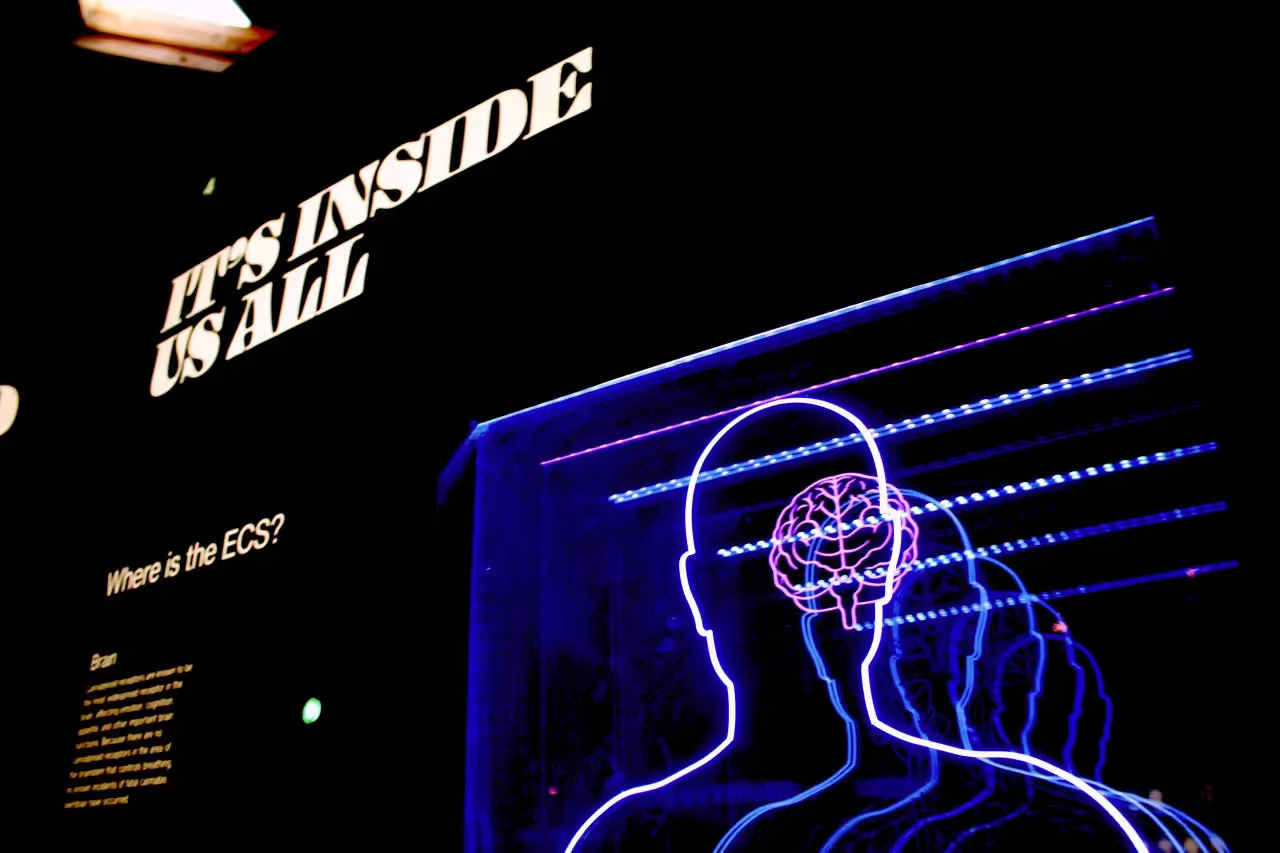
Your amygdala regulates fear and fear-based memories.
For example, a child who touches a hot stove stores that memory in their amygdala.
It teaches them that a behavior is dangerous by remembering the pain it caused.
This memory becomes imprinted by the rush of adrenaline produced by the traumatic event of pain.
The amygdala stores the emotion of the event and can be triggered into reproducing it in subsequent traumatic events.
A damaged amygdala can lead to difficulty regulating emotions or to feeling that the trauma is still happening.
When trauma occurs, the amygdala becomes hyperactive.
It becomes more sensitive to stimuli and often places the person into a constant fright response.
The effects of a traumatized amygdala are chronic stress, increased fear response, loss of sleep, and an inability to calm down.
Unfortunately, studies show that the brain will not heal on its own.
This means that the effects of trauma will only worsen when untreated.
And, these emotional effects will become permanent physical ailments if left untreated for too long.
Seeking treatment for trauma can be scary.
In fact, it can often stimulate your hyperactive amygdala which causes treatment to seem just as scary as the original trauma.
Take a deep breath: treatment is the best way to heal trauma, your memory, and your life.
Through counseling, trauma responses can be unlearned and you can become stronger than you were before this happened.
What is the goal of trauma counseling?
Trauma can feel like you're carrying a heavy, invisible backpack full of painful memories. It's exhausting, and it can be difficult to move forward. The goal of counseling isn't to get rid of the backpack immediately. It's to help you gently unpack it, one item at a time, so you can feel lighter and more confident. Trauma counseling focuses on helping you safely process traumatic experiences, reduce distressing symptoms, and regain a sense of control over your life.
We believe you have the power to live a life that is full and rewarding, and we are here to help you get there.
How can a counselor help me with my trauma?
Trauma can feel like you're in a movie with a strange script and a set of rules that no one else can see. Counseling helps you find your footing in a world that can feel confusing and overwhelming. A therapist specializing in trauma is trained to help you understand how trauma affects the brain and body, including symptoms related to post-traumatic stress disorder (PTSD).
We work together to help you understand your thoughts and feelings, build a sense of self, and find a sense of peace and security. Trauma therapy may also support healing related to grief, loss, and therapy for grief and trauma that overlap after painful life events.
What are some common signs of trauma?
Trauma is a deeply personal journey, and there’s no right or wrong way to feel. It's a bit like a fingerprint—it's unique to you. You may feel a mix of sadness, anger, guilt, emotional numbness, or even fear. Other signs may include hypervigilance, difficulty sleeping, intrusive memories, avoidance, or feeling disconnected from others—especially after traumatic events.
We want you to know that whatever you're feeling is valid. We provide a safe, non-judgmental space for you to process your emotions. You are not alone in this, and we're here to help you every step of the way.
How do I begin to heal from my trauma?
Healing from trauma can feel like trying to fix a broken bone without a cast—it’s difficult and painful without the right support. We want to be your support. The healing process often begins by recognizing that what you experienced was overwhelming and that your reactions make sense.
We'll work with you to process the past trauma and find new ways to cope with the stress and fear. With the right trauma therapist and mental health care, healing is possible—even after complex trauma.