
Mental health, and depression, have been an aspect of humanity for as long as humanity has been around.Some of the most ancient religious texts express...


Mental health, and depression, have been an aspect of humanity for as long as humanity has been around.
Some of the most ancient religious texts express depression and hopelessness as crucial aspects of the hero's journey.
And, yet, for all the thousands of years of contending with depression, research is constantly discovering new things about depression.
One of the most promising aspects of this new research is how to treat depression with nutrition and supplementation.
This is very good news for a number of reasons.
First and foremost it may be the key to treatment-resistant depression in which psychotherapy or medication doesn't seem to help as it should.
In addition, it gives healthy, risk-free, alternatives to powerful medications that often make depression worse and only work for about two-thirds of the people who use them.
I am not anti-medication by any means, but having alternatives for those who find medication to be too risky or ineffective is the best news for depression I've come across.
Today we'll be looking into different supplements for depression that you can find in almost any grocery store that are all-natural and scientifically proven to decrease depression.
Anytime depression is discussed in terms of treatment options it is always best to consult your doctor or your mental health care provider before beginning any changes to diet, including the addition of supplements.
Having said that, let's take a look at supplements for depression so you can talk to your healthcare provider about adding appropriate supplements for depression.
Let's start off with something that we can get from the sun itself that has been proven to be extremely effective in improving mood, regulating sleep, and boosting our immune system, Vitamin D.
I want to start with Vitamin D because it's the only supplement for depression that's completely free.
Granted, it may be difficult to get, especially during Winter but, it is free nonetheless.
Most people, especially in Colorado have a Vitamin D deficiency.
This deficiency is relevant to depression because that means our sleep and immune system are vulnerable.
Sleep is a huge factor in depression and having your sleep pattern regulated can have a significant impact on your depression.
Additionally, a weakened immune system also impacts depression by creating undue stress in the body which creates inflammatory cytokines that disrupt dopamine, serotonin, and epinephrine (which regulate drive, mood, and energy respectively).
Getting direct sun exposure will increase your Vitamin D thereby improving your immune system, helping regulate your sleep, and balancing your mood.
If direct sun exposure isn't accessible, then taking Vitamin D supplements for depression is the next best option.
Just make sure that it's Vitamin D3+K2; Vitamin K2 helps the body absorb the maximum amount of Vitamin D from your supplement.
The next proven supplements for depression are EPAs.
EPAs are found in all fish oils, just check the back of the label and you'll see the fish oils are broken down into EPA and DHA.
Both are excellent for brain function, but EPA has been proven to alleviate depressive symptoms as effectively as some anti-depressant medications with none of the risks.
But, not all fish oils (or EPAs) are equal, and the dosage matters.
As with any supplements for depression, always check the label for the Good Manufacturing Product stamp, and the 3rd Party tested stamp if possible.
These stamps provide high-quality assurance and efficacy in the dosage amounts due to the lack of regulation by the FDA.
Speaking of dosage, to achieve the anti-depressive effects of EPAs you'll need to take between 1000-2000 mg grams.
It can be difficult to find a fish oil supplement that has 1000 mg of EPAs in a single serving to read the label carefully and you may need to take more than the suggested serving size.
Again, talk with your healthcare provider before taking supplements for depression.
What makes EPAs so effective in fighting off depression is the impact they have on reducing inflammatory cytokines (as mentioned above).
EPAs dramatically reduce cytokine activity allowing the brain to regulate dopamine, serotonin, and epinephrine which completely changes how you sleep, your level of motivation, interest, and enjoyment of activities, and your energy levels.
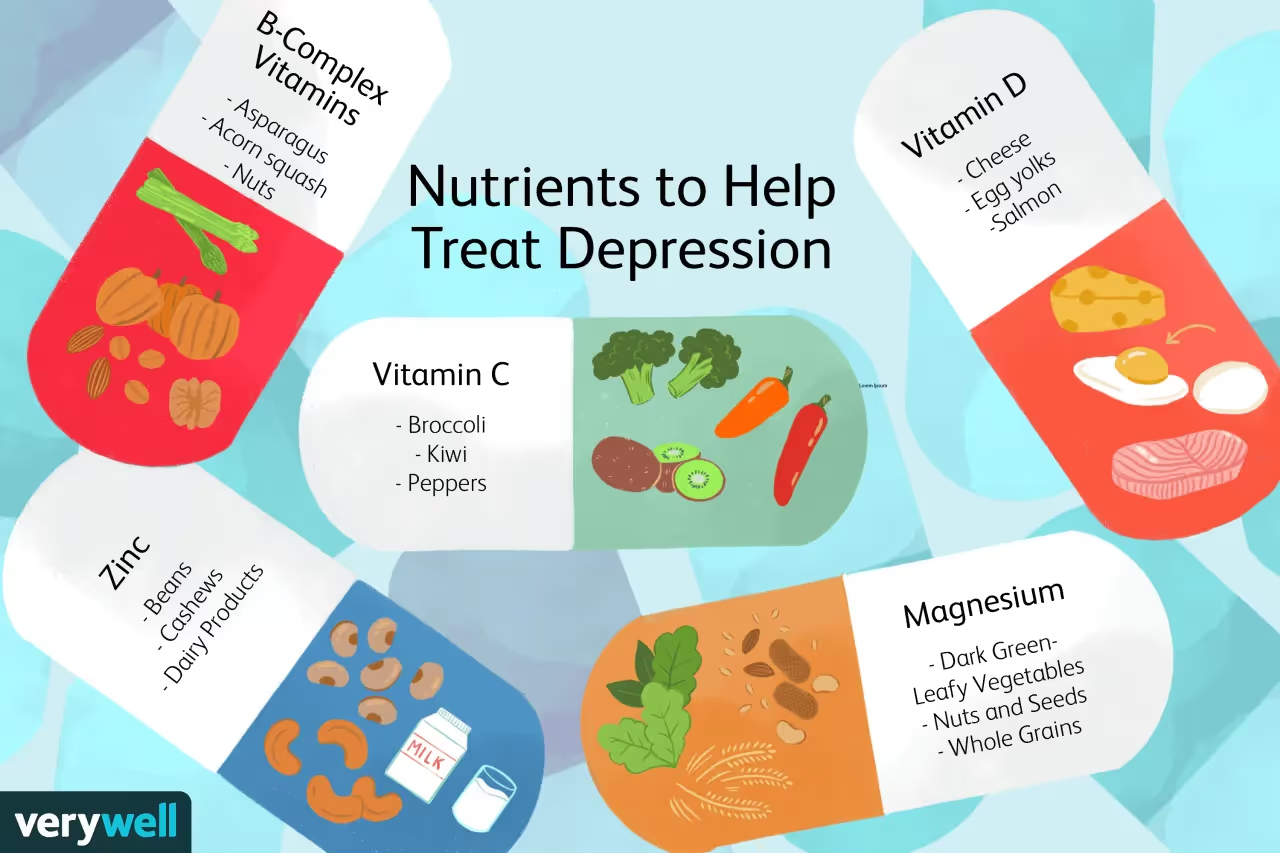
The third and final of the supplements for depression I want to talk about is Magnesium.
Magnesium has a number of positive effects on the brain that relate to depression.
The number one thing is that is regulates serotonin.
This is the third time this neurotransmitter has been mentioned, so what exactly does it do?
Serotonin is responsible for mood, more specifically our here-and-now feeling of joy and contentedness.
Without serotonin operating properly we feel discontent and can't appreciate what we have in front of us.
It makes it difficult to notice friends, and family, or enjoy the daily parts of our life that make us feel at peace.
Magnesium helps restore balance to serotonin and decreases the activity of cells in the amygdala which sends fear responses that make us anxious and depressed.
By quieting the amygdala, Magnesium restores the proper function of serotonin.
Again, the quality of any of the supplements for depression is very important.
Magnesium citrate for instance is the most bioavailable form of magnesium.
And, just like the other supplements, look for one that has the Good Manufacturing Product stamp on it and talk to your healthcare provider about making any changes to your diet and supplementations.
Vitamin D, Magnesium, and EPAs from fish oil are all proven to decrease the impact of depression and can make the difference you need to take control of your life.
Yes, these supplements for depression are all-natural, but you should always talk to your healthcare provider to make sure these supplements are right for you and don't interfere with other medications you may be taking.
Depression is a complex and still mysterious mental health disorder and new research is coming out all the time.
Luckily, a lot of this research is pointing to more and more natural alternatives to treat depression which lowers the risks associated with medication and will make a great addition to counseling and health and wellness as a whole.
Therapy can help with many types of depression, including major depressive disorder, persistent depressive disorder (dysthymia), seasonal affective disorder, postpartum depression, and depression related to life transitions or grief. Your therapist will tailor treatment to your specific needs.
What is the goal of depression counseling?
Living with depression can feel like walking through thick fog every day, where the world looks muted and it’s hard to find your way. The goal of counseling isn’t to instantly make the fog disappear. It’s to give you a powerful flashlight so you can find your path again. Depression counseling helps you better understand your symptoms of depression, identify what’s contributing to them, and learn healthier ways of coping.
We work together to help you understand what's behind the fog, rediscover your sense of purpose, and rebuild your life, one step at a time. We believe in your capacity to feel joy again.
How can counseling help me get my life back?
When you're dealing with depression, even the smallest tasks can feel like climbing a mountain. Counseling helps you build the skills and stamina to make that climb. Through evidence-based approaches such as cognitive behavioral therapy (CBT), we help challenge unhelpful thought patterns and behaviors that reinforce depression.
We'll help you challenge the negative thought patterns that weigh you down and find ways to re-engage with your life. Treating depression is not about perfection; it’s about progress and learning how to support yourself with compassion.
Can therapy really help with depression?
Yes! Therapy is one of the most effective ways to treat depression. Research consistently shows that depression therapy—especially CBT—is effective for depression, including major depressive disorder and persistent depressive disorder.
We'll help you navigate the difficult emotions and challenge the unhelpful beliefs that are holding you back. You are not alone in this fight, and we'll be there to support you every step of the way.
What if I don't feel motivated to go to counseling?
We get it. Depression often drains motivation, energy, and hope. A lack of motivation is itself a common symptom of depression—not a failure. You don’t have to feel “ready” to start. Just showing up is enough. We’ll meet you where you are and move at a pace that feels manageable.