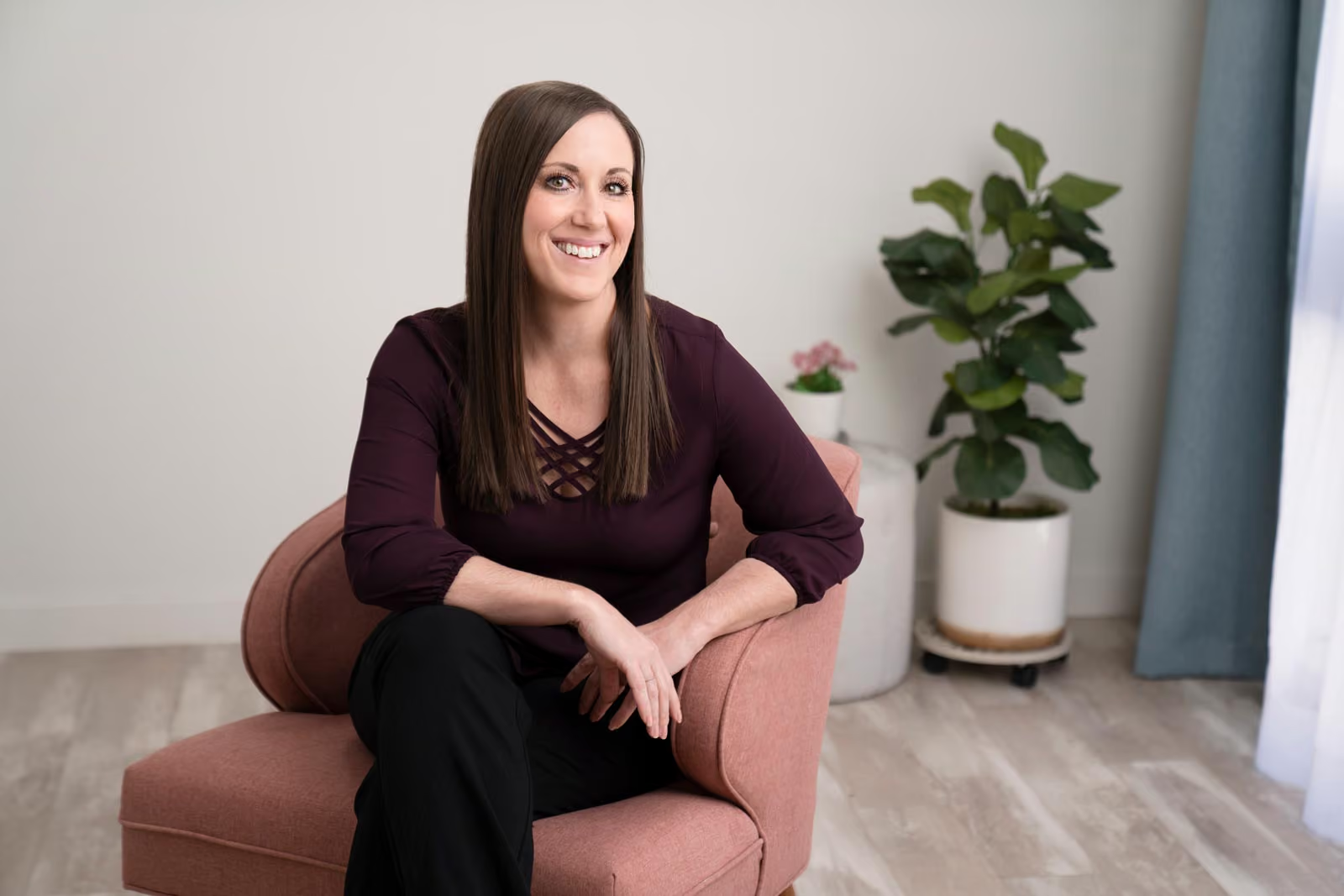
The life of a therapist: safety and risk, seeing people at their best and at their worst. Knowing what it is to be both human and humane. Most especially, being continually amazed at people's capacity to grow, and the strengths in the challenges they face. During my path to becoming a clinical social worker, I was blessed to have a supervisor who discussed and gave feedback on the triumphs and the frustrations of working within mental health. During my supervision at a non-profit, my experiences that I obtained from working with my supervisor were all-encompassing, from discussing self-care, to best practices, to ethical implications. Having now been an LCSW for four years, I am excited to work alongside you, and grow with you during this process!
As a therapist and a supervisor, I believe in an empowerment approach to supervision; I will alternate between acting as a sounding board, a teacher, and a support system, depending on the needs of the supervisee. In the beginning, I may take a more direct approach, however, I will always encourage feedback and open discussion during sessions. I focus heavily on discussing the ethical responsibilities of therapists, as well as operating with a best practices perspective.
The purpose of clinical supervision is to monitor and ensure the welfare of clients, promote the development of supervisees' clinical and professional identity, evaluate the competence of supervisees and fulfill requirements for licensure. It is my belief that as a supervisor I must meet the developmental needs of the supervisee. I often alternate between roles based on the needs of the supervisee. In the beginning, I may take a more direct feedback approach, and as the supervisee gains more experience, my role may change into a more collaborative approach.
In my supervision, I require that students are directly observed by myself while providing counseling services to clients (known as "tele-supervision"). This is to occur one time every three months on a date agreed upon between the supervisor and the supervisee. Tele-supervision is to occur a total of eight times during the span of the two-year supervision experience. The supervisee is required to obtain written permission from their client prior to the tele-supervision taking place and have the signed document uploaded into the client's file.
During the course of completing 100 supervision hours there are two formats that can be implemented (upon availability):
Yes — Overcomers Counseling offers structured clinical supervision for Licensed Professional Counselor Candidates (LPCCs) pursuing full LPC licensure, with supervisors available across our Colorado Springs, Aurora, Pueblo, and Fort Collins locations. Supervision is provided by licensed LPCs who meet Colorado's supervisor qualification standards, and caseloads are built to support both your clinical growth and your hour requirements.
Colorado requires LPCCs to complete 2,000 post-degree supervised practice hours (including at least 1,500 hours of face-to-face client contact) along with 100 total supervision hours — a minimum of 50 individual, with the remainder allowed in group or triadic format at up to a 1:10 supervisor-to-supervisee ratio. Requirements are set by DORA's Division of Professions and Occupations and are worth confirming directly with the board, since rules can be updated.
Overcomers Counseling regularly hires LPCCs across its Colorado Springs, Aurora, Pueblo, and Fort Collins offices, as well as for statewide teletherapy roles. As part of a nearly 100-provider practice, LPCCs join a built-in referral network, steady client flow through major insurance panels and Medicaid, and consistent access to a supervising LPC from day one.
Most clinicians take a minimum of 24 months to complete the required 2,000 supervised practice hours, since Colorado does not allow that experience to be compressed into a shorter timeframe. After hours and supervision requirements are met, candidates must also pass the National Counselor Examination (NCE) before applying for full LPC licensure.
Look for a practice with licensed, qualified supervisors, manageable caseloads that let you actually reach your face-to-face hour minimums, and a mix of individual and group supervision format options. At Overcomers Counseling, LPCCs and LSWs get individual supervision paired with peer consultation, mentorship from experienced clinicians, and support navigating Colorado's specific documentation requirements.
Yes — Overcomers Counseling supervises Licensed Social Workers (LSWs) and Clinical Social Worker Candidates (SWCs) pursuing full LCSW licensure, with supervision provided by Colorado-licensed LCSWs across our Colorado Springs, Aurora, Pueblo, and Fort Collins locations. Our supervisors provide the direct, individual supervision hours needed to keep your path to independent practice on track.
Colorado requires 3,360 post-degree supervised clinical hours over a minimum of 24 months, including at least 96 hours of supervision — with a minimum of 48 hours as face-to-face individual supervision — provided by a Colorado-licensed LCSW. Candidates must register as a Clinical Social Worker Candidate (SWC) with DORA before those hours begin counting, and must pass the ASWB Clinical exam before applying for full licensure.
Overcomers Counseling only provides clinical supervision to employed clinicians on our team — we don't offer supervision-only arrangements for candidates working elsewhere. If you're an LPCC or LSW/SWC looking for both a clinical position and a path to licensure, you can apply here.