On the Call Best Practices
Support Team calls should have a deliberate structure: a warm, clear introduction, swift assistance with an issue, and closing that assures we've met the client's needs.
Introducing Yourself
Your introduction should have three parts:
- Our company and department name.
- Your name.
- "How may I help you today?
Example: "Overcomers Counseling. This is Amy. How may I help you today?"
Give me a moment while I gather that information for you.
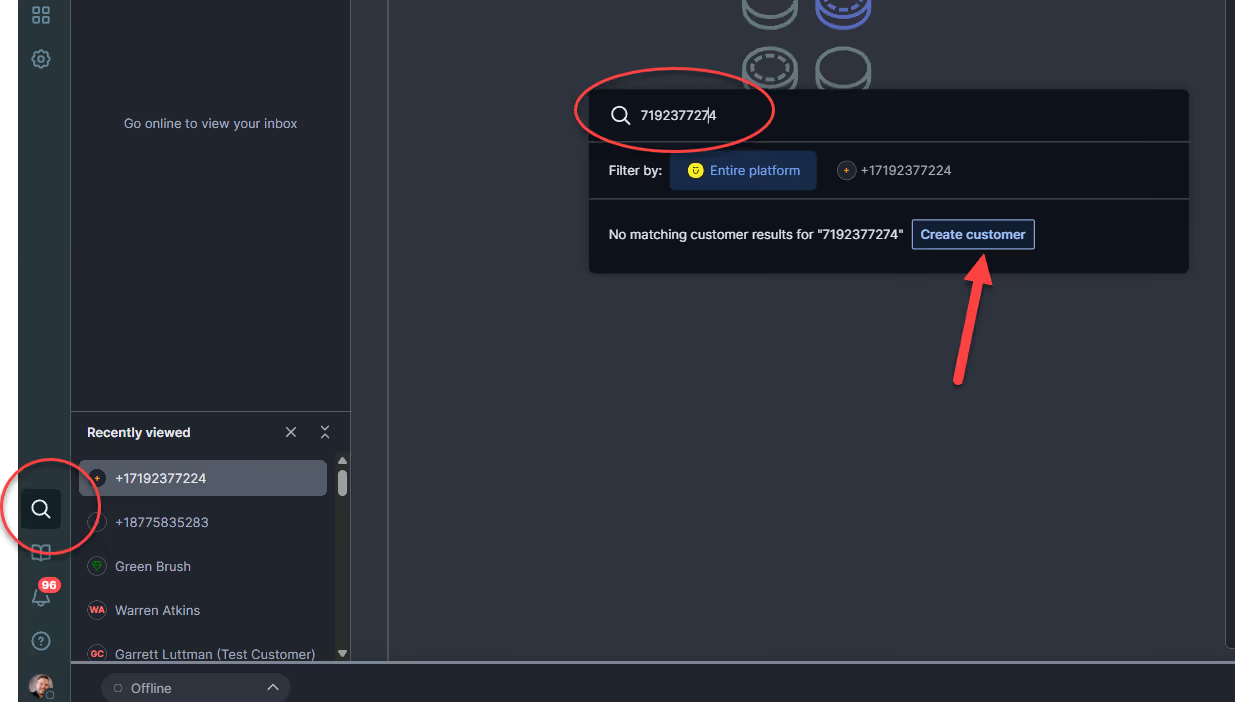
This tells clients that you are working on their issues and gives you time to find the best information. Best practice is to look up the client by phone number in Kustomer, and if a customer doesn't exist with that number, you can easily create a customer, right from the Search pop-up box.
Consistent Help
Studies show that clients perceive consistent service as more professional than sporadic imaginative solutions. This means our messages should be uniform, standardized and put forward as such.
To do this, it's important you familiarize yourself with our scripts. You should get to know them and stay abreast of updates as they occur. This keeps everyone on our team on the same page.
When closing the call, recap any actions that you will take and be specific about the time frame the client can expect results. Review any information or steps that the client can take to help his or her problem in the future. Always ask the client, "Is there anything else I can help you with today?"
At the end of the conversation, remember to thank clients for their time and always let them hang up first.
Holds & Transfers
There will be times when you need to put clients on hold or transfer them to another department. This can be frustrating to clients, but there are ways to make these processes as smooth as possible.
Be honest about how much time you will take. Many clients would not believe too short of a time but also don't like to wait too long. If you must, try not to be more than four minutes.
Use the phrase “Thank you for holding” instead of “I’m sorry to keep you holding.” This keeps the conversation positive and thanks the client for her time.
Remember to wait for the client's answer before putting them on hold.
Voice, Tone & Etiquette
As a Client Service Representative, you serve as the primary point of contact between our company and its clients. This means maintaining a warm, interested, and enthusiastic manner is paramount.
What is tone?
Tone is the way we speak to navigate through the world. There are many kinds of tones we use in different circumstances…
...We could be using a professional tone in a business meeting, a conversational tone with a friend, a warm tone at a religious service or a comic tone at a party telling a friend a story.
Your voice should be enthusiastic, and your tone should be professional. We should sound engaged and eager to help our clients. Maintaining an enthusiastic tone lets our clients know that we are eager to help them.
Difference between professional and formal tones
Professional
We can be both professional and warm, yet conversational. We want our clients to understand that we are advocates for them and part of building that trust is establishing welcoming communication. Please do not confuse this with an informal tone; we should use proper grammar and avoid slang.
Formal
A formal tone is complex, using long sentences and at times long words that narrow who will understand your communication. In a client service setting this can come as cold, and to some, condescending.
Informal vs. Professional Language
Informal
Professional
"Yeah."
"Yes."
"That's correct."
"Certainly!"
"Gimme a minute."
"I can check on that for you."
"Would you mind waiting for a moment?"
"Any time."
"No problem."
"You are welcome! Is there anything else I can help you with?"
"Hey! How ya' doing?"
"Hello! How may I help you today?"
Helping Difficult Clients
Difficult clients are almost always initially intense. As a result, many first-time employees get rattled and try ending the interaction as quickly as possible. This usually leads to the client becoming angrier.
The first step is to LISTEN.
Avoid interrupting, arguing, or engaging in problem-solving too early. Instead, listen intently.
The second step is to EMPATHIZE.
The guest will eventually take a breather and take this opportunity to apologize. Empathize by verbally acknowledging what's making him or her displeased. Many factors could be at work here, so do not take any confrontation personally.
The third step is to CLARIFY.
After apologizing and empathizing, repeating the guests' complaints lets them know you understand. This shows you are concerned and understand the issue, putting you in the position of being the client's advocate.
What position should one take with demanding clients?
To become your client's advocate, you can maintain a calm and positive tone.
The longer a client waits, the more difficult they become.
It is essential to resolve an issue promptly, as the client will grow angrier the lengthier they wait.
Practice Active Listening Daily
When in need, people reach out to Client Service; the best thing you can do for them is to be prepared. Being prepared means a quicker solution for our clients. The longer it takes to solve a problem the more frustrated a client can become.
People contact the client Service when they need help; the best thing you can do for them is to be prepared.
Active Listening involves acknowledging the other person in conversation by peppering them with encouragements, such as "I see," "Mmmhmm," and "Interesting," and paraphrasing what they said back to you. Take notes if it helps you do this.
Active listening is not only a client service technique but also a valuable life skill. Use the technique to speak with a friend, parent, family member, or partner. See how it makes them feel!
How to Listen Actively
Responding to the client as they speak lets them know that you are listening intently and understand what they're communicating.
"And then what happened?"
"Have you tried...?"
Asking questions can keep your conversation two-sided and let you receive the information you need to serve the client best.
"Let me make sure I understand you correctly. You said that you...."
Restating and paraphrasing what clients have told you makes them feel listened to and lets them know they've communicated effectively.